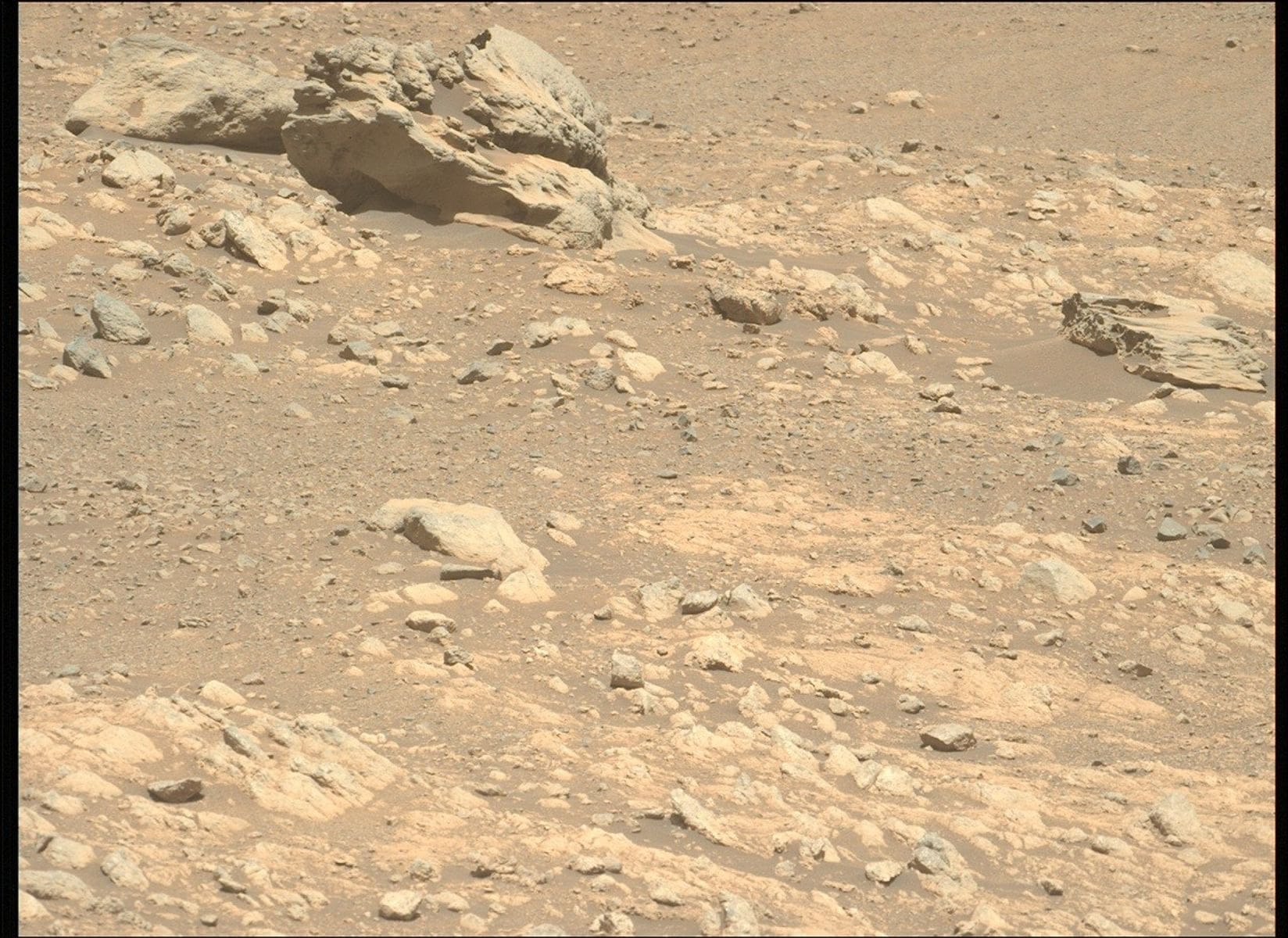
NASA’s Mars Perseverance rover, a component of the Mars 2020 mission, has acquired images of a uniquely shaped rock, designated “Phippsaksla,” exhibiting weathering textures distinct from surrounding bedrock at “Vernodden.” Captured on September 19, 2025—Sol 1629—using the Left Mastcam-Z camera, analysis with the SuperCam instrument revealed a high iron and nickel content within the 80-centimeter (approximately 31 inches) rock. This composition suggests a potential extraterrestrial origin, possibly an iron-nickel meteorite formed within the core of a large asteroid. Identifying such a meteorite would provide valuable insight into the history of impact events within Jezero crater.
Perseverance Rover Investigations
Perseverance is currently investigating an unusually shaped rock named “Phippsaksla,” approximately 80 centimeters (31 inches) across, which differs in appearance from surrounding bedrock. Identified on Sol 1629 of the Mars 2020 mission, the rover used its SuperCam instrument to analyze the rock’s composition. Initial findings reveal a high iron and nickel content, suggesting it may be an iron-nickel meteorite originating from the core of a large asteroid elsewhere in the solar system.
This potential meteorite discovery is notable because Perseverance had not yet identified such a rock within Jezero crater. Prior Mars rovers – Curiosity, Opportunity, and Spirit – have found iron-nickel meteorites, including the 1-meter wide “Lebanon” and “Cacao” meteorites. The current finding atop bedrock formed from impact processes suggests meteorites did fall on the Jezero crater floor, delta, and rim throughout time.
Further investigation is needed to confirm Phippsaksla’s status as a meteorite. If confirmed, this would add Perseverance to the list of Mars rovers that have studied fragments of rocky visitors to Mars. The rover captured initial images of the rock using its Left Mastcam-Z camera on Sol 1612 and Sol 1629, at local mean solar times of 12:45:41 and 12:11:25 respectively.
Meteorite Discoveries on Mars
NASA’s Perseverance rover has encountered a rock named “Phippsaksla” that may be a meteorite. Identified on Sol 1629 of the Mars 2020 mission, the 80-centimeter (31-inch) rock stood out from surrounding bedrock due to its unusual shape. Initial analysis using the SuperCam instrument revealed a high iron and nickel content, a composition commonly associated with iron-nickel meteorites formed within the cores of large asteroids. This suggests the rock originated outside of Mars, potentially from elsewhere in the solar system.
This potential meteorite discovery is notable because Perseverance had previously not identified any iron-nickel meteorites within Jezero crater. Other Mars rovers, including Curiosity, Opportunity, and Spirit, have found such meteorites—Curiosity identified the 1-meter wide “Lebanon” meteorite in 2014 and “Cacao” in 2023. The location of Phippsaksla, atop bedrock formed by past impact processes, makes this discovery particularly interesting, as it suggests meteorites did fall on the crater floor, delta, and rim over time.
Further investigation is needed to confirm if Phippsaksla is indeed a meteorite. However, if confirmed, Perseverance will join the other rovers that have studied these rocky visitors to Mars. The discovery is significant because it adds to the growing body of evidence that Mars has been impacted by material from elsewhere in the solar system, offering insights into the early solar system’s history.
But if this rock is deemed to be a meteorite Perseverance can at long last add itself to the list of Mars rovers who have investigated the fragments of rocky visitors to Mars.