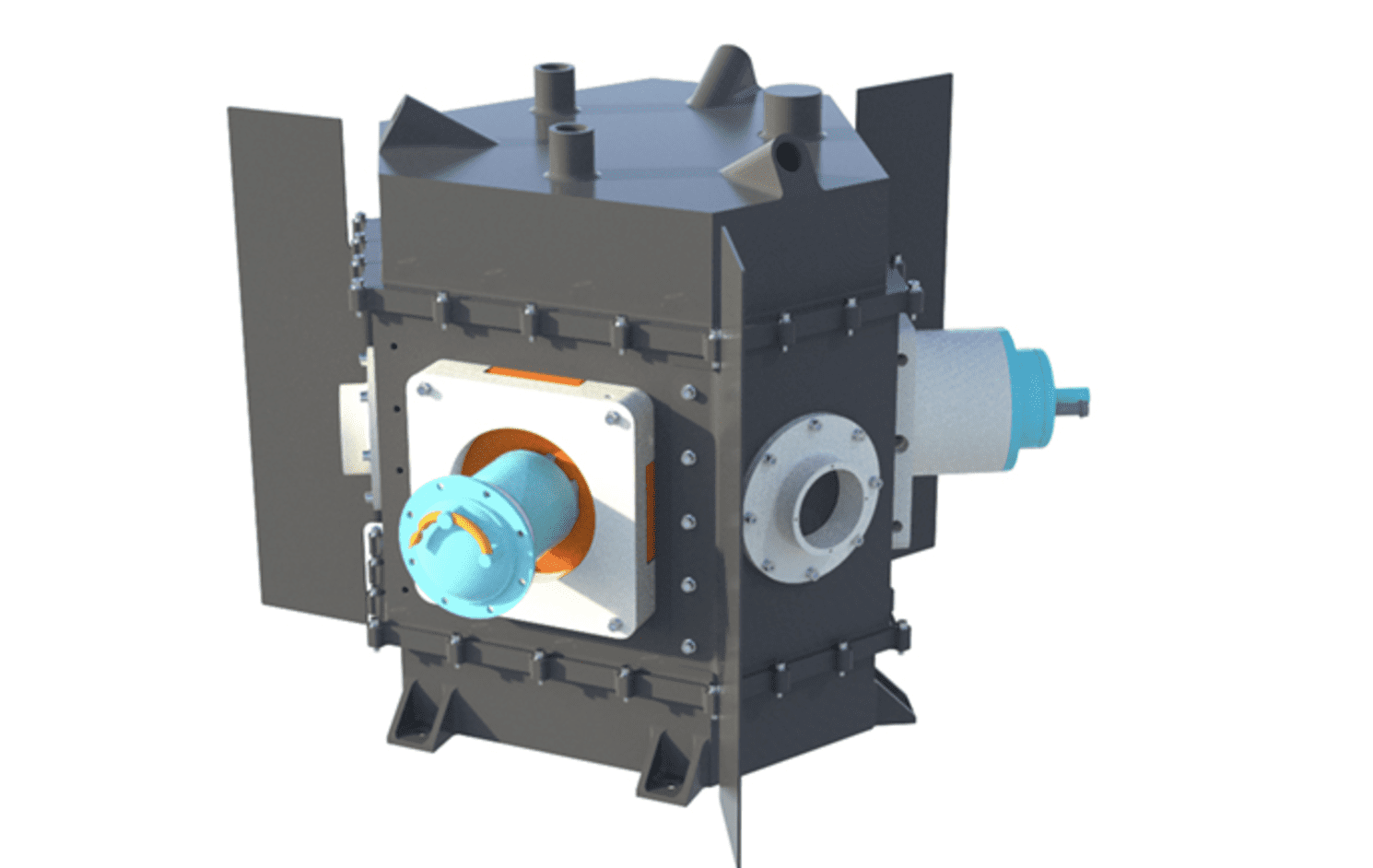
Scientists from the University of Leicester and NASA are collaborating on a project to power spacecraft into new frontiers by combining radioisotope power systems with high efficiency power convertor technology. The partnership, facilitated by an International Space Act Agreement, brings together experts from the University’s £100 million science and innovation park, Space Park Leicester, and NASA Glenn Research Center in Cleveland, Ohio.
The goal is to develop Radioisotope Stirling Generators (RSG) that can generate electrical power at higher efficiencies using heat sources powered by Americium-241, an alternative to traditional Plutonium-238 heat sources. Dr Hannah Sargeant, Research Fellow in the Space Nuclear Power Team at Space Park Leicester, will lead the testing of the novel heat source design with Stirling convertor technologies at NASA’s Glenn Research Center.
The project is funded by the UKSA International Bilateral Fund and NASA’s Radioisotope Power Systems Program and has the potential to enable spacecraft to venture into areas with limited access to solar power, such as shadowed craters on the Moon or the outer solar system.
Collaborative Advancements in Radioisotope Power Systems for Space Exploration
The University of Leicester and NASA have embarked on a collaborative project to develop innovative radioisotope power systems that can enable spacecraft to venture into new frontiers. This partnership, facilitated by an International Space Act Agreement (ISAA), brings together the expertise of both organizations to advance the design and testing of these power systems.
One of the primary objectives of this collaboration is to combine electrically heated simulators of americium heat sources with high-efficiency Stirling power convertor technology. The University of Leicester has been developing radioisotope power systems for over a decade, funded by the European Space Agency’s ENDURE program. These power systems utilize the heat generated from the decay of radioisotopes to provide heat or electricity to spacecraft. The heat sources being developed are powered by Americium-241, an alternative to traditional Plutonium-238 heat sources.
The project aims to generate electrical power from these heat sources at higher efficiencies using Stirling convertor technology in Radioisotope Stirling Generators (RSGs). RSGs work by heating and cooling a ‘working gas’ inside a sealed system, causing a piston to move back and forth, which in turn produces electrical power. A unique feature of the University of Leicester’s heat source design is that it can be coupled to three Stirling convertors, making it more reliable for future space missions.
Advantages of Americium-241 Heat Sources
The use of Americium-241 as a heat source offers several advantages over traditional Plutonium-238 heat sources. One of the primary benefits is its potential for use in space missions where solar power is limited, such as shadowed craters on the Moon or outer solar system. Additionally, Americium-241 has a longer half-life than Plutonium-238, making it a more reliable option for long-duration space missions.
The University’s heat source design also offers increased flexibility and reliability compared to traditional radioisotope power systems. By coupling the heat source to three Stirling convertors, the system can continue to generate electricity even if one of the convertors fails. This feature makes the system more robust and reliable for future space missions.
International Collaboration and Funding
The collaboration between the University of Leicester and NASA is facilitated by an International Space Act Agreement (ISAA), which enables the collaborative use of engineering design and laboratory resources at NASA’s Glenn Research Center in Cleveland, Ohio. The project is funded by the UKSA International Bilateral Fund and NASA’s Radioisotope Power Systems Program.
The international collaboration enabled by this agreement builds on the University of Leicester’s track record of pioneering research on space technologies. This ongoing work is instrumental in developing a commercial pipeline for radioisotopes used in space technologies, strengthening the UK’s role in the global space community.
Future Applications and Implications
The successful development and testing of these innovative radioisotope power systems could have significant implications for future space missions. The ability to generate electricity at higher efficiencies using Stirling convertor technology could enable spacecraft to venture into new frontiers, such as the shadowed craters on the Moon or outer solar system.
Dr. Hannah Sargeant, Research Fellow in the Space Nuclear Power Team at Space Park Leicester, emphasized the significance of this collaboration, stating that “the results of this work will help us to optimize the design for future space missions and generate electricity in some of the most challenging environments.” The potential applications of these power systems are vast, and their development could pave the way for new discoveries and advancements in space exploration.
External Link: Click Here For More