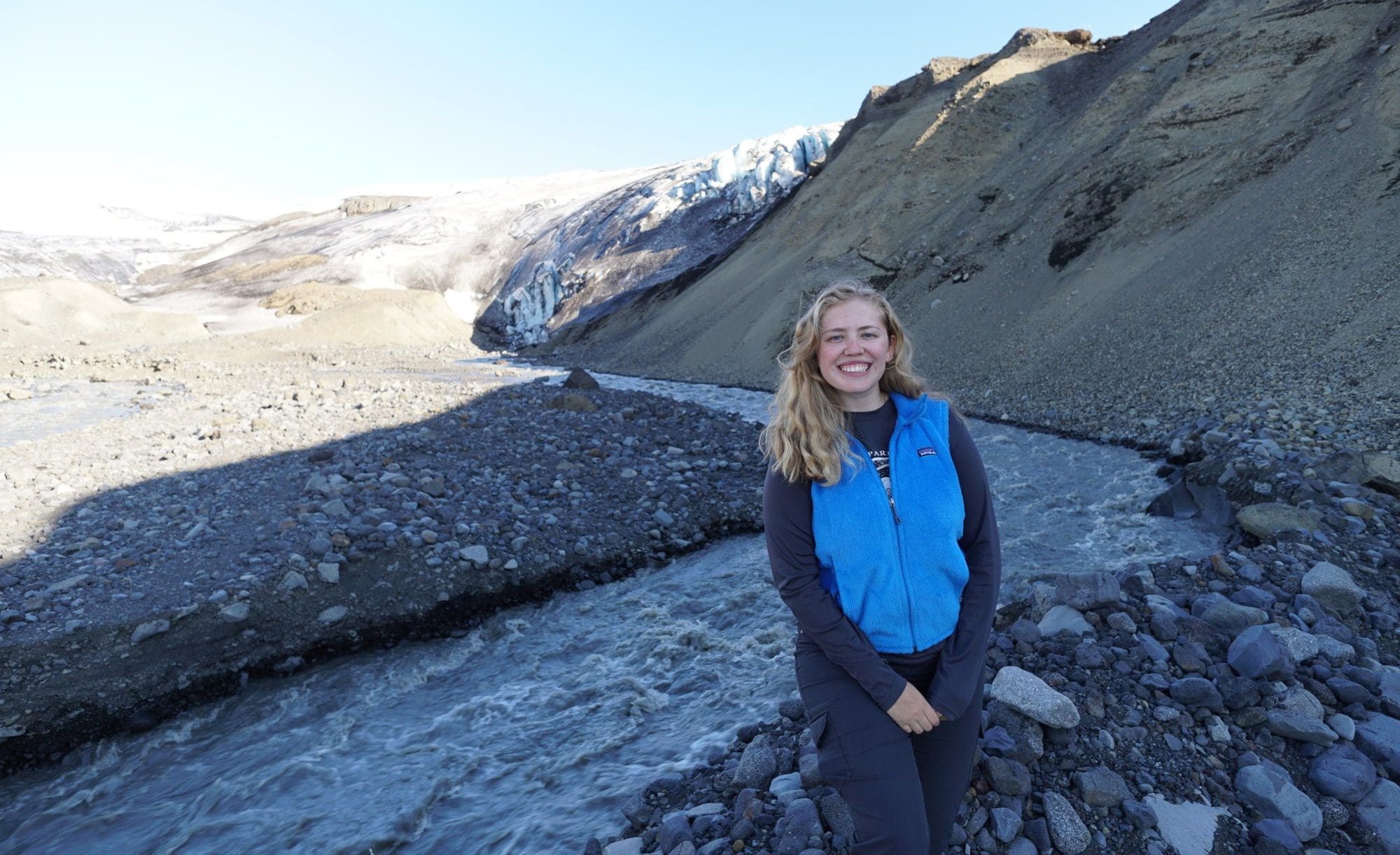
The Martian landscape, with its sprawling dunes and mysterious wind patterns, is a fascinating subject of study for planetary scientists. One key feature of the Red Planet’s geography – compound dunes, or dunes with smaller dunes layered on top – is now at the center of a research project led by Texas A&M Geology & Geophysics Ph.D. student Lauren Berger, who has been awarded a prestigious grant from the National Aeronautics and Space Administration (NASA) to investigate these formations.
By analyzing high-resolution images of Martian dunes and comparing them to similar structures on Earth, Berger aims to glean new insights into the planet’s atmospheric conditions, wind patterns, and environmental history, shedding light on the complex processes that have shaped the Martian surface over time. With the support of NASA’s FINESST program, which fosters innovative research in earth and planetary sciences, Berger’s project has the potential to impact our understanding of the Martian environment and its many secrets.
Introduction to Martian Dunes Research
The study of sand dunes on Mars is a fascinating area of research that can provide valuable insights into the planet’s mysterious environment. Lauren Berger, a Ph.D. student in Geology & Geophysics at Texas A&M University, has been awarded a prestigious grant from the National Aeronautics and Space Administration (NASA) to investigate Martian dunes. The FINESST (Future Investigators in NASA Earth and Space Science and Technology) grant will support Berger’s project, which aims to analyze compound dunes on Mars using high-resolution images captured by NASA’s orbiting cameras.
The shape and pattern of aeolian bedforms, such as sand dunes, can reveal a great deal about the environment in which they form. By comparing compound dunes on Mars to those on Earth, researchers can identify similarities and differences that may help to better understand the Martian surface and atmosphere. Berger’s project will focus on studying the formation and characteristics of compound dunes on Mars, with the goal of gaining a deeper understanding of the planet’s wind patterns, atmospheric conditions, and other environmental factors.
The FINESST grant is a highly competitive award that supports innovative research in earth and planetary sciences. Out of 1,120 submissions, only 156 projects were selected for funding, making Berger’s award a notable achievement. The grant will enable her to focus on her research, strengthen her relationship with NASA, and advance her career as a scientist. With the support of her advisers, Dr. Julia Reece and Dr. Marion Nachon, Berger is well-positioned to make significant contributions to the field of Martian geology.
Compound Dunes on Mars
Compound dunes are a type of aeolian bedform that consists of smaller dunes layered on top of larger ones. These complex dune formations are well-documented on Earth but remain relatively unexplored on Mars. Berger’s research will involve identifying and analyzing compound dunes on Mars using high-resolution images from NASA’s Context Camera and High Resolution Imaging Science Experiment. By studying the shapes and patterns of these dunes, she hopes to gain insights into the Martian environment and how it differs from that of Earth.
The study of compound dunes on Mars is important because it can provide clues about the planet’s wind patterns, atmospheric conditions, and geological history. For example, the size and shape of dunes can indicate the strength and direction of winds on Mars, while the distribution of dunes can reveal information about the planet’s topography and sediment supply. By comparing compound dunes on Mars to those on Earth, Berger may be able to identify similarities and differences that can help to better understand the Martian environment.
Berger’s research will also involve comparing the characteristics of compound dunes on Mars to those on Earth. This comparative study will enable her to identify any unique features of Martian dunes and to develop a more comprehensive understanding of the factors that control their formation. By analyzing the similarities and differences between Martian and terrestrial dunes, Berger may be able to shed light on the geological processes that have shaped the Martian surface over time.
Research Methodology
Berger’s research will involve several key steps, including identifying compound dunes on Mars, analyzing their shapes and patterns, and comparing them to similar dunes on Earth. She will use high-resolution images from NASA’s orbiting cameras to identify and map compound dunes on Mars, and will then analyze these images using specialized software to extract information about the size, shape, and distribution of the dunes.
The analysis of compound dunes on Mars will require a combination of geological and remote sensing techniques. Berger will use her knowledge of aeolian bedforms and sedimentary processes to interpret the characteristics of the Martian dunes, and will also employ advanced image processing and analysis software to extract quantitative data from the images. By combining these different approaches, she hopes to develop a comprehensive understanding of the formation and evolution of compound dunes on Mars.
Berger’s research will also involve collaboration with other scientists and experts in the field of Martian geology. She will work closely with her advisers, Dr. Julia Reece and Dr. Marion Nachon, as well as with other researchers at NASA and elsewhere, to ensure that her research is informed by the latest developments in the field. By working together with other scientists, Berger hopes to contribute to a deeper understanding of the Martian environment and to advance our knowledge of the planet’s geological history.
Career Development and Mentorship
The FINESST grant award is not only a recognition of Berger’s research potential but also an opportunity for her to develop her skills and advance her career as a scientist. The grant will enable her to focus on her research, attend conferences and workshops, and engage with other scientists in the field. With the support of her advisers and mentors, Berger is well-positioned to make significant contributions to the field of Martian geology and to become a leading researcher in her area of expertise.
Dr. Marion Nachon, the principal investigator for the research project, has been a key mentor for Berger throughout her work. Nachon emphasizes the importance of the FINESST grant award for young researchers, offering a unique opportunity to advance their careers and pursue their research interests. “With this highly competitive FINESST grant award, Lauren is getting an exceptional opportunity to pursue her growth as a motivated and promising scientist,” Nachon said.
The Department of Geology and Geophysics at Texas A&M University is dedicated to the scientific study of all aspects of the solid Earth, from fundamental processes that shape it to knowledge that benefits society. The department provides a supportive environment for students like Berger to develop their research skills and pursue their interests in geology and geophysics. With the support of her department and the FINESST grant award, Berger is well on her way to becoming a leading researcher in the field of Martian geology.
External Link: Click Here For More