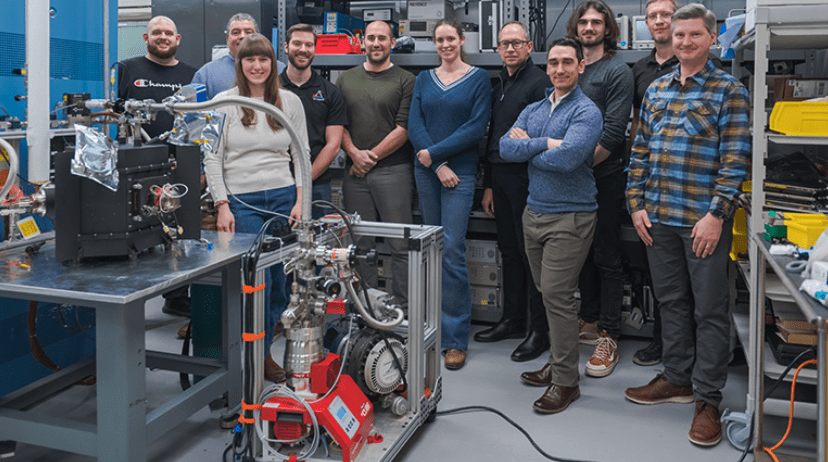
The University of Leicester and NASA Glenn have successfully tested a spacecraft power system at NASA’s facility in late 2024 under an International Space Act Agreement. The collaboration integrated electrically-heated americium heat sources with Stirling converters, achieving a global first by demonstrating the use of americium to reliably power multiple engines. Funded by the UK Space Agency and NASA’s Radioisotope Power System Program, this innovation provides a safer alternative to traditional plutonium-based systems, enhancing space exploration capabilities for future missions.
The University of Leicester and NASA Glenn have successfully tested a spacecraft power system that marks a global first in utilizing americium-241 as an alternative to traditional plutonium-238 heat sources. This collaboration, facilitated by an International Space Act Agreement signed in late 2024, demonstrates the potential of americium-fueled space nuclear power systems for future missions.
The system integrates electrically-heated replicas of americium heat sources with NASA’s Stirling convertors, enabling multiple engines to generate electricity from heat. This technology was tested using a bench-top generator prototype, showcasing its capability to withstand a failed convertor without power loss, as highlighted by Dr. Hannah Sargeant of the University’s Space Nuclear Power team.
Funded by the UK Space Agency and NASA’s Radioisotope Power System Program, this project builds on the University’s decade-long expertise in radioisotope systems supported by the European Space Agency’s ENDURE program. The successful test underscores the robustness of the design and its suitability for long-duration space exploration.
The collaboration between the University of Leicester and NASA Glenn centers on advancing spacecraft power systems through the use of americium-241 heat sources. This innovative approach integrates electrically-heated replicas of americium heat sources with NASA’s Stirling convertors, enabling multiple engines to efficiently generate electricity from thermal energy. The system’s design ensures robustness, as demonstrated by its ability to maintain functionality even if one convertor fails.
A key advantage of using americium-241 over traditional plutonium-238 is its greater availability and potential safety benefits. This shift could reduce reliance on scarce resources while enhancing mission sustainability. The successful testing of the bench-top generator prototype not only validated the system’s technical feasibility but also highlighted its reliability for long-duration space missions.
Looking ahead, this technology holds significant promise for future space exploration. By converting heat from americium-241 into electricity via Stirling convertors, it offers a sustainable power solution for spacecraft operating in remote or challenging environments. This advancement underscores the potential of “americium-fueled space nuclear power systems” to revolutionize space missions, enabling prolonged operations and expanding the scope of human exploration beyond current capabilities.
The collaboration’s success is a testament to international cooperation in advancing space technology. By leveraging expertise from both institutions, the project has achieved a milestone that could pave the way for more efficient and reliable power systems in space, ultimately supporting ambitious goals in space science and exploration.
The successful integration of americium-241 heat sources with NASA’s Stirling convertors represents a significant step toward advancing spacecraft power systems for future missions. The system demonstrates the ability to generate electricity by converting thermal energy from americium-241 into electrical power, using multiple Stirling engines in parallel. This configuration ensures robust operation, as evidenced by its capability to maintain functionality even when one convertor fails.
The use of americium-241 offers practical advantages over traditional plutonium-238, including greater availability and potential safety improvements. These benefits could reduce reliance on scarce resources while enhancing the sustainability of space missions. The successful testing of the bench-top prototype validates the technical feasibility and reliability of this approach for long-duration operations.
This technology holds particular promise for spacecraft operating in remote or challenging environments, where reliable power systems are critical. By leveraging the thermal-to-electrical energy conversion capabilities of Stirling engines, it provides a sustainable solution for extended missions. The potential to expand human exploration beyond current limits highlights the transformative impact of this innovation in space science and technology.
More information
External Link: Click Here For More