

The quest to reconcile quantum mechanics and general relativity drives ambitious experiments testing the boundaries of fundamental physics, and a key step involves creating matter-wave interferometers with increasingly massive particles. Peter Skakunenko, Daniel Folman, Yaniv Bar-Haim, and Ron Folman, all from Ben-Gurion University of the Negev, are pioneering this field by developing techniques to trap and control nanodiamonds, potentially enabling unprecedented tests of quantum superposition and gravity. Their recent work details a novel “needle Paul trap” capable of confining these particles with exceptional strength, achieving trap frequencies more than twice those previously demonstrated. This advance represents a significant step towards building a closed-loop matter-wave interferometer with nanodiamonds, offering a powerful new tool for exploring the interface between the quantum and classical worlds and potentially revealing new insights into the nature of gravity itself.
Levitated Nanoparticles Enable Quantum Sensing Research
This research details cutting-edge advancements in levitated optomechanics, a field with immense potential for quantum sensing and exploring fundamental physics. The core technology involves levitating nanoparticles, allowing scientists to study their behavior with unprecedented precision. Several techniques, including optical traps, radio-frequency (Paul) traps, and combinations of both, are employed, each offering unique advantages in control and accessibility. Cooling these particles to extremely low temperatures is crucial, bringing them closer to a state where quantum effects become observable, achieved through methods like laser cooling, feedback cooling, and cavity cooling.
Diamonds containing nitrogen-vacancy (NV) centers are particularly valuable due to their unique quantum properties, enabling precise spin control and optical readout. Levitated nanoparticles are remarkably sensitive to external forces and displacements, making them ideal for detecting incredibly weak signals and exploring fundamental physics principles, such as testing the limits of gravity, searching for evidence of dark matter, and probing the foundations of quantum mechanics. The spin of NV centers within levitated diamonds acts as a highly sensitive quantum sensor, capable of measuring magnetic fields, electric fields, and other physical quantities with exceptional accuracy. Researchers are actively investigating anomalous heating, an unexplained increase in the particle’s temperature, and developing mitigation strategies, alongside designing advanced trap configurations and control algorithms to improve stability.
Recent advancements include the development of hybrid traps that combine the strengths of optical and Paul traps, achieving improved control and access to the levitated particle. Achieving high-purity quantum states in levitated nanoparticles at room temperature represents a significant breakthrough, opening up new possibilities for quantum control and interference experiments. Researchers are also exploring techniques to integrate levitated optomechanical systems with micro and nanofabricated devices, paving the way for practical applications in precision metrology, materials science, and biological sensing. This rapidly evolving field promises to unlock new avenues for both fundamental scientific discovery and technological innovation, offering a unique platform for exploring the quantum world and developing advanced sensing technologies.
Nanodiamond Interferometry Tests Quantum Gravity Links
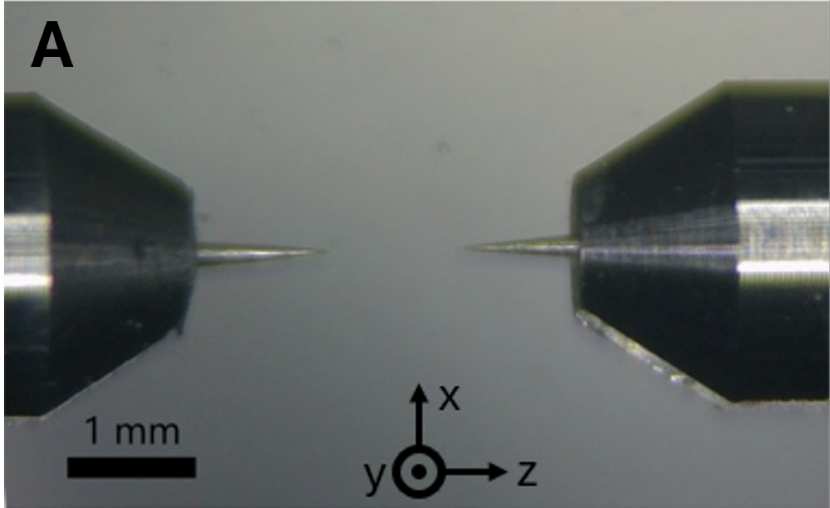
Researchers are pioneering a novel approach to test the fundamental principles of quantum mechanics and general relativity by creating an interferometer using nanodiamond particles. This ambitious project seeks to bridge the gap between these two pillars of modern physics by observing the behavior of matter in previously unexplored regimes, potentially revealing new insights into the nature of gravity and quantum superposition. The core innovation lies in utilizing nanodiamonds, each containing a single embedded spin, and manipulating them with precisely controlled forces to create a closed loop in space-time, a crucial step for performing interferometry with massive objects. The team designed a specialized needle Paul trap, a device that uses electric fields to confine and control the movement of the nanodiamond, featuring a controllable distance between its electrodes to create a strong electric gradient essential for tight confinement and precise positioning.
They paired this trap design with an electrospray charging method, achieving a trap frequency more than double that of current state-of-the-art technologies, significantly enhancing the stability and control of the levitated nanodiamond. This improved confinement is vital for minimizing disturbances and maintaining the quantum coherence necessary for successful interferometry. This methodology diverges from traditional approaches by focusing on nanodiamonds with embedded spins, offering the potential for long coherence times and enabling the coherent splitting and recombination of the particle using forces analogous to those used in the Stern-Gerlach experiment. The researchers envision a progression of experiments, starting with nanodiamonds containing approximately 107 atoms and extremely short interferometer durations, and gradually increasing both mass and duration. This phased approach will allow them to probe environmental decoherence and internal decoherence, and eventually test more exotic theories related to gravity and the quantum nature of reality. By focusing on a single spin within each nanodiamond, they aim to avoid signal smearing and maintain the clarity needed to observe subtle quantum effects, paving the way for a deeper understanding of the universe at its most fundamental level.
Nanodiamond Levitating Trap Exceeds 30 kHz
Researchers have achieved a significant advance in the pursuit of matter-wave interferometry, a field aiming to test the foundations of quantum mechanics and general relativity using massive particles. The team successfully designed and implemented a highly effective trap for levitating and controlling nanodiamond particles, a crucial step towards creating these complex quantum experiments. This innovative trap utilizes a needle-based design and a refined charging method, achieving a trap frequency exceeding 30 kHz, more than double the performance of existing nanoparticle traps. This higher frequency translates directly to improved precision in controlling the particle’s motion, a critical requirement for delicate quantum measurements.
The breakthrough stems from a novel approach to confining the nanodiamonds, employing a strong electric gradient created by a carefully designed needle Paul trap. By combining this with an electrospray technique for introducing charged particles, the researchers were able to achieve unprecedented levels of control. Measurements of the particle’s motion reveal a diameter of approximately 52. 5 nanometers, aligning with manufacturer specifications, and allow for estimation of the particle’s minimal uncertainty in position to be around 490 nanometers. This enhanced control is particularly important because it minimizes disturbances to the particle, allowing it to maintain quantum coherence for longer periods.
The team addressed challenges related to particle loss at lower pressures, identifying laser scattering as a contributing factor and demonstrating stable trapping at pressures as low as 10-3 Torr with reduced laser power. They are actively exploring strategies to further enhance signal-to-noise ratio, including alternative detection schemes and improved optics. Looking ahead, the researchers are focused on increasing the trap frequency even further by decreasing the distance between the trap’s needles, mitigating heating effects with higher-purity diamonds and cryogenic cooling, and exploring techniques to manipulate the particle’s charge state in situ. This work represents a crucial step towards realizing ambitious experiments aimed at testing the limits of quantum mechanics and bridging the gap between quantum and classical physics, ultimately paving the way for exploring the fundamental nature of spacetime.
Strong Nanoparticle Confinement Reaches 30 kHz
Researchers have achieved a significant advance in the pursuit of matter-wave interferometry, a field aiming to test the foundations of quantum mechanics and general relativity using massive particles. The team successfully designed and implemented a highly effective trap for levitating and controlling nanodiamond particles, a crucial step towards creating these complex quantum experiments. This innovative trap utilizes a needle-based design and a refined charging method, achieving a trap frequency exceeding 30 kHz, more than double the performance of existing nanoparticle traps. This higher frequency translates directly to improved precision in controlling the particle’s motion, a critical requirement for delicate quantum measurements. The breakthrough stems from a novel approach to confining the nanodiamonds, employing a strong electric gradient created by a carefully designed needle Paul trap. By combining this with an electrospray technique for introducing charged particles, the.
🗞 Strong Confinement of a Nanoparticle in a Needle Paul Trap: Towards Matter-Wave Interferometry with Nanodiamonds
🧠 ArXiv: https://arxiv.org/abs/2508.14272


