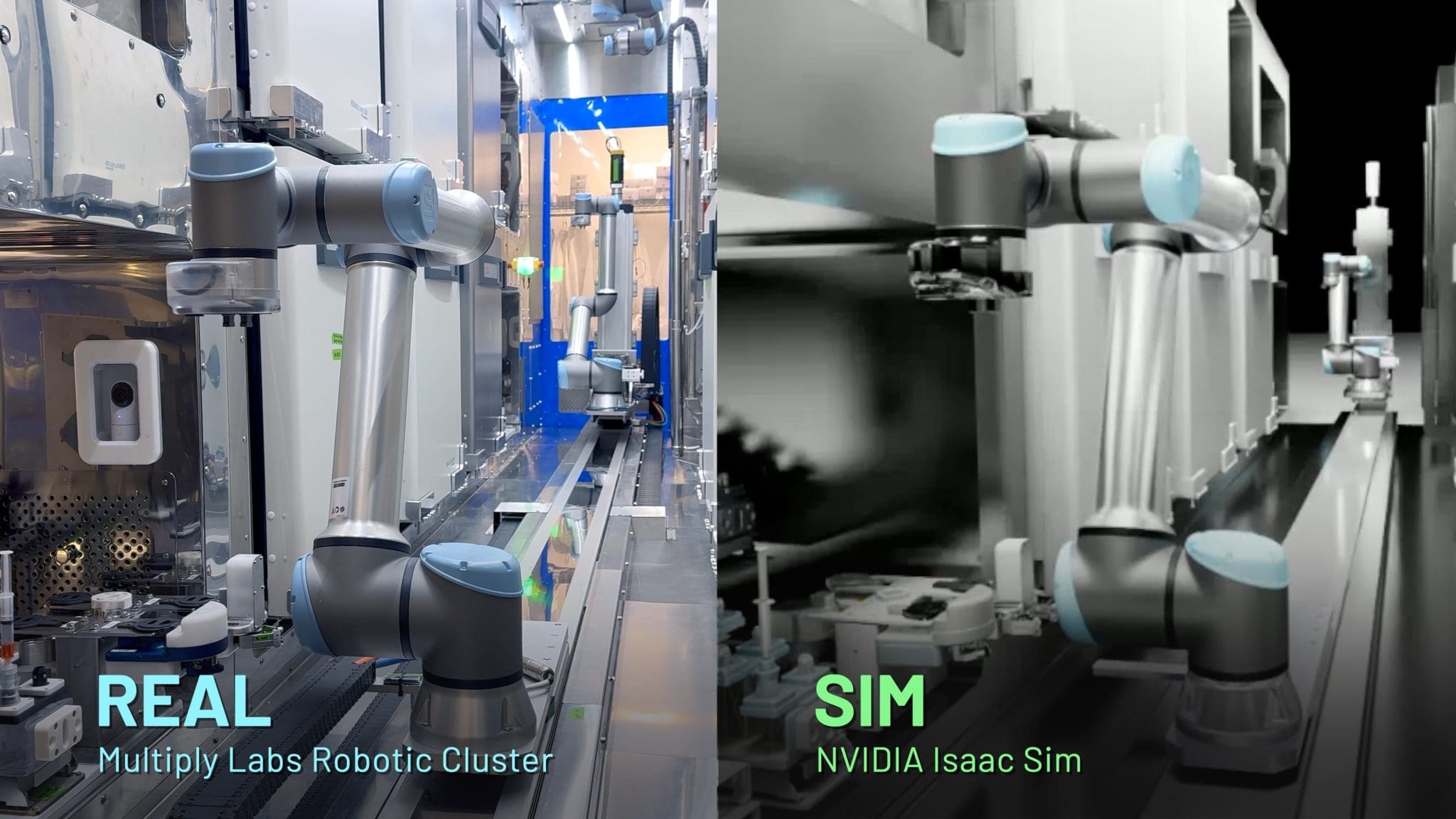
Multiply Labs is pioneering robotic biomanufacturing systems through its integration of NVIDIA’s digital twins, foundation models, and perception AI. The company’s systems, utilizing NVIDIA’s technologies, target up to 100x more patient doses per square foot compared to traditional manual processes. This collaboration aims to scale production of life-changing cell and gene therapies.
NVIDIA’s Isaac & GR00T Drive Robotic Biomanufacturing Systems
Multiply Labs is integrating NVIDIA’s Isaac and GR00T technologies to advance robotic biomanufacturing, specifically focusing on cell and gene therapies. This includes utilizing advanced robotics simulation and perception capabilities from NVIDIA, shifting the industry away from traditionally manual processes. The goal is to improve consistency, traceability, and efficiency in producing personalized treatments, ultimately increasing their accessibility to patients. The company’s robotic systems employ four parallel arms to maximize production within current facilities, aiming for a 100x increase in patient doses per square foot.
Multiply Labs is leveraging NVIDIA’s AI infrastructure across three core areas – simulation, perception, and foundation models – to accelerate development of both hardware and software. This collaborative effort intends to translate advancements in physical AI into tangible benefits for patients needing advanced therapies.
Multiply Labs Targets 100x Dose Increase Per Cleanroom Foot
Multiply Labs aims to dramatically increase manufacturing output by targeting 100 times more patient doses per cleanroom foot than current manual processes allow. This increased density is achieved through the implementation of robotic systems featuring four parallel arms, maximizing production within existing facilities. By optimizing space utilization, the company intends to address a key bottleneck in scaling cell and gene therapy production for wider patient access. This focus on automation is intended to improve consistency and traceability in therapy production, tackling challenges caused by historically time-intensive and variable manual methods. Ultimately, this technology aims to make personalized treatments more broadly accessible to patients needing advanced therapies.
Advanced biomanufacturing is a powerful frontier for physical AI, where robotics and AI can help scale the manufacturing of therapies that can help patients across the world.
Stacie Calad-Thomson, North America Business Development Lead, Healthcare and Life Sciences, NVIDIA
Digital Twins & Foundation Models Scale Cell & Gene Therapies
Multiply Labs is integrating NVIDIA’s digital twins and foundation models to revolutionize biomanufacturing, moving away from traditionally manual processes. The goal is to significantly improve manufacturing consistency and traceability, ultimately making personalized treatments more accessible to patients. This investment in “physical AI” is intended to translate robotic advancements into a broader impact on patient care and therapy availability.