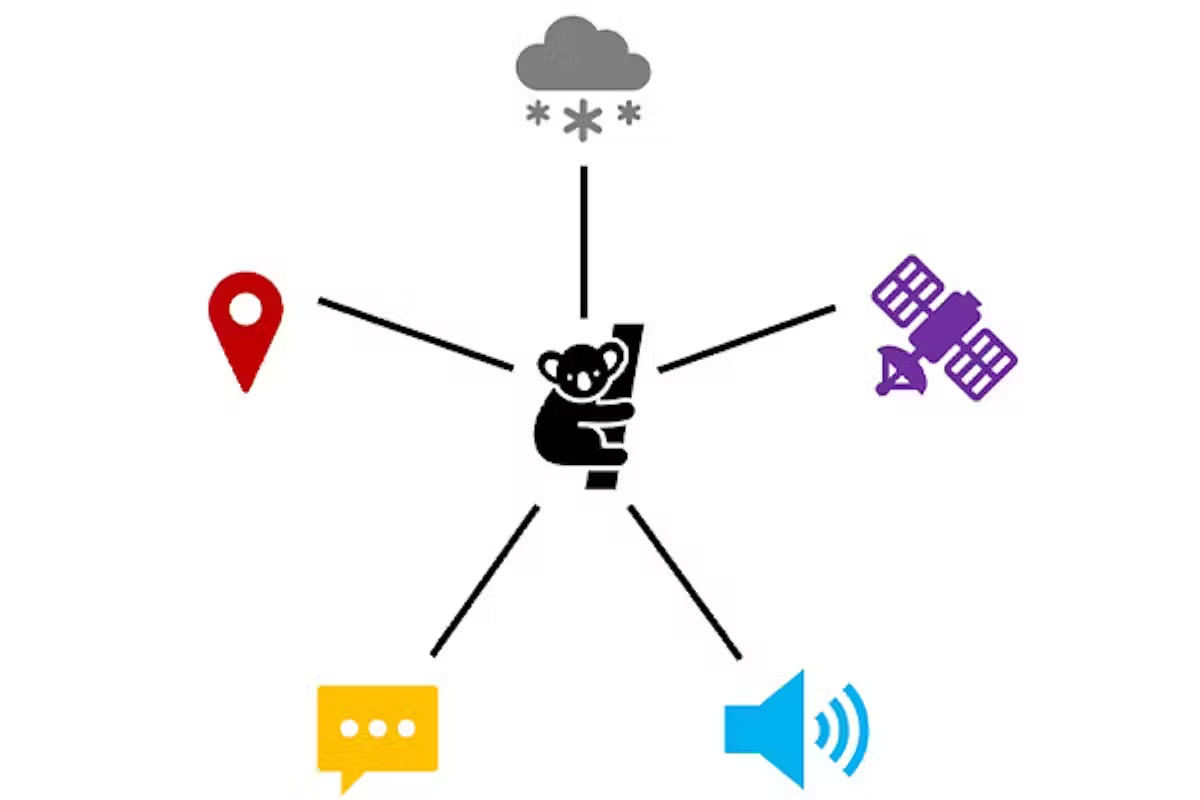
TaxaBind, a multimodal AI tool developed by computer scientists at Washington University in St. Louis, combines six distinct data modalities—ground-level species images, geographic location, satellite imagery, text, audio, and environmental features—to address ecological challenges such as species classification, distribution mapping, and habitat analysis.
Presented at the IEEE/CVF Winter Conference on Applications of Computer Vision (WACV) in Tucson, AZ, TaxaBind leverages an innovative technique called multimodal patching to integrate diverse data sources into a unified framework, enabling tasks like zero-shot species classification and cross-modal retrieval. The tool, trained on approximately 450,000 species, demonstrates superior performance in linking ecological data with real-world environmental information, offering potential applications in deforestation monitoring, habitat mapping, and climate-related research.
Introduction to TaxaBind
TaxaBind is a novel multimodal AI tool developed by researchers at Washington University in St. Louis to address ecological challenges through advanced computational methods. The tool integrates six distinct data modalities—ground-level species images, geographic location, satellite imagery, text, audio, and environmental features—into a unified framework. This integration allows TaxaBind to perform tasks such as species classification, distribution mapping, and ecological modeling with greater accuracy and versatility than existing single-modality models.
The core innovation of TaxaBind lies in its use of multimodal patching, a technique that consolidates information from diverse data sources into a single binding modality. Ground-level images serve as this central hub, enabling the AI to synthesize insights from text, audio, satellite imagery, and environmental context simultaneously. This cohesive approach enhances the tool’s ability to handle complex ecological tasks, including zero-shot classification, where it can identify species not present in its training dataset.
TaxaBind demonstrates exceptional performance in cross-modal retrieval, linking fine-grained ecological data with real-world environmental information. For instance, combining satellite images with ground-level species data allows the tool to retrieve habitat characteristics and climate data, while also returning relevant satellite imagery based on species inputs. These capabilities make TaxaBind a powerful resource for ecological research, with potential applications in deforestation monitoring, habitat mapping, and understanding the impacts of human activities on ecosystems.
The development of TaxaBind represents a significant advancement in multimodal AI tools, offering researchers a comprehensive platform to tackle complex ecological questions with enhanced precision and efficiency.
How TaxaBind Works
The core of TaxaBind’s functionality lies in its use of multimodal patching, a technique that consolidates information from diverse data sources into a single binding modality. Ground-level images serve as this central hub, enabling the AI to synthesize insights from text, audio, satellite imagery, and environmental context simultaneously. This cohesive approach enhances the tool’s ability to handle complex ecological tasks.
One of TaxaBind’s notable capabilities is zero-shot classification, which allows it to identify species not present in its training dataset. Additionally, the tool excels in cross-modal retrieval, linking different types of ecological data. For instance, combining satellite images with ground-level species data enables the retrieval of habitat characteristics and climate data.
This approach offers several advantages over traditional single-modality models by providing more comprehensive insights into ecological questions. TaxaBind’s ability to integrate multiple data sources makes it a powerful resource for researchers, facilitating a deeper understanding of ecological dynamics through its versatile and robust functionality.
TaxaBinds Performance in Ecological Tasks
TaxaBind, as a multimodal AI tool, excels in handling complex ecological tasks by integrating diverse data sources. Its ability to process multiple modalities simultaneously enhances accuracy and versatility compared to traditional single-modality models.
One notable aspect of TaxaBind’s performance is its efficiency in managing large datasets. Consolidating information from various sources into a unified framework enables researchers to analyze extensive ecological data more effectively, leading to quicker insights and decision-making processes.
Another key feature is the tool’s adaptability. It can be applied to different ecological projects, from monitoring biodiversity hotspots to assessing the impact of environmental changes. This flexibility allows TaxaBind to address a wide range of research questions with precision and comprehensiveness.
Moreover, TaxaBind’s role in predictive modeling within ecology is significant. By analyzing historical data and current trends, it aids in forecasting species distribution shifts due to climate change, providing valuable projections for conservation strategies.
In summary, TaxaBind stands out as an effective and versatile tool in ecological research, offering researchers a powerful means to tackle complex questions with enhanced efficiency and adaptability.
Implications of TaxaBind for Ecology and Climate Applications
One of TaxaBind’s notable capabilities is zero-shot classification, allowing it to identify species not present in its training dataset. Additionally, it excels in cross-modal retrieval, linking different types of ecological data. For instance, combining satellite images with ground-level species data enables the retrieval of habitat characteristics and climate information, while also returning relevant satellite imagery based on species inputs.
TaxaBind’s applications are diverse, including deforestation monitoring, habitat mapping, and understanding human impacts on ecosystems. By integrating multiple data sources, it offers a more comprehensive approach to ecological research compared to traditional models, providing enhanced insights into ecological dynamics.
TaxaBind is an innovative multimodal AI tool designed for ecological research, integrating six distinct data modalities: ground-level species images, geographic location, satellite imagery, text, audio, and environmental features. Its core functionality lies in multimodal patching, which consolidates information from these sources into a unified framework, with ground-level images serving as the central hub.
One of TaxaBind’s notable capabilities is zero-shot classification, enabling it to identify species not present in its training dataset. Additionally, it excels in cross-modal retrieval, linking different ecological data types. For instance, combining satellite images with ground-level data retrieves habitat characteristics and climate information, enhancing comprehensive analysis.
TaxaBind offers advantages over traditional models by providing more holistic insights through integrated data sources. It efficiently handles large datasets, aiding quicker decision-making for researchers. Its adaptability allows application across various projects, such as monitoring biodiversity and assessing environmental impacts.
The tool aids in predictive modeling, forecasting species distribution shifts due to climate change, crucial for conservation strategies. Applications include deforestation monitoring and habitat mapping, offering a more comprehensive approach compared to single-modality models.
More information
External Link: Click Here For More