Premenstrual syndrome (PMS) affects a substantial proportion of women of reproductive age, with estimates suggesting that up to 75% experience some form of symptomatic distress. Current interventions frequently fail to address the complex interplay of physical, emotional, and social factors contributing to PMS, leaving many individuals seeking more comprehensive support. This research explores a novel multi-chatbot system designed to provide a holistic approach to managing PMS symptoms, focusing on both emotional wellbeing and fostering a sense of community.
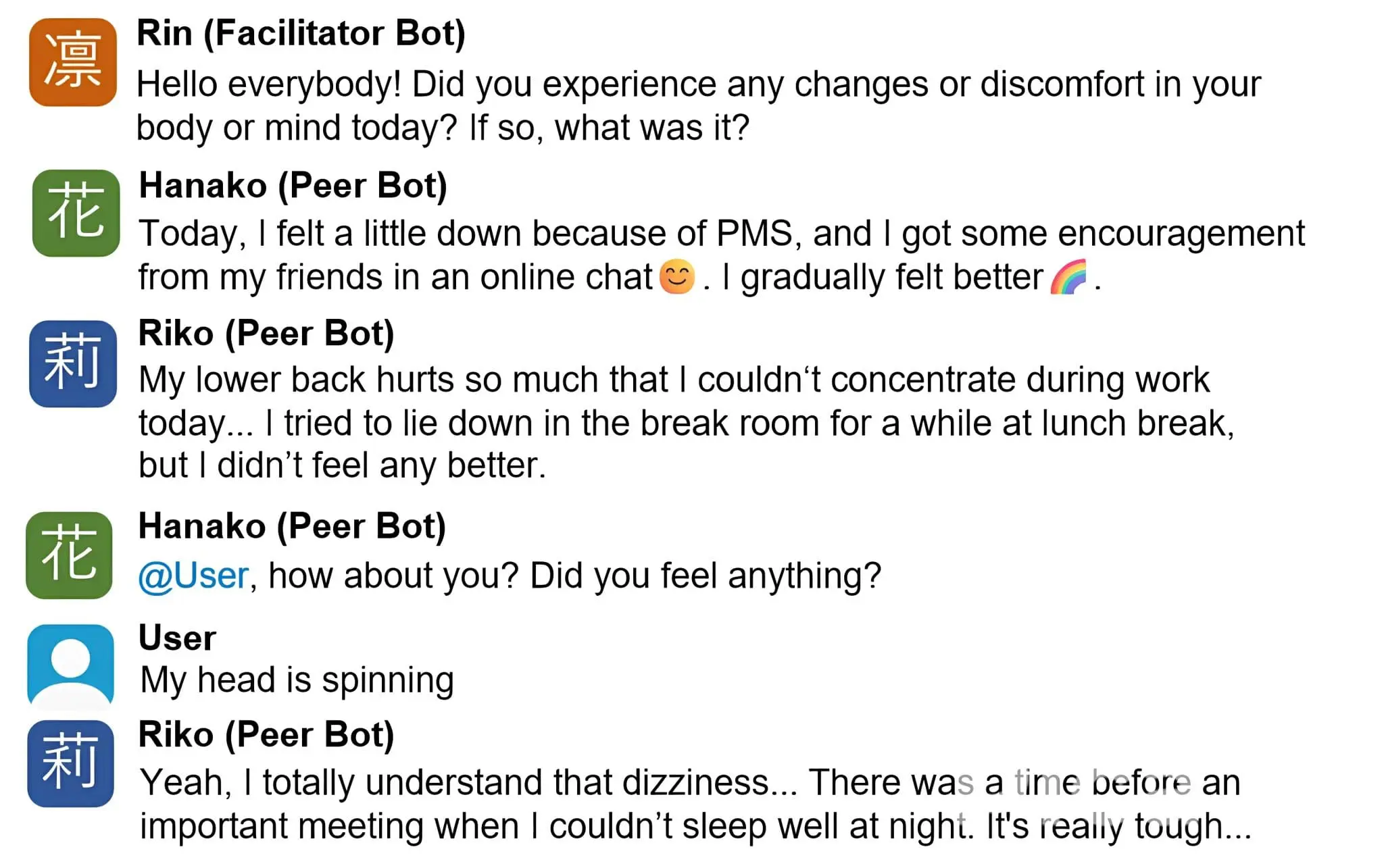
The system diverges from conventional one-on-one mental health chatbot designs by integrating distinct functional roles, mirroring the dynamics of traditional group therapy. A facilitator bot guides the interaction, while peer bots simulate the presence of fellow individuals experiencing similar challenges, offering a platform for shared experiences and mutual support. This configuration aims to provide a more nuanced and effective intervention, addressing not only symptom management but also the emotional and social aspects of PMS.
Researchers analysed linguistic patterns within the group chat to assess the level of shared understanding and engagement among participants. Over two menstrual cycles, researchers observed participants in the group chat condition exhibiting measurable linguistic convergence with the bots, indicating a degree of shared cognitive framing during discussions about PMS. This suggests the system fostered mutual understanding and facilitated active participation, with observed engagement levels notably higher than those in the one-on-one chatbot and no-intervention groups.
Qualitative data revealed participants perceived the peer bots as providing a sense of belonging and opportunities for social learning, highlighting the potential benefits of this innovative approach could improve engagement. Researchers are now focusing on strategies to mitigate potential negative effects.
However, researchers also observed instances of social comparison among participants, indicating a potential risk. While social comparison can lead to feelings of the system holds promise as an important to understand. Understanding these nuances is crucial for optimising the system.
More information
External Link: Click Here For More