
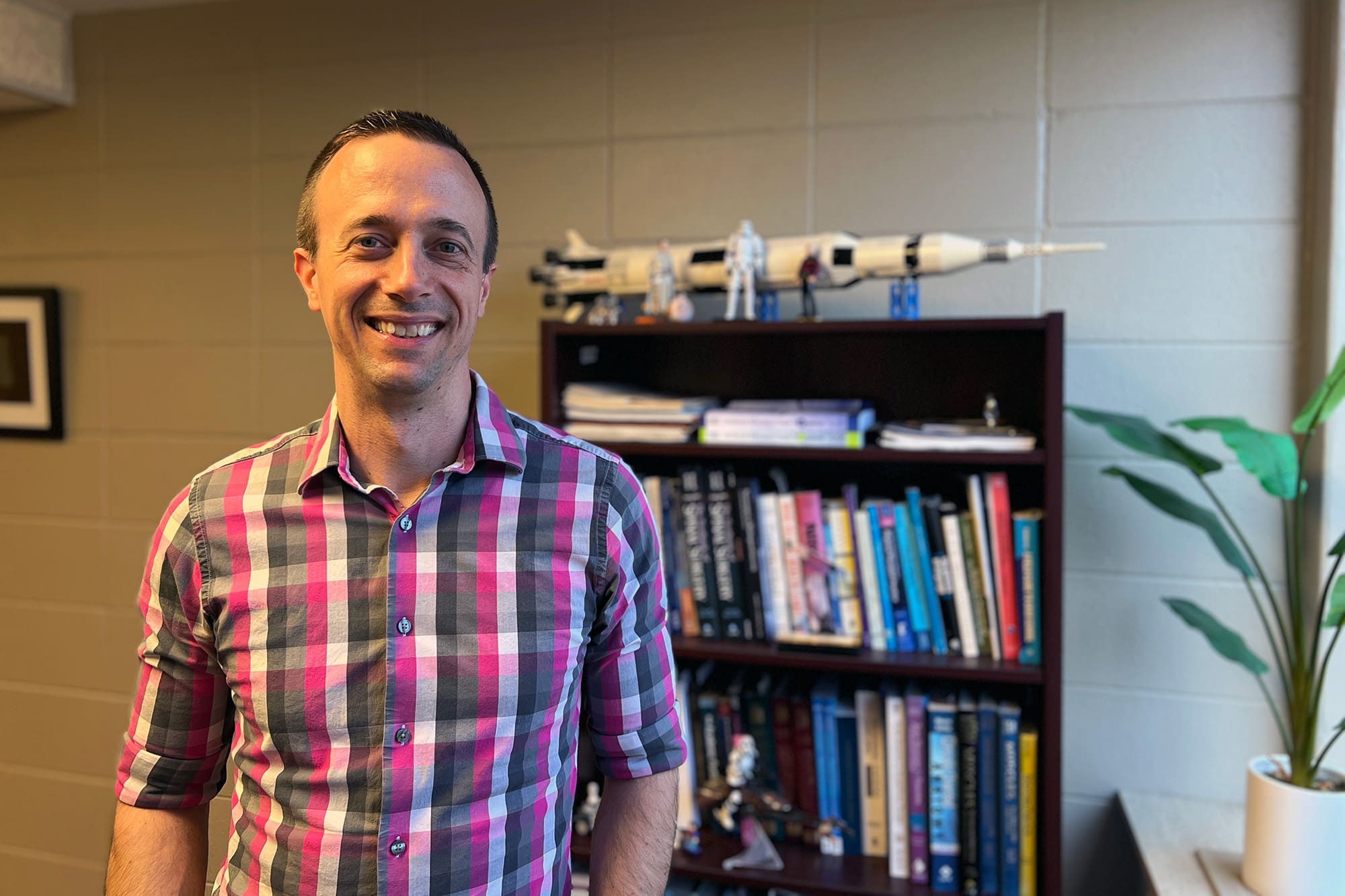
University of Missouri researchers Bill Janes and Noah Marchal are combining in-home sensor technology with artificial intelligence to monitor daily changes in ALS patients’ health, with the goal of enabling earlier interventions and improved quality of life. Utilizing sensors originally developed for monitoring older adults, the team at Mizzou’s School of Medicine and Institute for Data Science and Informatics is adapting the technology to track ALS progression in real time. This approach aims to detect subtle shifts in health—including changes in walking and sleeping patterns—and predict a patient’s score on the ALS Functional Rating Scale Revised (ALSFRS-R), potentially identifying issues before they escalate.
Tracking ALS Progression with Sensor Technology
University of Missouri researchers are developing a system to track ALS progression in real-time using in-home sensor technology combined with artificial intelligence. These sensors, originally designed for monitoring older adults, detect changes in behavior and physical activity – including walking and sleeping patterns. The goal is to identify subtle health shifts before patients or clinicians notice them, potentially allowing for earlier interventions and improved quality of life. The system wirelessly transmits data to university researchers for analysis.
The collected sensor data is used to estimate a patient’s score on the ALS Functional Rating Scale Revised (ALSFRS-R), a clinical tool measuring the impact of ALS on daily abilities. Utilizing machine learning, predictive models are built to anticipate changes in a patient’s functional status. Researchers aim to detect problems like gait or respiratory issues before they lead to falls or hospitalizations. This proactive approach intends to give clinicians timely information for adjusting care plans.
Currently, the research team is verifying the accuracy of the sensor data in reflecting real-world changes in patient function. The long-term vision is to integrate the system into clinical workflows, providing clinicians with a secure portal to view daily health trends. Positive feedback from participating families highlights the potential for increased connection and peace of mind. The study was published in Frontiers in Digital Health.
Adapting Home Monitoring for ALS Patients
University of Missouri researchers are adapting in-home sensor technology—originally developed for monitoring older adults—to track ALS progression in real-time. These sensors detect changes in behavior and physical activity, including walking and sleeping patterns, aiming to identify subtle health shifts before patients or clinicians notice them. The goal is to enable earlier interventions and improve quality of life by closing gaps in care between clinic visits, as current monitoring provides limited insight into daily health fluctuations.
The system utilizes wirelessly transmitted data from sensors in the home, securely transferred to university systems for analysis. Researchers are building predictive models using machine learning (a type of AI) to estimate a patient’s score on the ALS Functional Rating Scale Revised (ALSFRS-R)—a tool measuring daily abilities impacted by ALS. This allows for proactive monitoring, with the hope of detecting issues in gait or respiration before they lead to falls or hospitalization.
Currently, the team is verifying sensor data accuracy and preparing to integrate the system into clinical workflows. If the predictive models indicate a concerning decline, clinicians could receive alerts to check in with patients, adjust treatment, or recommend assistive devices. Early feedback from families participating in the study has been positive, highlighting a sense of connection and peace of mind provided by the system’s monitoring capabilities.
“Our goal is to not just track changes after they happen; we’re also trying to see them in advance,”
Noah Marchal
Integrating Data for Improved Clinical Workflows
Researchers are working to improve clinical care for ALS patients by integrating in-home sensor technology with artificial intelligence. Currently, tracking ALS progression relies on clinic visits, creating gaps in understanding a patient’s daily health. This new system uses sensors to detect subtle changes in behavior and physical activity—like walking and sleeping patterns—allowing for earlier detection of potential issues and proactive interventions, potentially before a patient even feels them.
The collected sensor data wirelessly transmits to university systems where researchers build predictive models using machine learning. These models estimate a patient’s score on the ALS Functional Rating Scale Revised (ALSFRS-R), a tool measuring how ALS impacts daily abilities. The goal is to anticipate changes – such as gait or respiration problems – before they lead to serious events like falls or hospitalization, offering a more proactive approach to care.
Ultimately, the project aims to integrate this system into routine clinical workflows. Clinicians could receive alerts when the model predicts a concerning decline, enabling them to adjust treatment, recommend assistive devices, or simply check in with the patient. Researchers envision a secure portal allowing clinicians to view daily health trends, similar to how ICU teams monitor telemetry, providing timely information for better patient management.