The immersive Friday Late event, co-programmed with MOTH, blends art, music, gaming, and talks to demonstrate the potential of quantum computing beyond traditional science. Attendees can explore interactive installations like Quantum Brush and Actias, alongside a live, quantum-generated remix of electronic artist ILĀ’s music, offering a glimpse into a future where quantum technology shapes creative expression. This event marks a significant step in making quantum concepts accessible and engaging for a wider audience. The evening promises immersive experiences exploring how quantum computing can inspire new forms of creativity in music, gaming, and visual art. Attendees will be invited to engage with installations that demonstrate the potential of quantum algorithms beyond traditional computational tasks.
Several interactive exhibits will allow visitors to directly experience these concepts, including Quantum Brush, a digital painting tool, and Actias, a quantum-inspired synthesiser. Meanwhile, the ILĀ X MOTH – RECURSE installation features an infinite remix of electronic artist ILĀ’s track, continuously generated in real time using MOTH’s Archaeo platform. This collaboration highlights an artist-first approach to generative AI, producing an ever-evolving soundscape for exploration.
Building on this, conversations with quantum experts will be held throughout the evening, featuring theoretical physicists Mark Mitchison and Eugene Lim from Kings College London. MOTH founder Harry Kumar will also join artist ILĀ and interdisciplinary scientist Konstantinos Meichanetzidis, alongside quantum application developer João Ferreira, to discuss the future of quantum-inspired creativity. These discussions aim to bridge the gap between scientific innovation and artistic vision.
Immersive Experiences Mirroring Present Reality
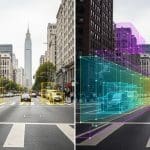
At Science Gallery London’s Friday Late, attendees can experience a novel installation titled “How can humans be certain about the future…?” This exhibit utilizes quantum computing to mirror the present moment, creating a dynamic and evolving reality encoded within quantum circuits, according to MOTH. The installation aims to confront visitors with the inherent uncertainty of both present perception and future prediction through an interactive display.
The experience translates the movement of crowds into a two-dimensional computational environment, subtly altered by a quantum algorithm. While only fleeting glimpses of the quantum-encoded reality are perceptible, the system demonstrates a direct link between physical presence and computational change, the company announced. Astryd Park, a quantum application engineer at MOTH who developed the project during her MSc at University of the Arts London, highlights the ambition to visualize complex computational processes through human interaction.
Building on this immersive approach, MOTH also presents “RECURSE” within the Studio space. This infinite remix of electronic artist ILĀ’s track is continuously generated in real-time using MOTH’s quantum platform, Archaeo. This collaboration showcases an artist-first approach to generative AI, creating an ever-evolving soundscape that responds to the environment and offers a unique auditory experience for visitors, according to the event description.
The Friday Late event at Science Gallery London showcases how MOTH is pioneering applications of quantum technology beyond traditional computation. By merging quantum principles with creative tools like Quantum Brush and Actias, they demonstrate a tangible shift towards experiential quantum interfaces. This development could enable new forms of artistic expression and immersive entertainment, directly linking abstract quantum phenomena to human perception.
For industries reliant on innovative digital content and interactive experiences, this represents a compelling preview of future possibilities. MOTH’s work extends the reach of quantum computing, suggesting a pathway where its power isn’t limited to solving complex problems, but also enriching creative and cultural landscapes.