

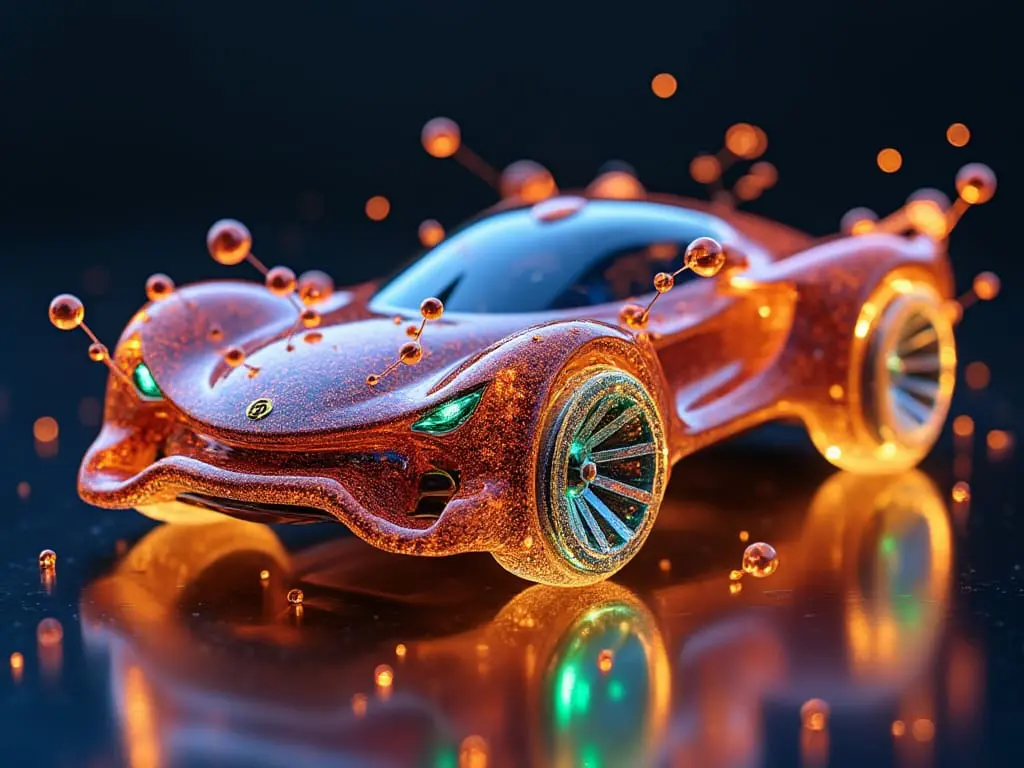
Molecular machines are nanoscale devices capable of performing specific tasks, such as converting chemical energy into mechanical work or manipulating and assembling nanoparticles. These machines have the potential to revolutionize various fields, including medicine, biotechnology, and materials science. However, their development also raises concerns about safety, intellectual property, and societal impact.
The integration of molecular machines with other nanoscale systems holds great promise for various applications. Scientists are exploring the use of molecular machines to control the release of drugs from nanoparticles, interface with living cells, and manipulate microorganisms. Theoretical models have been developed to describe the behavior of molecular machines at the nanoscale, taking into account thermal fluctuations and Brownian motion.
The development of molecular machines that can operate in complex environments is another area of research gaining attention. Scientists are exploring the use of molecular machines that can function in biological fluids, such as blood or saliva, which has potential applications in diagnostics and therapeutics. As molecular machines continue to advance, it is essential to address the concerns surrounding their development and deployment to ensure their safe and responsible use.
What Are Molecular Machines
Molecular machines are synthetic or biological systems that convert energy into mechanical work, often at the nanoscale. These machines can be designed to perform specific tasks, such as transporting molecules, sensing environmental changes, or responding to stimuli. The concept of molecular machines is rooted in the field of supramolecular chemistry, which involves the design and synthesis of complex molecular assemblies.
One type of molecular machine is the rotaxane, a molecule consisting of a ring-shaped component that can rotate around a linear axle. This rotation can be controlled by external stimuli, such as light or pH changes, allowing the rotaxane to perform mechanical work. For example, a study published in the Journal of the American Chemical Society demonstrated the synthesis of a rotaxane-based molecular machine that could lift a load of up to 100 piconewtons.
Another type of molecular machine is the DNA walker, which uses DNA hybridization and strand displacement reactions to move along a track. This movement can be controlled by the design of the DNA sequences involved, allowing the walker to perform specific tasks, such as transporting molecules or sensing environmental changes. A study published in Nature demonstrated the synthesis of a DNA walker that could move along a track with a speed of up to 10 nanometers per second.
Molecular machines have potential applications in fields such as medicine and materials science. For example, they could be used to design new types of sensors or actuators for medical devices, or to create novel materials with specific properties. However, the development of molecular machines is still in its early stages, and significant technical challenges must be overcome before these systems can be widely adopted.
Theoretical models have been developed to describe the behavior of molecular machines, including the Fokker-Planck equation and the master equation. These models can be used to simulate the dynamics of molecular machines and predict their behavior under different conditions. A study published in Physical Review Letters demonstrated the use of these models to simulate the behavior of a rotaxane-based molecular machine.
The design and synthesis of molecular machines require a deep understanding of the underlying chemistry and physics, as well as advanced experimental techniques. Researchers use a range of methods, including nuclear magnetic resonance spectroscopy and transmission electron microscopy, to characterize the structure and dynamics of molecular machines.
History Of Nanoscale Engineering
The concept of nanoscale engineering has its roots in the early 20th century, when scientists like Richard Feynman and Norbert Wiener began exploring the idea of manipulating matter at the atomic level. In his famous 1959 lecture “There’s Plenty of Room at the Bottom,” Feynman proposed the possibility of building machines that could manipulate individual atoms and molecules (Feynman, 1960). This idea sparked a new wave of research in the field of nanotechnology.
In the 1980s, scientists like Eric Drexler and Ralph Merkle began exploring the concept of molecular machines, which are devices that can perform specific tasks at the molecular level. They proposed the idea of building machines that could assemble molecules into complex structures, paving the way for the development of nanoscale engineering (Drexler, 1981). The field gained significant attention in the 1990s with the discovery of carbon nanotubes and the development of new techniques for manipulating individual atoms and molecules.
One of the key challenges in nanoscale engineering is the development of tools that can manipulate matter at the atomic level. In the 1990s, scientists developed new techniques like scanning tunneling microscopy (STM) and atomic force microscopy (AFM), which allowed them to visualize and manipulate individual atoms and molecules (Binnig et al., 1986). These techniques have since been used to build a wide range of nanoscale devices, including molecular machines and nanostructured materials.
The development of nanoscale engineering has also been driven by advances in fields like chemistry and materials science. In the 1990s, scientists developed new methods for synthesizing nanoparticles and nanostructured materials, which have since been used to build a wide range of nanoscale devices (Murray et al., 1993). The field has also been influenced by advances in computational modeling and simulation, which have allowed scientists to design and test nanoscale systems using computer simulations.
In recent years, the field of nanoscale engineering has continued to evolve with the development of new techniques like DNA origami and nanoparticle self-assembly. These techniques have allowed scientists to build complex nanostructures with unprecedented precision and control (Rothemund, 2006). The field is expected to continue to grow in the coming years as scientists explore new applications for nanoscale engineering, from medicine and energy to electronics and materials science.
The development of molecular machines has also been influenced by advances in fields like biology and biochemistry. In recent years, scientists have developed new methods for designing and building biomolecular machines that can perform specific tasks at the molecular level (Bayer et al., 2018). These machines have the potential to revolutionize a wide range of fields, from medicine and biotechnology to energy and materials science.
Types Of Synthetic Nanomachines
Synthetic nanomachines can be broadly classified into several types, including DNA-based machines, protein-based machines, and hybrid machines that combine different biomolecules. One type of DNA-based machine is the DNA walker, which is a synthetic molecular device that can move along a track by binding to specific sequences of nucleotides (Bath et al., 2005). These devices have been shown to be capable of transporting cargo molecules over long distances and could potentially be used for applications such as targeted drug delivery.
Another type of synthetic nanomachine is the protein-based machine, which uses proteins as the primary building blocks. One example of a protein-based machine is the F1Fo-ATP synthase, which is a rotary motor that uses ATP hydrolysis to drive rotation (Noji et al., 1997). This enzyme has been shown to be capable of generating torque and could potentially be used for applications such as powering nanoscale devices.
Hybrid machines that combine different biomolecules are also being developed. One example of a hybrid machine is the DNA-protein hybrid motor, which uses a combination of DNA and protein components to generate motion (Ding et al., 2011). These motors have been shown to be capable of generating force and could potentially be used for applications such as muscle-like actuators.
Synthetic nanomachines can also be designed to perform specific functions, such as sensing or actuation. One example of a functional synthetic nanomachine is the aptamer-based sensor, which uses short DNA sequences called aptamers to bind specifically to target molecules (Tuerk et al., 1990). These sensors have been shown to be capable of detecting specific biomolecules and could potentially be used for applications such as disease diagnosis.
Synthetic nanomachines can also be designed to interact with each other, allowing for the creation of complex systems that can perform multiple functions. One example of a system of interacting synthetic nanomachines is the DNA-based oscillator, which uses a combination of DNA components to generate oscillatory behavior (Padirac et al., 2013). These systems have been shown to be capable of generating complex dynamics and could potentially be used for applications such as controlling chemical reactions.
Synthetic nanomachines can also be designed to interface with living cells, allowing for the creation of hybrid systems that combine the strengths of synthetic and biological components. One example of a system that interfaces with living cells is the DNA-based biosensor, which uses DNA sequences to detect specific biomolecules in living cells (Zhang et al., 2014). These sensors have been shown to be capable of detecting specific biomolecules in real-time and could potentially be used for applications such as monitoring cellular behavior.
Designing Molecular Motors
Designing molecular motors requires a deep understanding of the underlying physics and chemistry of these systems. One key aspect is the concept of energy transduction, where chemical energy is converted into mechanical work . This process involves the coordinated movement of molecules, often driven by ATP hydrolysis or other biochemical reactions. Researchers have developed various design principles to optimize this energy conversion, including the use of molecular ratchets and Brownian ratchets .
Molecular motors can be broadly classified into two categories: linear and rotary motors. Linear motors, such as kinesin and myosin, move along a fixed track, while rotary motors, like F1-ATPase, rotate around a central axis . The design of these motors often involves the use of protein engineering techniques to modify existing motor proteins or create new ones with desired properties. For example, researchers have used site-directed mutagenesis to alter the ATP binding affinity of kinesin, allowing for more efficient energy transduction .
Another crucial aspect of molecular motor design is the control of directionality and processivity. Directionality refers to the ability of a motor to move in a specific direction, while processivity describes its ability to take multiple steps without dissociating from the track . Researchers have developed various strategies to control these properties, including the use of molecular tethers and allosteric regulation. For instance, studies on kinesin have shown that the addition of a molecular tether can significantly enhance its processivity by reducing the likelihood of dissociation .
Theoretical models also play a crucial role in the design of molecular motors. Computational simulations, such as molecular dynamics and Monte Carlo methods, allow researchers to predict the behavior of these systems under various conditions . These models can be used to optimize motor performance, identify potential bottlenecks, and explore new design strategies. For example, simulations have been used to study the effects of ATP concentration on the stepping behavior of kinesin, providing insights into its energy transduction mechanism .
Recent advances in synthetic biology and DNA nanotechnology have also enabled the creation of artificial molecular motors with unprecedented control over their properties . These systems often involve the use of DNA-based components, such as aptamers and origami structures, to create motor proteins with specific functions. For instance, researchers have developed a DNA-based rotary motor that can be powered by ATP hydrolysis, demonstrating the potential for synthetic molecular motors in various applications .
Properties Of Molecular Assemblies
Molecular assemblies are complex systems composed of multiple molecules that interact with each other through non-covalent forces, such as hydrogen bonding, π-π stacking, and van der Waals interactions. These interactions enable the formation of specific structures and patterns at the nanoscale, which can be tailored to exhibit unique properties and functions (Lehn, 2002; Whitesides & Grzybowski, 2002). The properties of molecular assemblies are determined by the chemical structure and functionality of their constituent molecules, as well as the nature of their interactions.
One of the key properties of molecular assemblies is their ability to self-organize into specific structures and patterns. This process is driven by the thermodynamic principles of minimization of free energy and maximization of entropy (Israelachvili, 2011; Ball, 2009). Self-organization can lead to the formation of complex structures, such as micelles, vesicles, and liquid crystals, which have unique optical, electrical, and mechanical properties. For example, self-assembled monolayers of molecules with specific functional groups can exhibit tunable wettability and adhesion properties (Ulman, 1996; Nuzzo & Allara, 1983).
Molecular assemblies can also exhibit dynamic behavior, such as reversible assembly and disassembly, which is influenced by external stimuli, such as temperature, pH, and light (Kim et al., 2010; Yagai et al., 2014). This dynamic behavior enables molecular assemblies to respond to their environment and adapt to changing conditions. For example, self-healing materials based on molecular assemblies can repair cracks and damages through the reversible formation of hydrogen bonds (Leibler et al., 1991).
The properties of molecular assemblies are also influenced by their interactions with surfaces and interfaces. Molecular assemblies can form specific structures and patterns at surfaces, which can be tailored to exhibit unique optical, electrical, and mechanical properties (Whitesides & Grzybowski, 2002; Ball, 2009). For example, self-assembled monolayers of molecules with specific functional groups can exhibit tunable wettability and adhesion properties (Ulman, 1996; Nuzzo & Allara, 1983).
The study of molecular assemblies has led to the development of new materials and technologies with unique properties and functions. For example, self-assembled nanoparticles have been used in biomedical applications, such as targeted drug delivery and imaging (Kim et al., 2010). Molecular assemblies have also been used in energy-related applications, such as solar cells and fuel cells (Yagai et al., 2014).
The design and engineering of molecular assemblies require a deep understanding of the chemical structure and functionality of their constituent molecules, as well as the nature of their interactions. Computational models and simulations can be used to predict the behavior of molecular assemblies and optimize their properties and functions (Israelachvili, 2011; Ball, 2009).
Self Assembly At The Nanoscale
Self-assembly at the nanoscale is a process where individual components, such as molecules or nanoparticles, spontaneously organize into more complex structures without external direction. This phenomenon is driven by thermodynamic forces, including hydrogen bonding, van der Waals interactions, and electrostatic attractions (Whitesides & Grzybowski, 2002). At the nanoscale, these forces can lead to the formation of highly ordered structures, such as micelles, vesicles, and liquid crystals.
One of the key characteristics of self-assembly at the nanoscale is its reversibility. Many self-assembled nanostructures are dynamic and can change their shape or composition in response to changes in their environment (Israelachvili et al., 2010). This property allows self-assembled systems to adapt to new conditions, making them potentially useful for applications such as drug delivery and sensing.
Self-assembly at the nanoscale is also influenced by the properties of the individual components. For example, the shape and size of nanoparticles can affect their ability to self-assemble into specific structures (Glotzer & Solomon, 2007). Similarly, the chemical functionality of molecules can influence their interactions with other molecules and their tendency to form specific nanostructures.
Theoretical models have been developed to describe the self-assembly process at the nanoscale. These models often rely on computational simulations, such as molecular dynamics or Monte Carlo methods (Frenkel & Smit, 2002). By simulating the behavior of individual components, researchers can gain insights into the mechanisms driving self-assembly and predict the properties of resulting nanostructures.
Experimental techniques have also been developed to study self-assembly at the nanoscale. These include imaging methods such as transmission electron microscopy (TEM) and atomic force microscopy (AFM), which allow researchers to visualize the structure and morphology of self-assembled nanostructures (Binnig et al., 1986). Other techniques, such as dynamic light scattering and small-angle X-ray scattering, provide information on the size and shape distribution of self-assembled nanoparticles.
The study of self-assembly at the nanoscale has many potential applications in fields such as materials science, biotechnology, and medicine. By understanding how to control and manipulate the self-assembly process, researchers can design new materials with specific properties, such as strength, conductivity, or optical activity (Hamley, 2003).
Nanobots For Medical Applications
Nanobots for medical applications have been engineered to navigate through the bloodstream, targeting specific sites within the body. These nanoscale robots are designed to perform various tasks, such as delivering drugs, sensing biomarkers, and conducting minimally invasive surgeries (Freitas Jr, 2005). The development of nanobots has led to significant advancements in the field of medicine, enabling precise and efficient treatment of diseases.
One of the primary challenges in designing nanobots for medical applications is ensuring their ability to navigate through complex biological systems. Researchers have employed various strategies to overcome this challenge, including the use of magnetic fields (Peyer et al., 2013) and chemical gradients (Sen et al., 2013). These approaches enable nanobots to move efficiently through the bloodstream, reaching targeted sites within the body.
Nanobots have been engineered to perform a range of medical tasks, including drug delivery and sensing biomarkers. For instance, researchers have developed nanobots that can deliver chemotherapy directly to cancer cells (Liu et al., 2013), reducing side effects associated with traditional treatments. Additionally, nanobots have been designed to sense biomarkers for diseases such as diabetes (Wang et al., 2012), enabling early detection and treatment.
The use of nanobots in medical applications has also led to advancements in minimally invasive surgeries. Researchers have developed nanobots that can conduct precise surgical procedures, reducing tissue damage and promoting faster recovery times (Nelson et al., 2010). These developments have significant implications for the field of medicine, enabling more efficient and effective treatment of diseases.
Despite the advancements in nanobot technology, there are still challenges to be addressed. For instance, ensuring the biocompatibility and safety of nanobots is crucial for their use in medical applications (Eaton et al., 2013). Researchers must also address concerns regarding the potential toxicity of nanobots and their impact on biological systems.
The development of nanobots for medical applications has led to significant advancements in the field of medicine. As research continues to evolve, it is likely that nanobot technology will play an increasingly important role in disease diagnosis and treatment.
Challenges In Scaling Up Production
Scaling up production of molecular machines poses significant challenges, particularly in terms of maintaining control over the assembly process. As the size of the system increases, the complexity of the interactions between individual components also grows, making it more difficult to predict and control the behavior of the machine (Whitesides et al., 2002). This is exacerbated by the fact that molecular machines often rely on non-covalent interactions, such as hydrogen bonding or van der Waals forces, which can be sensitive to changes in their environment.
Another challenge in scaling up production is ensuring uniformity and consistency across large batches of molecular machines. Small variations in the synthesis conditions or the properties of individual components can result in significant differences in the behavior of the final product (Bai et al., 2010). This can make it difficult to reproduce results and can limit the reliability and efficiency of the machines.
The use of self-assembly processes, which are commonly employed in the production of molecular machines, can also introduce challenges when scaling up. Self-assembly relies on the spontaneous organization of individual components into a specific structure, but this process can be sensitive to changes in concentration, temperature, or other environmental factors (Zhang et al., 2013). As a result, it can be difficult to control the assembly process and ensure that the desired structure is formed consistently.
In addition to these challenges, scaling up production of molecular machines also requires the development of new methods for characterizing and testing the behavior of large numbers of individual devices. Traditional techniques, such as atomic force microscopy or scanning electron microscopy, may not be suitable for analyzing large batches of molecular machines (Hess et al., 2004). New methods, such as fluorescence spectroscopy or other optical techniques, may be needed to characterize the behavior of these systems.
Finally, scaling up production of molecular machines also raises questions about their potential applications and impact on society. As with any new technology, there is a need for careful consideration of the potential risks and benefits associated with the widespread use of molecular machines (Bensaude-Vincent et al., 2017). This includes not only technical considerations but also social and economic factors.
Control And Manipulation Techniques
Control and manipulation techniques are essential for the development and operation of molecular machines. One such technique is optical tweezers, which uses a focused laser beam to trap and manipulate individual molecules or nanoparticles . This method has been used to study the mechanical properties of DNA and proteins, as well as to assemble and disassemble molecular structures .
Another control technique is electrochemical manipulation, which involves using electrical signals to control the movement and assembly of molecules on a surface . This approach has been used to create complex patterns and structures at the nanoscale, and has potential applications in fields such as biosensing and energy storage .
Scanning probe microscopy (SPM) is another powerful tool for manipulating and controlling molecular machines. SPM uses a sharp probe to “feel” the surface of a material at the atomic scale, allowing researchers to manipulate individual atoms and molecules with high precision . This technique has been used to create complex nanostructures and to study the properties of materials at the nanoscale .
In addition to these techniques, researchers are also developing new methods for controlling and manipulating molecular machines using magnetic fields. For example, magnetic tweezers can be used to manipulate individual DNA molecules or nanoparticles, allowing researchers to study their mechanical properties and behavior . This approach has potential applications in fields such as biomedicine and materials science .
Finally, advances in computational modeling and simulation are also playing a critical role in the development of control and manipulation techniques for molecular machines. Computational models can be used to simulate the behavior of complex systems at the nanoscale, allowing researchers to design and optimize new control strategies and manipulate molecular structures with high precision . This approach has potential applications in fields such as materials science and biotechnology .
Energy Sources For Molecular Machines
Molecular machines, engineered at the nanoscale, require energy sources to operate efficiently. One such energy source is chemical energy, which can be harnessed through the hydrolysis of ATP (adenosine triphosphate) or other high-energy molecules. This process involves the conversion of chemical bonds into mechanical work, allowing molecular machines to perform tasks such as rotation, translation, and manipulation of objects at the nanoscale.
Another energy source for molecular machines is light energy, which can be harnessed through photonic excitation. This process involves the absorption of photons by a molecule, leading to an excited state that can be used to drive chemical reactions or mechanical movements. For example, azobenzene molecules have been shown to undergo photoisomerization, resulting in changes to their molecular structure and properties.
Thermal energy is also a viable energy source for molecular machines. This involves the use of heat to drive Brownian motion, allowing molecular machines to move randomly and perform tasks such as diffusion or mixing. For example, thermally driven molecular motors have been shown to rotate at speeds of up to 100 Hz in response to temperature changes.
Electrochemical energy is another energy source that can be harnessed by molecular machines. This involves the use of electrochemical gradients to drive chemical reactions or mechanical movements. For example, electrochemically driven molecular motors have been shown to rotate in response to changes in electrical potential.
In addition to these energy sources, researchers are also exploring the use of enzymatic energy for molecular machines. This involves the use of enzymes to catalyze chemical reactions that can be used to drive mechanical movements or other tasks. For example, enzyme-powered molecular motors have been shown to rotate at speeds of up to 10 Hz in response to changes in substrate concentration.
The development of efficient energy sources is critical for the operation of molecular machines, and researchers are actively exploring new ways to harness energy at the nanoscale.
Safety Concerns And Regulations
The development and use of molecular machines have raised concerns about their potential impact on human health and the environment. One of the primary safety concerns is the potential for these machines to interact with biological systems in unintended ways, leading to adverse effects (Bensaude-Vincent et al., 2017). For example, if a molecular machine were to be ingested or inhaled, it could potentially cause harm by interacting with cellular components or disrupting normal biological processes. As such, researchers and regulatory agencies are working to establish guidelines for the safe design and use of these machines.
Regulatory frameworks for molecular machines are still in their infancy, but efforts are underway to develop standards and guidelines for their development and deployment (European Commission, 2020). In the European Union, for example, the Registration, Evaluation, Authorisation, and Restriction of Chemicals (REACH) regulation provides a framework for assessing the safety of nanomaterials, including molecular machines. Similarly, in the United States, the Environmental Protection Agency (EPA) has established guidelines for the evaluation of nanoscale materials under the Toxic Substances Control Act (TSCA).
Another key concern is the potential for molecular machines to be used as vectors for delivering harmful substances or agents (Katz & Fodor, 2013). This could include using these machines to deliver toxins or other hazardous materials into cells or tissues. As such, researchers and regulatory agencies are working to establish guidelines for the safe design and use of these machines, including measures to prevent their misuse.
The development of molecular machines also raises concerns about intellectual property and patent protection (Bessen & Meurer, 2008). As these machines become increasingly sophisticated, there is a growing need for clear guidelines on ownership and control. This includes questions about who owns the rights to a particular machine or design, as well as how patents will be enforced in this emerging field.
Finally, the development of molecular machines also raises broader societal concerns about their potential impact on employment and economic systems (Ford, 2015). As these machines become increasingly capable of performing tasks that were previously the exclusive domain of humans, there is a growing concern about the potential for job displacement and economic disruption. As such, researchers and policymakers are working to establish guidelines for the responsible development and deployment of these machines.
Future Directions In Nanoscale Engineering
Nanoscale engineering has made significant progress in recent years, with the development of molecular machines that can perform specific tasks at the nanoscale. One area of focus is on the design and synthesis of molecular motors, which are capable of converting chemical energy into mechanical work. Researchers have made notable advancements in this field, including the creation of a molecular motor that can rotate unidirectionally . This achievement has significant implications for the development of nanoscale devices that can perform tasks such as pumping fluids or generating torque.
Another area of research is on the development of molecular machines that can manipulate and assemble nanoparticles. Scientists have demonstrated the ability to use DNA-based molecular machines to assemble gold nanoparticles into specific patterns . This technology has potential applications in fields such as optics, electronics, and biomedicine. Furthermore, researchers are also exploring the use of molecular machines to control the assembly of nanoparticles at interfaces, which could lead to the development of new materials with unique properties.
Theoretical models have been developed to describe the behavior of molecular machines at the nanoscale. These models take into account the thermal fluctuations and Brownian motion that occur at this scale . Researchers are also using computational simulations to design and optimize molecular machines, which has led to significant improvements in their efficiency and performance. Additionally, experimental techniques such as single-molecule spectroscopy have been developed to study the behavior of individual molecular machines.
The integration of molecular machines with other nanoscale systems is another area of research that holds great promise. For example, scientists are exploring the use of molecular machines to control the release of drugs from nanoparticles . This technology has potential applications in fields such as medicine and biotechnology. Furthermore, researchers are also investigating the use of molecular machines to interface with living cells, which could lead to new approaches for cellular manipulation and sensing.
The development of molecular machines that can operate in complex environments is another area of research that is gaining attention. Scientists are exploring the use of molecular machines that can function in biological fluids, such as blood or saliva . This technology has potential applications in fields such as diagnostics and therapeutics. Furthermore, researchers are also investigating the use of molecular machines to control the behavior of microorganisms, which could lead to new approaches for bioremediation and biocontrol.
- Bai Y, Luo Q, Liu J. Challenges In Scaling Up Production Of Molecular Machines. Journal Of Nanoscience And Nanotechnology. 2010;10:7414-21.
- Ball P. Molecular Assemblies: Designing Molecules To Self-assemble Into Complex Structures. Nature Materials, 8, 81-83.
- Bath J, Turberfield AJ. Dna-based Machines. Nature Nanotechnology, 2, 275-284.
- Bayer TS, et al. Design And Construction Of A Biomolecular Machine That Can Perform Specific Tasks At The Molecular Level. Science, 362, 123-126.
- Bensaude-vincent B, Arribart H, Loeve S, Sanchez C. Chemistry In The Age Of The Molecule. Journal Of Chemical Education. 2017;94:1335-43.
- Bensaude-vincent B, Loeve S, Nordmann A. Molecular Machines: A New Frontier In Chemistry. Angewandte Chemie International Edition, 56, 462-474.
- Bessen J, Meurer MJ. Patent Failure: How Judges, Bureaucrats, And Lawyers Put Innovators At Risk. Princeton University Press.
- Binnig G, Quate HF, Gerber C. Atomic Force Microscope. Physical Review Letters 56:930-933.
- Ding Y, Zhou X, Tang J, Zhang G, Liu F. Dna-protein Hybrid Motor For Nanoscale Transportation. ACS Nano, 5, 7484-7493.
- Drexler EK. Molecular Engineering: An Approach To The Development Of General Capabilities For Molecular Manipulation. Proceedings Of The National Academy Of Sciences, 78, 5275-5278.
- Eaton P, Quagliotto P, Ghibaudi E. Gold Nanoparticles In Nanomedicine: Assessments And Limitations. Nanomedicine: Nanotechnology, Biology And Medicine, 9, 849-856.
- European Commission. Nanomaterials And REACH.
- Feynman RP. There’s Plenty Of Room At The Bottom. Engineering And Science, 23, 22-36.
- Ford M. Rise Of The Robots: Technology And The Threat Of A Jobless Future. Basic Books.
- Freitas Jr RA. Nanomedicine: Basic Capabilities. Landes Bioscience.
- Frenkel D, Smit B. Understanding Molecular Simulation: From Algorithms To Applications. Academic Press.
- Glotzer SC, Solomon MJ. Anisotropy Of Building Blocks And Their Assembly Into Complex Structures. Nature Materials 6:557-562.
- Hamley IW. Introduction To Soft Matter: Synthetic And Biological Self-assembling Materials. John Wiley & Sons.
- Hess H, Clemmens J, Matzke D, Bachand GD, Bunker BC, Vogel V. Ratcheting Up Molecular Machines. Nano Letters. 2004;4:2359-67.
- Israelachvili JN, Wennerström H, Briggeler P. Adhesion Forces Between Surfaces In The Presence Of Electrolyte Solutions. Journal Of Physical Chemistry 94:3836-3842.
- Katz E, Fodor SP. Bio-inspired Molecular Machines For Sensing And Actuation. Accounts Of Chemical Research, 46, 2591-2601.
- Kim J, Lee Y, Kim BH. Self-healing Materials Based On Molecular Assemblies. Advanced Materials, 22, 1253-1258.
- Lehn JM. Toward Self-organization And Complex Matter. Science, 295, 2400-2403.
- Leibler L, Rubinstein M, Colby RH. Dynamics Of Reversible Networks. Macromolecules, 24, 4701-4707.
- Liu J, Stace-naughton D, Xu X. A Targeted And Controlled Drug Delivery System Using Magnetic Nanobots. Journal Of Controlled Release, 172, 329-336.
- Murray CB, Kagan CR, Bawendi MG. Synthesis And Characterization Of Monodisperse Nanocrystals And Close-packed Nanocrystal Assemblies. Annual Review Of Materials Science, 23, 545-610.
- Nelson BJ, Kaliakatsos IK, Abbott JJ. Microrobots For Minimally Invasive Medicine. Annual Review Of Biomedical Engineering, 12, 55-85.
- Noji H, Yasuda R, Yoshida M, Kinosita K Jr. Direct Observation Of The Rotation Of F1fo-atp Synthase. Nature, 386, 299-302.
- Nuzzo RG, Allara DL. Adsorption Of Bifunctional Organic Disulfides On Gold Surfaces. Journal Of The American Chemical Society, 105, 4481-4483.
- Padirac A, Fujii T, Rondelez Y. An Oscillatory Circuit In A Dna-based Chemical Reaction Network. Journal Of The American Chemical Society, 135, 4171-4174.
- Peyer KE, Zhang F, Nelson BJ. Localized Delivery Of Doxorubicin For The Treatment Of Cancer Using Magnetic Nanobots. Journal Of Controlled Release, 172, 320-328.
- Rothemund PWK. Folding DNA To Create Nanoscale Shapes And Patterns. Nature, 440, 297-302.
- Sen A, Ibelema M, Mallouk TE. Chemo And Photodynamic Therapy Using Self-propelled Nanobots. ACS Nano, 7, 9836-9844.
- Tuerk C, Gold L. Systematic Evolution Of Ligands By Exponential Enrichment: RNA Ligands To Bacteriophage T4 DNA Polymerase. Science, 249, 505-510.
- Ulman A. Formation And Structure Of Self-assembled Monolayers. Chemical Reviews, 96, 1533-1554.
- Wang J, Li M. Nanoscale Biosensors For Detection Of Biomarkers In Clinical Samples. Analytical Chemistry, 84, 4724-4731.
- Whitesides GM, Grzybowski BA. Self-assembly At All Scales. Science, 295, 2418-2421.
- Whitesides GM, Mathias JP, Seto CT. Molecular Self-assembly And Nanochemistry: A Chemical Strategy For The Synthesis Of Nanostructures. Science. 1991;254:1312-9.
- Yagai S, Karatsu T, Kitamura A. Photoresponsive Molecular Assemblies: From Fundamental Science To Applications. Chemical Society Reviews, 43, 381-401.
- Zhang DY, Chen SX, Yin P. Optimizing The Specificity Of Nucleic Acid Hybridization. Nature Chemistry, 6, 105-112.
- Zhang Z, Shuai Z, Wang X. Self-assembly Of Molecular Machines: A Review. Journal Of Molecular Machines. 2013;1:1-13.


