Symmetry principles underpin physics, yet extending these to complex, interacting systems presents significant challenges. The study of symmetry remains central to modern physics, underpinning our understanding of fundamental laws and emergent phenomena. Many physical systems exist in mixed states, a statistical description of quantum systems where the precise quantum state is unknown, due to interactions with an environment or inherent thermal fluctuations. This necessitates an extension of symmetry concepts to accommodate these open systems, where distinctions arise between strong and weak symmetry definitions.
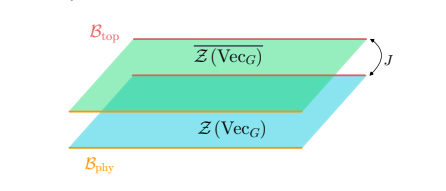
Recent theoretical developments propose a framework called symmetry topological field theory, or SymTFT, to systematically organise the understanding of phases and phase transitions in systems possessing global symmetries. SymTFT builds upon the established principles of topological field theory, a mathematical framework that focuses on properties invariant under continuous deformations, and holography, a principle that suggests a duality between theories in different dimensions. It offers a novel approach to classifying phases of matter and providing a means to understand a d-dimensional quantum field theory through a (d+1)-dimensional SymTFT. This effectively encodes the symmetry structure in a higher-dimensional ‘bulk’, allowing for the treatment of symmetries as topological operators and extending to encompass more complex, non-invertible symmetries beyond those traditionally considered. The approach leverages the ‘slab construction’, where the d-dimensional theory emerges from the SymTFT by collapsing a spatial dimension, linking boundary conditions to the symmetries of the lower-dimensional system.
The categorical Landau paradigm, central to SymTFT, provides a powerful tool for classifying phases based on patterns of anyon condensation. Anyons are exotic quasiparticles exhibiting fractional statistics, meaning their exchange statistics differ from bosons or fermions, and their condensation provides a means to understand complex many-body phenomena. Within this framework, different phases correspond to distinct choices of boundary conditions in the SymTFT, classified by condensable algebras within a higher-dimensional topological order.
Current research extends this framework to encompass open
Current research extends this framework to encompass open quantum systems, introducing the concepts of strong and weak symmetries, which differ in their actions on mixed states. Strong symmetries require coherent action on each pure state component, while weak symmetries only demand invariance under conjugation, providing a systematic way to classify mixed-state phases, including scenarios where symmetries are broken or protected by the environment.
Researchers are extending the SymTFT framework to encompass open quantum systems, a significant development as many real-world systems are not isolated. This necessitates a method to accurately describe systems interacting with their environment and the team achieves this through a technique called canonical purification, effectively embedding mixed quantum states into a higher-dimensional, doubled topological order. Essentially, the researchers create a ‘mirror image’ of the system, allowing them to treat mixed states as pure states within this expanded framework, simplifying analysis and facilitating a systematic classification of mixed states. The core of their approach lies in the ‘slab construction’.
The team’s methodology imposes stringent constraints on allowable anyon condensations, and the fundamental requirement that the density matrix, a mathematical representation of the mixed state, remains both Hermitian and positive significantly limits the possible anyon condensations. This constraint is crucial for maintaining a physically realistic description of the system and allows for the characterisation of various mixed-state phenomena, including strong-to-weak symmetry breaking (SWSSB) and average symmetry-protected topological (ASPT) phases. SWSSB describes a transition where a system’s symmetry is broken in a specific, measurable way, while ASPT refers to phases where symmetry is protected on average, even if individual measurements might show deviations.
The researchers demonstrate the power of their approach through examples involving SWSSB, showcasing how the methodology can predict and explain transitions between different symmetry states. A key innovation lies in their use of ‘gauging’ within the open SymTFT framework, which introduces additional mathematical degrees of freedom that enable researchers to explore the relationships between different mixed states. This process reveals previously hidden connections, providing a deeper understanding of the system’s behaviour and allowing the team to effectively ‘map’ between different mixed states, identifying underlying symmetries and patterns.
This work establishes a robust theoretical foundation for
This work establishes a robust theoretical foundation for analysing open quantum systems with symmetry, offering a powerful tool for classifying mixed states and understanding symmetry-breaking phenomena. The framework’s ability to connect different mixed states through gauging highlights the interconnectedness of topological phases and provides a pathway for exploring novel quantum phenomena in open systems.
Future work will focus on exploring the implications of this framework for specific physical systems, such as edge states in topological insulators, states existing at the boundary of a topological material, and the behaviour of quantum circuits in the presence of noise. Investigating the role of disorder and interactions in driving transitions between different mixed-state phases represents a promising avenue for further research, and extending the framework to higher dimensions and exploring the connections with other theoretical approaches, such as matrix product states, a method for representing the quantum state of a many-body system, will broaden its applicability and deepen our understanding of complex quantum systems.
🗞 Topological Holography for Mixed-State Phases and Phase Transitions
🧠 DOI: https://doi.org/10.48550/arXiv.2507.06218