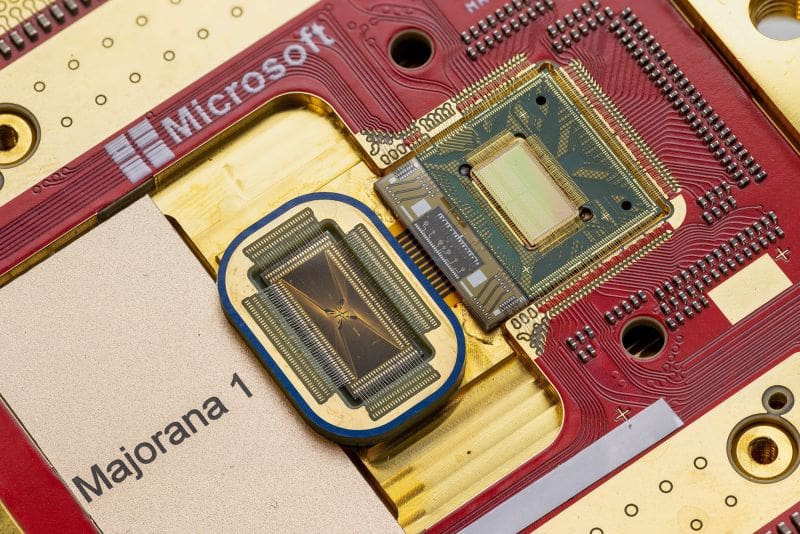
Microsoft is developing a quantum computer prototype, the Majorana 1, leveraging research initiated by theoretical physicist Chetan Nayak, who received U.S. National Science Foundation (NSF) funding through a CAREER grant from 2000 to 2006 while at UCLA. Nayak joined Microsoft in 2005 and now leads the company’s quantum computing efforts, based on his NSF-supported theories concerning Majorana fermions – particles first predicted in the 1930s. The company aims to create a quantum computer capable of accelerating materials discovery and pharmaceutical research, competing with other firms in the emerging field.
Microsoft’s Quantum Advance
Microsoft’s prototype chip, designated the Majorana 1, represents a current contender in the development of functional quantum computers, machines theorised to exceed the capabilities of classical computers in specific, computationally intensive tasks. These tasks include simulating molecular interactions, with potential applications in accelerating the discovery of new medicines and materials. The chip’s computational abilities rely on its capacity to control an unusual state of matter, distinguishing it from other quantum computing technologies currently under development.
The approach adopted by Microsoft centres on harnessing the properties of a particle initially predicted in the 1930s by Ettore Majorana, a theoretical physicist, and named in his honour. This particle, a Majorana fermion, remained theoretical for over seventy years before researchers, including those supported by the U.S. National Science Foundation, discovered that specific arrangements of solid materials might exhibit its behaviour. Theoretical physicist Chetan Nayak received an NSF Faculty Early Career Development grant in 2000 at UCLA to explore the physical attributes and theoretical potential of topological materials, which exhibit unique electronic properties.
Nayak subsequently joined Microsoft in 2005, where he now leads the company’s efforts to physically implement his NSF-funded theories in the development of a functional quantum computer. Daryl Hess, a program director at the NSF Division of Materials Research, highlights the necessity of entirely new concepts for genuinely transformative technologies, emphasising the importance of bold new ideas woven together through theory. Microsoft’s work, alongside that of other companies, aims to produce a quantum computer capable of aiding the discovery of new superconducting materials, medicines, and other valuable substances, demonstrating potential applications in diverse fields and driving research into quantum computing applications.
The Pursuit of Majorana Fermions
The computational capabilities of Microsoft’s chip, designated the Majorana 1, depend on its ability to control an unusual state of matter, and its approach is notably exotic amongst the diverse quantum computing technologies currently under development. Microsoft’s chip represents the most advanced attempt yet to harness the properties of a particle first predicted in the 1930s by Italian theoretical physicist Ettore Majorana. This particle, a Majorana fermion, remained entirely theoretical for over seventy years before researchers, many supported by the U.S. National Science Foundation, discovered that thin-layered arrangements of certain solid materials might reveal its behaviour.
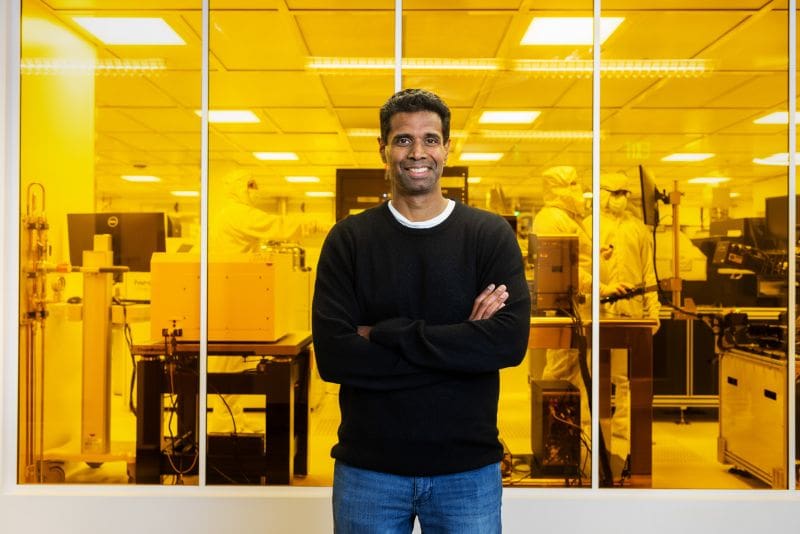
In 2000, theoretical physicist Chetan Nayak received an NSF Faculty Early Career Development grant at UCLA to explore the physical attributes and theoretical potential of systems based on newly discovered topological materials, which exhibit unique electronic properties due to their internal structure. Nayak joined Microsoft in 2005, where he now leads the company’s effort to develop a functional quantum computer by physically implementing his NSF-funded theories. Daryl Hess, program director in the NSF Division of Materials Research, oversaw Nayak’s NSF CAREER grant from 200- and emphasizes that genuinely transformative new technologies require entirely new concepts.
More information
External Link: Click Here For More