
Microsoft is one of the top three language players in the Quantum space where it supports the open source language Q#. Other open-source languages such as Qiskit and Cirq from IBM and Google are challengers to be the most adopted Quantum languages employed by developers and researchers. In the quest to own the Quantum Computing ecosystem, each language is supporting existing developers and hoping to bring new developer’s into the fold. Now Microsoft is making it easier for learners to find their level of quantum computing and aims to build a curriculum around their specific needs.
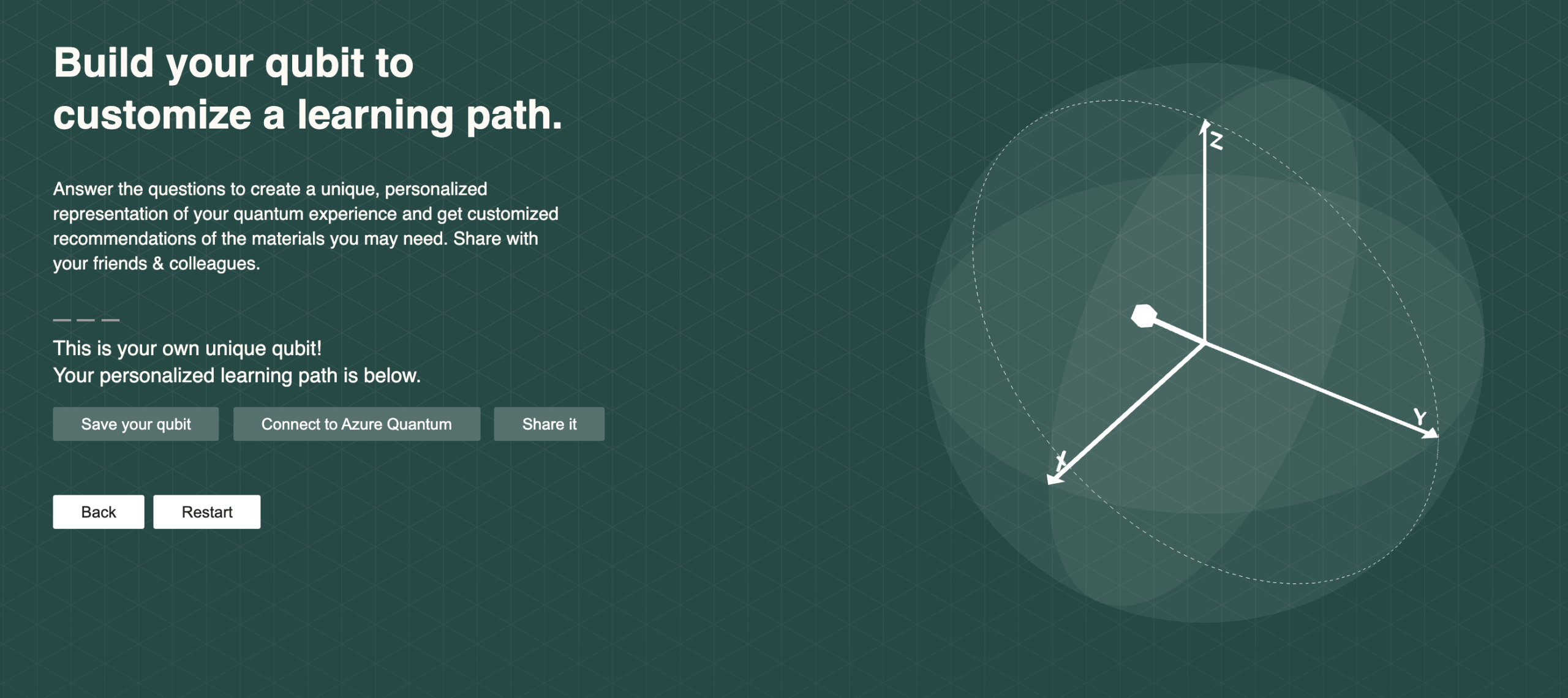
Microsoft’s new innovative interface allows users to answer questions about their quantum computing understanding, with a series of questions on what you want to learn and what your existing skill base actually is. Microsoft’s recommender then kicks in to suggest some of the quantum courses that you might find useful. There is even a very neat Qubit visualisation which take your data and plonks that information onto your very own unique Qubit projection which can be saved, stored or shared.
There is plenty of diversity of learning materials available, everything from Quantum Katas (a very popular training series) to basic introductions to Q#. The Quantum Katas, for example, are a collection of self-paced tutorials and programming exercises to help students learn quantum computing and Q# programming. Of course the language is one part of the process, the Azure Quantum is where you can run quantum workloads and as you’d expect there are course learning elements that help you get started on the Quantum cloud.
Get stuck into your Microsoft personalized learning programme