Microsoft has inaugurated an expanded quantum computing facility in Lyngby, Denmark, representing a DKK 1 billion (approximately $140M USD) investment in scalable, fault-tolerant quantum technology. This new lab, Microsoft’s largest quantum site globally, will focus on the fabrication of topological qubits—specifically, advancing the “Majorana 1” chip—utilizing on-site cleanroom capabilities and advanced instrumentation. Led by Vice President Lauri Sainiemi, the highly international team of physicists, material scientists, and engineers aims to accelerate the transition from fundamental physics to manufacturable quantum systems, reinforcing Denmark’s role as a leading European quantum hub.
Microsoft Expands Danish Quantum Computing Facility
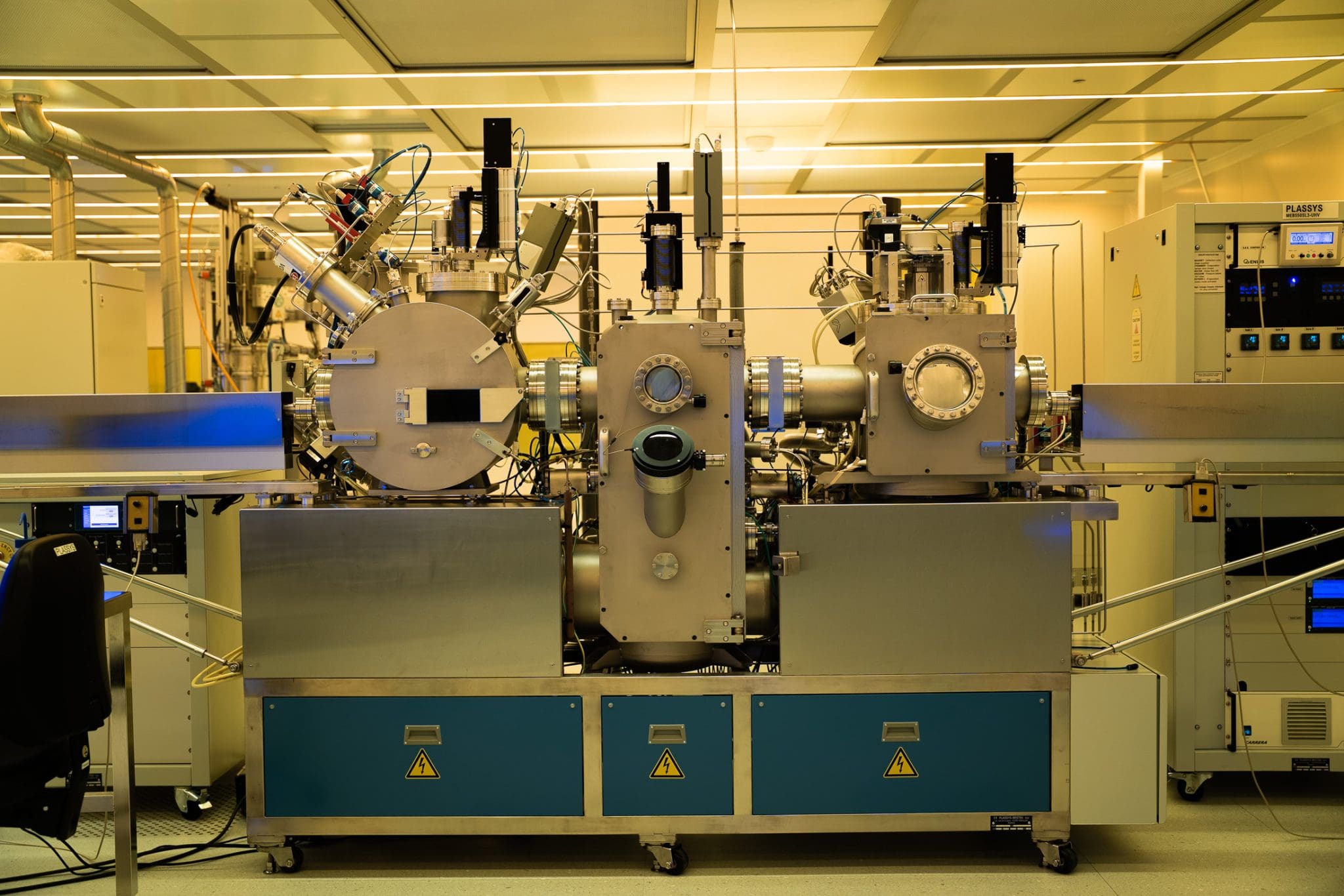
Microsoft has significantly expanded its quantum computing facility in Lyngby, Denmark, representing a total investment exceeding DKK 1 billion. This new, state-of-the-art lab is now Microsoft’s largest quantum site globally, focused on advancing topological qubits – the core technology behind the “Majorana 1” chip. This expansion isn’t merely about space; it provides critical cleanroom capacity and instrumentation needed to improve qubit fabrication yields and accelerate progress towards scalable, error-resilient quantum architectures.
The Lyngby facility is pivotal to Microsoft’s unique approach, combining fundamental physics with large-scale engineering. Researchers are now able to fabricate the complete “heart” of the Majorana chips in Denmark. This builds upon years of close collaboration with Danish universities like the Niels Bohr Institute and DTU, focusing on materials science and device engineering. Importantly, the lab is AI-enabled, fostering innovation and attracting talent within Denmark and the Nordic region.
Beyond internal development, Microsoft’s Danish investment supports Europe’s broader quantum ambitions. A partnership with Atom Computing to deliver “Magne,” a next-generation quantum computer utilizing logical qubits, is expected to be operational by late 2026. Microsoft will provide the operating system, cloud integration, and developer tools—a full-stack solution—to accelerate research in fields like materials science and biotechnology, reinforcing Denmark’s position as a key quantum hub.
Advancing Topological Qubit Development and Majorana 1
Microsoft’s expanded Quantum Lab in Lyngby, Denmark, represents a significant DKK 1 billion+ investment in scalable quantum computing. The facility is central to advancing topological qubits – a promising architecture for fault-tolerant quantum computers. Notably, the lab now possesses the capacity to fully fabricate the core of Microsoft’s “Majorana 1” chip, the first quantum processing unit powered by a topological core, designed to scale to millions of qubits. This move converts foundational physics research into manufacturable technology, accelerating the timeline from decades to years.
The Lyngby lab’s focus on topological qubits addresses a critical challenge in quantum computing: error correction. Unlike conventional qubits, topological qubits leverage exotic states of matter to encode information in a way that is inherently more resilient to environmental noise. Majorana 1 utilizes these properties, aiming for a pathway to stable, scalable architectures. The new, AI-enabled cleanroom provides the necessary process control and instrumentation for iterating faster and improving qubit yield – crucial steps toward achieving “true quantum scale.”
This expansion aligns with Europe’s broader quantum ambitions, particularly the Quantum Europe Strategy aiming for global leadership by 2030. Microsoft is actively partnering with Danish universities like the Niels Bohr Institute and DTU, building on years of collaborative materials and device engineering. Further, the lab’s work feeds into initiatives like ‘Magne’ – a next-generation quantum computer, expected in late 2026, combining Microsoft’s software with Atom Computing’s hardware, and showcasing a full-stack quantum solution.
European Quantum Collaboration and Microsoft’s Investment
Microsoft has significantly expanded its quantum computing facility in Lyngby, Denmark, representing over DKK 1 billion (approximately $145 million USD) in investment. This new lab is crucial for fabricating the “heart” of Microsoft’s Majorana 1 chip—a quantum processing unit utilizing topological qubits. These qubits are designed for scalability, aiming for millions of qubits on a single chip, and represent a unique approach focused on error resilience through advanced materials science and engineering. The expansion solidifies Denmark’s position as a key European quantum hub.
The Lyngby lab isn’t operating in isolation; it’s central to Microsoft’s European quantum strategy. Collaboration with institutions like the Niels Bohr Institute and DTU has been ongoing since 2018, focusing on topological qubit development. Furthermore, Microsoft is partnering with the Nordic quantum initiative QuNorth and Atom Computing on “Magne”—a next-generation quantum computer slated for operation in late 2026. Magne will deploy logical qubits, combining Microsoft’s error correction software with Atom Computing’s hardware.
This investment reflects Europe’s broader ambition to lead in quantum technology by 2030, as outlined in the Quantum Europe Strategy. Microsoft’s Lyngby facility is one of the world’s first AI-enabled hardware labs, accelerating iteration and yield on topological qubits. By providing a full-stack solution – including the Quantum Development Kit and cloud integration – Microsoft aims to translate research into practical applications in fields like materials science and biotechnology, furthering both European and global quantum capabilities.