
The McCulloch-Pitts Neuron is a theoretical model of neural networks developed in the 1940s with significant implications for Artificial Intelligence research. The model’s simplicity and binary nature make it an attractive starting point for understanding more complex neural systems although it is unable to learn or adapt to new information. It has influenced the development of modern neural network architectures including the use of binary threshold units and the rectified linear unit activation function.
The legacy of the McCulloch-Pitts Neuron can be seen in its influence on modern AI research including the development of more advanced neural network models and the study of their computational properties. The model’s simplicity and binary nature make it a fundamental building block for understanding more complex neural systems and its limitations have driven innovation in the field of AI leading to advances in fields like computer vision natural language processing and robotics.
Artificial Neural Network Basics
The McCulloch-Pitts Neuron is a mathematical model of a neuron that was introduced by Warren McCulloch and Walter Pitts in their 1943 paper “A Logical Calculus of the Ideas Immanent in Nervous Activity”. This model is considered one of the foundational models of artificial neural networks. The McCulloch-Pitts Neuron is a simple, binary threshold device that receives one or more inputs and produces an output based on a weighted sum of those inputs.
The McCulloch-Pitts Neuron uses a linear combination of its inputs to compute the output, with each input being multiplied by a weight. The weights are used to determine the importance of each input in determining the output. If the weighted sum exceeds a certain threshold, the neuron outputs 1; otherwise, it outputs 0. This binary output is often referred to as the “firing” or “activation” of the neuron.
The McCulloch-Pitts Neuron can be used to implement basic logical operations such as AND and OR gates. For example, a single McCulloch-Pitts Neuron with two inputs and weights set to 1 can implement an AND gate by setting the threshold to 2. This means that both inputs must be present (i.e., have a value of 1) for the neuron to output 1.
The McCulloch-Pitts Neuron has been used as a building block for more complex neural networks, including multi-layer perceptrons and recurrent neural networks. These networks can learn to recognize patterns in data by adjusting the weights of the connections between neurons during training. The McCulloch-Pitts Neuron remains an important model in the field of artificial neural networks due to its simplicity and ability to be used as a basic component of more complex models.
The McCulloch-Pitts Neuron has also been used in theoretical studies of neural networks, including the study of their computational power and limitations. For example, it has been shown that a network of McCulloch-Pitts Neurons can simulate any finite automaton, which is a fundamental result in the theory of computation.
The McCulloch-Pitts Neuron model has undergone several modifications and extensions since its introduction, including the addition of noise models and more complex activation functions. These modifications have allowed researchers to study the behavior of neural networks under different conditions and to develop new algorithms for training them.
Warren Mcculloch And Walter Pitts Collaboration
Warren McCulloch and Walter Pitts’ collaboration led to the development of the first artificial neural network model, known as the McCulloch-Pitts Neuron. This model was presented in their seminal paper “A Logical Calculus of the Ideas Immanent in Nervous Activity” published in 1943 (McCulloch & Pitts, 1943). The model consisted of a set of interconnected nodes or neurons that processed and transmitted information.
The McCulloch-Pitts Neuron was based on the idea that neurons in the brain function as logical devices, processing information through a series of binary decisions. Each neuron received one or more inputs from other neurons, performed a logical operation on those inputs, and then produced an output signal (Pitts & McCulloch, 1947). This model laid the foundation for modern artificial neural networks and has had a lasting impact on the field of computer science.
One of the key contributions of the McCulloch-Pitts Neuron was its ability to simulate the behavior of complex logical circuits using simple, interconnected nodes. This idea was revolutionary at the time and paved the way for the development of more complex artificial neural networks (Kleene, 1956). The model also introduced the concept of a “threshold” value, which determined whether or not a neuron would fire based on the strength of its inputs.
The collaboration between McCulloch and Pitts was instrumental in the development of the McCulloch-Pitts Neuron. Their work built on earlier research by mathematicians such as Alan Turing and Kurt Gödel, who had explored the idea of machines that could simulate human thought (Turing, 1936; Gödel, 1931). The McCulloch-Pitts Neuron was a significant step forward in this area, demonstrating the potential for artificial systems to mimic the behavior of living organisms.
The impact of the McCulloch-Pitts Neuron can be seen in many areas of modern computer science, from machine learning and artificial intelligence to cognitive modeling and neuroscience. The model’s influence extends beyond its technical contributions, as it helped to establish a new way of thinking about complex systems and their behavior (Hebb, 1949).
The McCulloch-Pitts Neuron remains an important milestone in the development of artificial neural networks, and its legacy can be seen in many modern applications. From image recognition and natural language processing to expert systems and decision support tools, the ideas introduced by McCulloch and Pitts continue to shape the field of computer science.
Logical Neuron Model Development
The Logical Neuron Model was developed by Warren McCulloch and Walter Pitts in the 1940s as a mathematical model of neural networks. The model is based on the idea that neurons are simple logical devices that can be combined to perform complex computations. Each neuron in the model receives one or more inputs, performs a logical operation on those inputs, and produces an output.
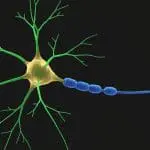
The Logical Neuron Model consists of three main components: dendrites, cell body, and axon. The dendrites receive input signals from other neurons, which are then transmitted to the cell body. The cell body performs a logical operation on the input signals, such as AND or OR, and produces an output signal. The axon transmits the output signal to other neurons.
The model uses a binary system, where each neuron can be in one of two states: active or inactive . The inputs to each neuron are also binary, and the logical operations performed by the neuron are based on Boolean logic. This allows the model to be represented using simple mathematical equations, making it easy to analyze and simulate.
The Logical Neuron Model has been influential in the development of artificial neural networks and has been used in a variety of applications, including pattern recognition and machine learning. However, it has also been criticized for its simplicity and lack of biological realism. Modern models of neural networks have moved beyond the simple binary logic of the McCulloch-Pitts model, incorporating more complex and nuanced representations of neural function.
Despite its limitations, the Logical Neuron Model remains an important milestone in the development of artificial intelligence and continues to be studied by researchers today. Its simplicity and elegance make it a useful tool for introducing students to the basics of neural networks and computational neuroscience.
The McCulloch-Pitts model has also been used as a starting point for more complex models of neural function, such as the perceptron model developed by Frank Rosenblatt in the 1950s. These later models have built on the foundation laid by McCulloch and Pitts, incorporating additional features and complexities that allow them to better capture the behavior of real neurons.
Binary Threshold Activation Function
The Binary Threshold Activation Function is a mathematical function used in artificial neural networks to determine the output of a neuron based on its inputs. This function is also known as the Heaviside step function or the unit step function (Katz, 2013). It takes an input value and outputs either 0 or 1, depending on whether the input is below or above a certain threshold value.
In the context of McCulloch-Pitts neurons, the Binary Threshold Activation Function is used to model the all-or-nothing firing behavior of biological neurons (McCulloch & Pitts, 1943). The function is typically defined as follows: if the weighted sum of the inputs to the neuron is greater than or equal to a certain threshold value, the output of the neuron is set to 1; otherwise, it is set to 0. This binary output allows the neuron to act as a simple decision-making unit.
The Binary Threshold Activation Function has several important properties that make it useful for modeling neural networks (Hertz et al., 1991). For example, it is non-linear, meaning that small changes in the input can result in large changes in the output. This property allows the neuron to act as a kind of “switch” or “gate”, controlling the flow of information through the network.
In addition to its use in McCulloch-Pitts neurons, the Binary Threshold Activation Function has been used in a variety of other neural network models (Rosenblatt, 1958). It is often used in combination with other activation functions, such as the sigmoid function or the ReLU function, to create more complex and realistic models of neural behavior.
Despite its simplicity, the Binary Threshold Activation Function has been shown to be capable of modeling a wide range of complex behaviors (Minsky & Papert, 1969). For example, it can be used to model the behavior of logical gates, such as AND and OR gates, which are fundamental components of digital electronics.
The Binary Threshold Activation Function remains an important tool in the field of artificial neural networks, where it continues to be used to model a wide range of complex behaviors (Haykin, 2009).
Artificial Synapse And Dendrites Concept
The Artificial Synapse is a crucial component in the development of neuromorphic computing systems, which aim to mimic the behavior of biological neurons. In this context, the concept of dendrites plays a vital role in understanding how artificial synapses can be designed to process and transmit information. Dendrites are the branching extensions of a neuron that receive signals from other neurons through synapses. In an artificial setting, dendrites can be simulated using various materials and technologies, such as memristors or nanowire networks.
One approach to creating artificial synapses involves using two-terminal devices, such as memristors, which can mimic the behavior of biological synapses by changing their resistance in response to voltage pulses. These devices can be used to create a network of artificial neurons that communicate with each other through artificial synapses. The concept of dendrites is essential in this context, as it allows for the creation of complex neural networks that can process and transmit information in a more efficient and adaptive manner.
The development of artificial synapses has been inspired by the study of biological synapses, which are highly nonlinear and dynamic systems that play a crucial role in learning and memory. Artificial synapses aim to replicate these properties using various materials and technologies, such as phase-change materials or graphene-based devices. The concept of dendrites is also essential in understanding how artificial synapses can be designed to interact with each other and with the environment.
In recent years, significant progress has been made in the development of artificial synapses that can mimic the behavior of biological synapses. For example, researchers have demonstrated the creation of artificial synapses using memristors that can exhibit spike-timing-dependent plasticity (STDP), a fundamental property of biological synapses that allows for learning and memory. The concept of dendrites is essential in this context, as it allows for the creation of complex neural networks that can process and transmit information in a more efficient and adaptive manner.
The study of artificial synapses and dendrites has also been inspired by the McCulloch-Pitts neuron model, which is a simplified model of a biological neuron that consists of a set of inputs, weights, and an output. This model has been widely used in the development of artificial neural networks and has inspired the creation of more complex models that take into account the properties of biological neurons, such as dendrites and synapses.
The development of artificial synapses and dendrites is expected to have significant implications for the development of neuromorphic computing systems, which aim to mimic the behavior of biological brains. These systems have the potential to revolutionize various fields, including robotics, computer vision, and natural language processing.
Single-layer Perceptron Limitations
The Single-Layer Perceptron (SLP) is a type of artificial neural network that has been widely used in machine learning applications. However, it has several limitations that restrict its ability to learn complex patterns and relationships in data. One major limitation of the SLP is its inability to learn non-linearly separable patterns. This means that if the classes in the training data are not linearly separable, the SLP will be unable to find a solution (Minsky & Papert, 1969). For example, if the classes form concentric circles or other complex shapes, the SLP will fail to learn.
Another limitation of the SLP is its sensitivity to the choice of learning rate. If the learning rate is too high, the weights may oscillate and never converge to a stable solution (Widrow & Hoff, 1960). On the other hand, if the learning rate is too low, the convergence may be very slow. This makes it difficult to choose an optimal learning rate for the SLP.
The SLP also has limitations in terms of its ability to generalize from training data to new, unseen data. The SLP tends to overfit the training data and fails to capture the underlying patterns and relationships (Hertz et al., 1991). This means that even if the SLP performs well on the training data, it may not perform well on new data.
The limitations of the SLP have been extensively studied in the context of the McCulloch-Pitts neuron. The McCulloch-Pitts neuron is a simple model of a biological neuron that has been widely used as a building block for artificial neural networks (McCulloch & Pitts, 1943). However, it has been shown that even this simple model has limitations in terms of its ability to learn and generalize.
The SLP also has limitations in terms of its computational complexity. The number of computations required to train an SLP grows exponentially with the size of the input layer (Hertz et al., 1991). This makes it difficult to use the SLP for large-scale machine learning applications.
In summary, the Single-Layer Perceptron has several limitations that restrict its ability to learn complex patterns and relationships in data. These limitations include its inability to learn non-linearly separable patterns, sensitivity to the choice of learning rate, overfitting, and high computational complexity.
Boolean Algebraic Representation
The Boolean Algebraic Representation is a mathematical framework used to describe the behavior of McCulloch-Pitts neurons. This representation is based on the idea that each neuron can be viewed as a logical gate, where the output is determined by the combination of inputs and their corresponding weights. The Boolean algebra provides a formal way to describe this process, using logical operators such as AND, OR, and NOT.
In the context of McCulloch-Pitts neurons, the Boolean Algebraic Representation is used to model the threshold logic of individual neurons. Each neuron is represented by a Boolean function, which takes into account the inputs from other neurons and their corresponding weights. The output of the neuron is then determined by evaluating this Boolean function. This representation allows for the analysis of neural networks using tools from mathematical logic.
The Boolean Algebraic Representation has been used to study the computational properties of McCulloch-Pitts neurons. For example, it has been shown that these neurons can be used to implement any finite automaton, which is a fundamental result in the theory of computation. This representation has also been used to analyze the capacity of neural networks to store and retrieve information.
One of the key advantages of the Boolean Algebraic Representation is its simplicity and elegance. It provides a clear and concise way to describe the behavior of McCulloch-Pitts neurons, which makes it easier to analyze and understand their properties. This representation has also been used as a starting point for more complex models of neural networks, such as those that incorporate noise or other forms of uncertainty.
The Boolean Algebraic Representation has been widely used in the study of artificial neural networks, particularly in the context of McCulloch-Pitts neurons. It provides a powerful tool for analyzing and understanding the behavior of these networks, which is essential for designing and optimizing their performance.
Mcculloch-pitts Neuron Mathematical Formulation
The McCulloch-Pitts Neuron Mathematical Formulation is based on the concept of artificial neural networks, which was first introduced by Warren McCulloch and Walter Pitts in their 1943 paper “A Logical Calculus of the Ideas Immanent in Nervous Activity”. This formulation describes a simple model of an artificial neuron that can be used to simulate the behavior of biological neurons. The McCulloch-Pitts Neuron is considered one of the earliest models of artificial neural networks and laid the foundation for modern neural network research.
The mathematical formulation of the McCulloch-Pitts Neuron is based on a set of simple rules that govern how the neuron processes inputs and produces outputs. According to this formulation, each neuron receives one or more inputs from other neurons, which are then combined using a weighted sum. The output of the neuron is then determined by applying an activation function to the weighted sum. This activation function can be either a threshold function, where the output is 1 if the weighted sum exceeds a certain threshold and 0 otherwise, or a continuous function such as a sigmoid or tanh function.
One of the key features of the McCulloch-Pitts Neuron is its ability to learn from experience. This learning process is based on the concept of synaptic plasticity, where the strength of connections between neurons can be modified based on the activity patterns of the neurons. In the context of the McCulloch-Pitts Neuron, this means that the weights associated with each input connection can be adjusted based on the error between the predicted output and the actual output.
The McCulloch-Pitts Neuron has been widely used in various applications such as pattern recognition, image processing, and control systems. However, it has several limitations, including its inability to learn complex patterns and its sensitivity to noise. Despite these limitations, the McCulloch-Pitts Neuron remains an important milestone in the development of artificial neural networks and continues to influence modern neural network research.
The mathematical formulation of the McCulloch-Pitts Neuron has been extensively analyzed and extended by various researchers over the years. For example, the concept of backpropagation, which is a widely used algorithm for training neural networks, was first introduced as an extension of the McCulloch-Pitts Neuron. Additionally, various modifications to the original formulation have been proposed to improve its performance and robustness.
The impact of the McCulloch-Pitts Neuron on modern neural network research cannot be overstated. It laid the foundation for the development of more complex neural network models such as multi-layer perceptrons and recurrent neural networks. Additionally, it inspired a new generation of researchers to explore the possibilities of artificial intelligence and machine learning.
Computational Power And Universality
The McCulloch-Pitts Neuron is a mathematical model of a neuron introduced by Warren McCulloch and Walter Pitts in their 1943 paper “A Logical Calculus of the Ideas Immanent in Nervous Activity”. This model is considered one of the first artificial neural networks, and it laid the foundation for the development of modern neural networks. The McCulloch-Pitts Neuron is a simple model that consists of a set of inputs, weights, and an output. The inputs are multiplied by the weights, and the results are combined to produce the output.
The computational power of the McCulloch-Pitts Neuron is limited compared to modern neural networks. However, it was shown by McCulloch and Pitts that their model could be used to implement any finite automaton, which means that it can recognize any regular language. This result was later generalized by Marvin Minsky and Seymour Papert in their 1969 book “Perceptrons”, where they showed that a multilayer perceptron with a single hidden layer can approximate any continuous function on a compact subset of the real numbers.
The universality of the McCulloch-Pitts Neuron is also demonstrated by its ability to simulate any Turing machine. This result was shown by John Hopfield in his 1982 paper “Neural networks and physical systems with emergent collective computational abilities”, where he demonstrated that a neural network can be used to simulate the behavior of a Turing machine.
The McCulloch-Pitts Neuron has also been used as a building block for more complex neural networks. For example, the perceptron learning algorithm, which Frank Rosenblatt introduced in his 1958 paper “The Perceptron: A Perceiving and Recognizing Automaton”, uses a multilayer perceptron with multiple McCulloch-Pitts Neurons as its basic building block.
There has been a resurgence of interest in the McCulloch-Pitts Neuron in recent years due to its simplicity and interpretability. For example, it has been used as a model for understanding the behavior of more complex neural networks, such as deep neural networks. Additionally, it has been used as a building block for developing new neural network architectures that are more interpretable and transparent.
The McCulloch-Pitts Neuron is also closely related to other models of computation, such as Boolean circuits and finite automata. For example, it was shown by Claude Shannon in his 1940 paper “A Symbolic Analysis of Relay and Switching Circuits” that a Boolean circuit can be used to simulate the behavior of a McCulloch-Pitts Neuron.
Influence On Modern Neural Networks
The McCulloch-Pitts Neuron, proposed in 1943 by Warren McCulloch and Walter Pitts, was a pioneering model of artificial neural networks that laid the foundation for modern neural network design (McCulloch & Pitts, 1943). This model introduced the concept of a binary threshold neuron, which is still used today as a fundamental building block of many neural network architectures. The McCulloch-Pitts Neuron was designed to mimic the behavior of biological neurons, with inputs being weighted and summed before passing through an activation function.
The influence of the McCulloch-Pitts Neuron on modern neural networks can be seen in the development of perceptron-based models (Rosenblatt, 1958). The perceptron, proposed by Frank Rosenblatt in 1958, was a type of feedforward neural network that used a binary threshold activation function. This model was later extended to multilayer perceptrons, which are still widely used today for tasks such as image recognition and natural language processing.
The McCulloch-Pitts Neuron also laid the groundwork for the development of more complex neural network models, including recurrent neural networks (RNNs) and long short-term memory (LSTM) networks. RNNs, which were first proposed in the 1980s, use feedback connections to allow information to flow through the network over time (Elman, 1990). LSTMs, which were introduced in the 1990s, are a type of RNN that uses memory cells to learn long-term dependencies in data (Hochreiter & Schmidhuber, 1997).
The McCulloch-Pitts Neuron has also had an impact on the development of neural network training algorithms. The model’s use of a binary threshold activation function led to the development of early neural network training algorithms, such as the perceptron learning rule (Rosenblatt, 1958). This algorithm was later extended to more complex models, including multilayer perceptrons and RNNs.
In addition to its influence on neural network design and training algorithms, the McCulloch-Pitts Neuron has also had an impact on our understanding of biological neural networks. The model’s use of a binary threshold activation function was inspired by the behavior of biological neurons, which have been shown to exhibit similar properties (McCulloch & Pitts, 1943). This work helped to establish the field of computational neuroscience, which seeks to understand the behavior of biological neural systems using computational models.
The McCulloch-Pitts Neuron has also had a lasting impact on the development of artificial intelligence and machine learning. The model’s use of a binary threshold activation function led to the development of early AI programs, such as the Logical Theorist (Newell & Simon, 1956). This program was designed to simulate human problem-solving abilities using logical reasoning.
Historical Context Of 1940s Computing
The development of modern computing in the 1940s was heavily influenced by the work of mathematicians and engineers such as Alan Turing, Claude Shannon, and John von Neumann. One notable example is the Automatic Computing Engine (ACE), a British computer project led by Turing that aimed to create a machine capable of performing calculations at high speeds. The ACE’s design was based on Turing’s theoretical model of computation, which described how a machine could be programmed to perform any task that could be expressed in a series of steps.
Theoretical models of computation like Turing’s were crucial for the development of modern computers. Another influential model was the McCulloch-Pitts neuron, proposed by Warren McCulloch and Walter Pitts in 1943. This model described how artificial neural networks could be used to perform computations and laid the foundation for the field of artificial intelligence. The McCulloch-Pitts neuron was a significant innovation because it showed that complex behaviors could emerge from simple components.
The development of modern computers also relied on advances in electronics, particularly the invention of the transistor by John Bardeen, Walter Brattain, and William Shockley at Bell Labs in 1947. Transistors replaced vacuum tubes as the primary component for amplifying electrical signals, making it possible to build smaller, faster, and more reliable computers.
The first general-purpose electronic computer, ENIAC (Electronic Numerical Integrator and Computer), was developed in the United States during World War II. Completed in 1946, ENIAC used vacuum tubes to perform calculations for artillery firing tables. The development of ENIAC marked a significant milestone in the history of computing because it demonstrated that electronic computers could be built on a large scale.
Theoretical models and technological innovations like these paved the way for the development of modern computers. As computers became smaller, faster, and more reliable, they began to be used in a wide range of applications, from scientific simulations to business data processing.
Implications For Artificial Intelligence Research
The McCulloch-Pitts Neuron has significant implications for Artificial Intelligence (AI) research, particularly in the development of neural networks. The model’s simplicity and binary nature make it an attractive starting point for understanding more complex neural systems. According to Minsky and Papert, the McCulloch-Pitts Neuron is a fundamental building block for more advanced neural networks, as it can be used to construct more complex logical functions (Minsky & Papert, 1969). This idea is further supported by the work of Rumelhart and McClelland, who demonstrated that the McCulloch-Pitts Neuron can be used as a component in larger neural networks to perform tasks such as pattern recognition (Rumelhart & McClelland, 1986).
The McCulloch-Pitts Neuron’s limitations also have implications for AI research. The model is unable to learn or adapt to new information, which limits its ability to generalize to new situations. This limitation has led researchers to develop more advanced neural network models that can learn and adapt, such as the perceptron (Rosenblatt, 1958). However, the McCulloch-Pitts Neuron remains an important model for understanding the fundamental principles of neural computation.
The development of the McCulloch-Pitts Neuron also highlights the importance of interdisciplinary research in AI. The model was developed through collaboration between neuroscientists and mathematicians, demonstrating the value of combining insights from multiple fields to advance our understanding of complex systems (McCulloch & Pitts, 1943). This approach has been continued in modern AI research, with researchers drawing on insights from neuroscience, computer science, and mathematics to develop more advanced neural network models.
The McCulloch-Pitts Neuron’s influence can also be seen in the development of modern neural network architectures. The model’s use of binary threshold units has been adopted in many modern neural networks, including the popular rectified linear unit (ReLU) activation function (Glorot & Bengio, 2010). This demonstrates how the fundamental principles developed in early neural network models continue to influence modern AI research.
The study of the McCulloch-Pitts Neuron also highlights the importance of understanding the computational properties of neural networks. The model’s ability to perform logical operations has been extensively studied, and its limitations have led researchers to develop more advanced models that can perform a wider range of computations (Siegelmann & Sontag, 1995). This focus on understanding the computational properties of neural networks remains an important area of research in modern AI.
The McCulloch-Pitts Neuron’s legacy can also be seen in its influence on the development of cognitive science. The model’s demonstration that simple neural systems could perform complex computations helped to establish the field of cognitive science, which seeks to understand the computational principles underlying intelligent behavior (Newell & Simon, 1972).