Olivier Morin’s team at the Max Planck Institute of Quantum Optics, led by Gerhard Rempe, has made a significant breakthrough in quantum computing. They have successfully created a ring-shaped and a tree-shaped graph state, which are complex forms of entanglement between quantum bits, or qubits. This development could greatly enhance the computing power of quantum computers and the stability of a future quantum internet. The team achieved this by trapping individual atoms between two highly reflective mirrors, a process Rempe has spent decades perfecting. The research is published in the journal Nature.
Quantum Computing: The Advent of Two-Dimensional Graph States
Quantum computing and quantum internet are two emerging technologies that rely heavily on the entanglement of quantum systems. This entanglement, particularly when it involves multiple quantum bits or qubits, can result in significant computational power. However, it also leads to complex mathematical descriptions that can be challenging to manage. A recent breakthrough by Olivier Morin’s team at the Max Planck Institute of Quantum Optics has simplified this process by creating the first two-dimensional “graph states” in an experiment. This development could have significant implications for the future of quantum computing and the quantum internet.
The Concept of Entanglement and Quantum Information Technologies
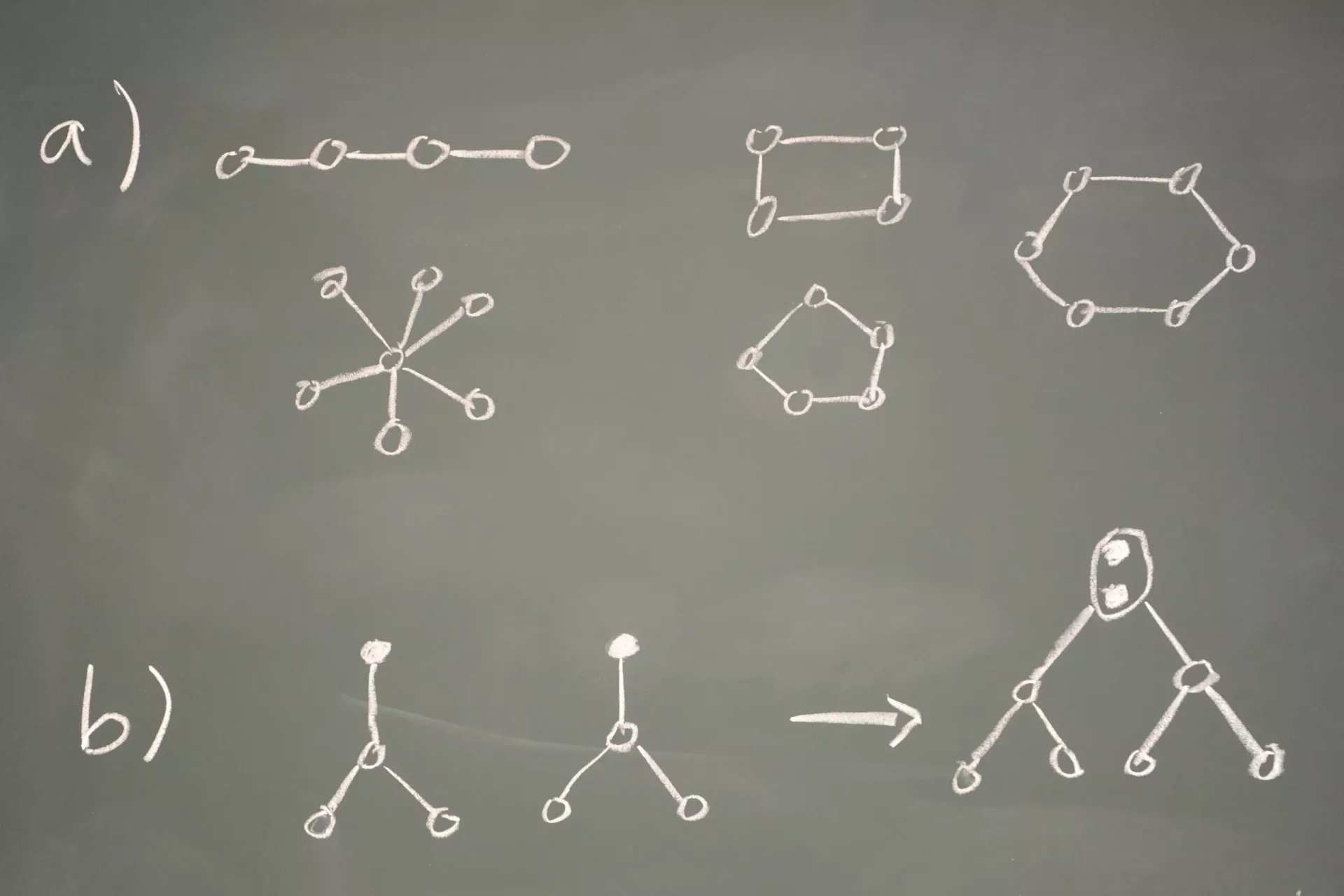
Entanglement forms the foundation of all quantum information technologies currently under development, including quantum computers and the quantum internet. The basic element of these technologies is pairs of qubits that are entangled with each other. This entanglement can be visualized as LED lights connected via a cable, with the lights representing the qubits and the cable representing the entanglement. By connecting more and more of these pairs, longer chains can be formed, leading to the creation of complex structures like rings, stars, or trees.
The Challenge of Quantum Information Transmission
One of the major challenges in quantum information technologies is the transmission of quantum information. In the quantum internet, for instance, quantum information is packaged in entangled photons, or “flying qubits,” and sent via fiber optic networks. However, the loss of photons increases exponentially with the length of the transmission. To counter this, researchers are exploring the possibility of superimposing a tree-shaped entanglement on a stream of photons flying one after the other. This could allow for redundant quantum information, ensuring that even if only half of the photons reach the receiver, the information can still be recreated.
Graphical Representation of Quantum States
The graphical representation of quantum states offers a simplified way to describe complex entanglements. In this representation, nodes symbolize the quantum bits, and lines between them represent the entanglement. However, while this representation is simple and elegant in theory, it is extremely challenging to realize in practice. Despite these challenges, Rempe’s team has made significant strides in producing quantum mechanical graph states using their experimental techniques.
The Breakthrough: Two-Dimensional Graph States
The recent breakthrough by Morin’s team involves the creation of two-dimensional graph states. To achieve this, the team captured two rubidium-87 atoms in an optical cavity and prepared a one-dimensional graph state with both atoms. Through a joint measurement on both atoms, the two physically separate atomic qubits were then “fused” into a single “logical” qubit. This process generated a two-dimensional graph state, allowing for the creation of complex entanglement patterns suitable for sophisticated applications. This breakthrough marks a significant step forward in the field of quantum computing and quantum internet, opening up new avenues for research and development.
External Link: Click Here For More