

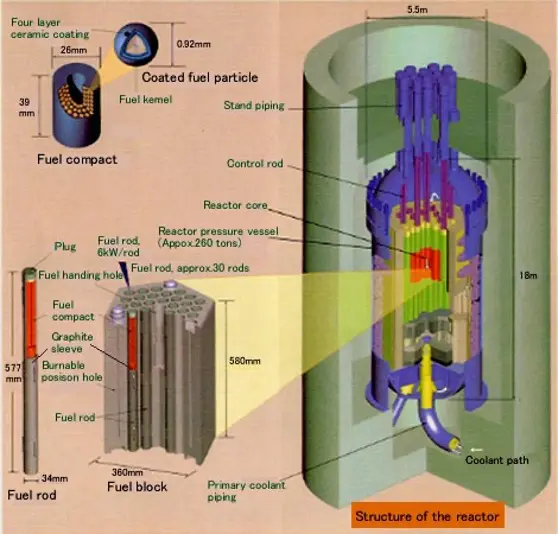
The five-year ENLIGHT programme (Enabling a Lifecycle Approach to Graphite for Advanced Modular Reactors), led by researchers at The University of Manchester in collaboration with the Universities of Oxford, Plymouth, and Loughborough, addresses critical material challenges for the future deployment of nuclear power within the UK’s net zero strategy. Funded by an GBP8. 2m grant from the UK Research and Innovations Engineering and Physical Sciences Research Council (EPSRC), alongside GBP5m from industry partners and contributions from Higher Education Institutions, the GBP13m initiative focuses on securing a sovereign supply of nuclear graphite – a vital neutron moderator controlling the rate of nuclear fission in advanced reactors – and devising sustainable solutions for the increasing volume of irradiated graphite waste. The programme aims to re-establish a UK-based graphite supply chain, mitigating current reliance on overseas suppliers, and simultaneously develop technologies for the recycling and reuse of irradiated graphite, transforming a problematic waste stream into a potentially valuable resource, thereby enhancing both energy security and environmental sustainability within the nuclear sector.
Graphite’s Role in Nuclear Power
The University of Manchester leads a new GBP13 million research programme, ENLIGHT (Enabling a Lifecycle Approach to Graphite for Advanced Modular Reactors), designed to address critical challenges in the sustainable management and supply of graphite, a fundamental material for nuclear power generation. An GBP8 supports this five-year initiative.
The programme’s scope encompasses both securing a domestic supply of graphite and developing innovative solutions for the increasing volume of irradiated graphite waste currently generated by existing and future nuclear reactors. Graphite’s crucial role within nuclear reactors stems from its properties as a neutron moderator; it slows down neutrons produced during nuclear fission, increasing the probability of further fission events and enabling a controlled, sustained chain reaction.
This moderation process is essential for the efficient and safe operation of many reactor designs, including advanced modular reactors.
Programme Objectives and Funding
The ENLIGHT programme, a GBP13 million initiative, is underpinned by a robust funding structure comprising a GBP8.2 million grant from the UK Research and Innovation Engineering and Physical Sciences Research Council (EPSRC), complemented by contributions from participating Higher Education Institutions and approximately GBP5 million in industrial funding. This financial support facilitates a five-year research agenda focused on establishing a lifecycle approach to graphite management, crucial for the future deployment of advanced modular reactors and the bolstering of UK energy security.
The collaborative research effort is led by The University of Manchester, with significant contributions from researchers at the Universities of Oxford, Plymouth, and Loughborough, each bringing specialised expertise to address the multifaceted challenges inherent in nuclear graphite technology. A central objective of the programme is to secure a sustainable and sovereign supply of nuclear graphite, currently reliant on overseas sources, thereby mitigating strategic vulnerabilities.
Researchers will investigate novel graphite materials and manufacturing processes, focusing on achieving consistent quality and performance characteristics suitable for advanced reactor applications. This includes exploring alternative carbon feedstocks and refining purification techniques to meet the stringent requirements of nuclear-grade graphite, demanding exceptional purity and structural integrity.
Michael Shaver (Plymouth), and Professor Hongtao Ding (Loughborough University), are employing advanced techniques such as neutron diffraction, Raman spectroscopy, and X-spectroscopy to meticulously analyse graphite’s crystalline structure and correlate these features with macroscopic performance characteristics.
This detailed investigation is crucial for optimising graphite’s properties to meet the stringent demands of next-generation reactor designs, particularly advanced modular reactors which often operate at higher temperatures and require enhanced material performance. A significant aspect of the research focuses on establishing a sovereign UK supply chain for nuclear graphite, currently reliant on overseas sources. It involves exploring alternative carbon feedstocks and refining purification techniques to achieve the exceptional purity required for nuclear-grade materialalso this:
More information
External Link: Click Here For More


