Manipal Academy of Higher Education (MAHE) has established Quantum-Hub@MAHE (Q-Hub@MAHE) at its Manipal Institute of Technology in Bengaluru, creating a university-led ecosystem designed to bolster India’s National Quantum Mission. The new hub will focus on indigenous quantum hardware development, integrating experimentation, startup incubation, and workforce training within a unified academic framework. It begins operation with a 25-qubit dilution refrigeration system for advanced training. This initiative aims to strengthen India’s capabilities across the entire quantum technology value chain, from component innovation to scalable manufacturing. “Q-Hub@MAHE reflects our commitment to building sovereign scientific capability aligned with the vision of the National Quantum Mission,” said Lt. Gen. (Dr.) M. D. Venkatesh, Vice Chancellor, MAHE, adding that the integrated approach will contribute to India’s leadership in advanced quantum technologies.
Quantum-Hub@MAHE Advances India’s National Quantum Mission
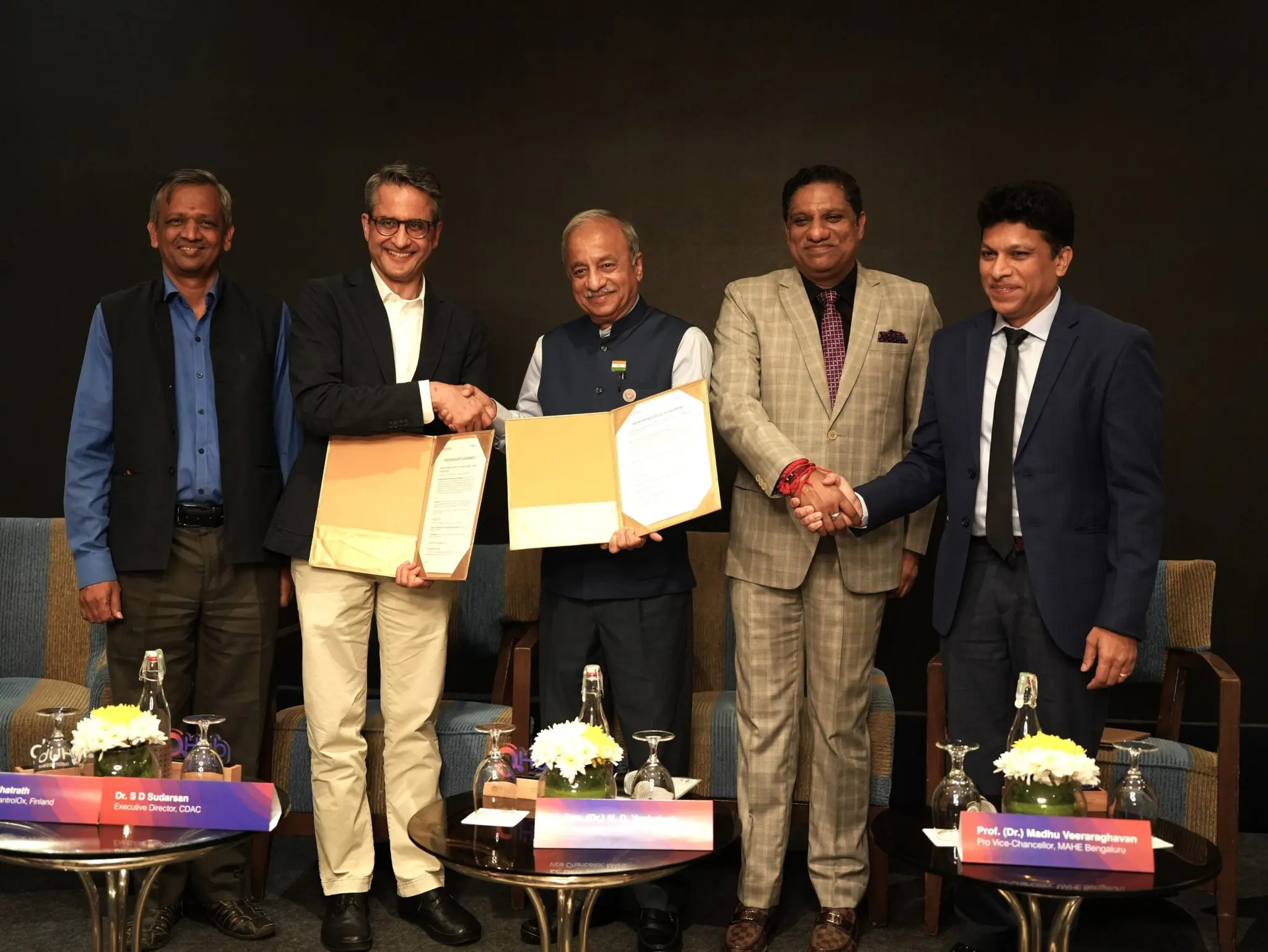
The initiative distinguishes itself through its commitment to an open-architecture approach, prioritizing indigenous component development and scalable manufacturing pathways, a departure from typical vendor-locked quantum deployments. Initial operations will center around a 25-qubit dilution refrigeration system, marking the first step in a phased roadmap aiming for industrial-grade quantum systems exceeding 150 qubits. This multi-campus strategy was formalized through Memorandums of Agreement with QuantrolOx (Finland), Bluefors (Finland), QBLOX (Netherlands), ConScience (Sweden), and Centre for Development of Advanced Computing (C-DAC), focusing on workforce development, hardware experimentation, and co-developed intellectual property. A key target is to train 100 quantum engineers by December 2026 via a combined online and laboratory-based certification program. Gen. (Dr.) M. D. Venkatesh, Vice Chancellor, MAHE, explained that beyond training, the hub will serve as a national testing gateway, providing access to advanced infrastructure for researchers and industry. “With MIT Bengaluru serving as the operational centre, Q-Hub@MAHE will catalyse interdisciplinary collaboration, deep-tech entrepreneurship, and translational research,” added Prof. (Dr.) Madhu Veeraraghavan, Pro Vice Chancellor, MAHE Bengaluru, highlighting the ambition to move beyond academic exploration toward practical quantum systems.
Qubit System Anchors Hardware Experimentation & Workforce Training
The facility will initially feature a 25-qubit dilution refrigeration system, an open-architecture setup intended to move beyond simple access to quantum resources and foster indigenous innovation in component development and scalable manufacturing. Unlike many existing quantum deployments, Q-Hub@MAHE prioritizes an open-architecture ecosystem, supporting the creation of indigenous calibration systems and hardware integration pathways. “Access to real quantum hardware, cryogenic systems, and RF infrastructure ensures that our students and researchers are not merely technology users but system builders,” explained Prof. Iven Jose, Director, MIT Bengaluru. Mr. Vishal of QuantrolOx added, “We are pleased to collaborate with Q-Hub@MAHE in advancing calibration and automation capabilities within an open-architecture framework.”
With MIT Bengaluru serving as the operational centre, Q-Hub@MAHE will catalyse interdisciplinary collaboration, deep-tech entrepreneurship, and translational research. Our focus is to move from academic exploration to manufacturable quantum systems with real-world impact.
Prof. (Dr.) Madhu Veeraraghavan, Pro Vice Chancellor, MAHE Bengaluru
Multi-Campus Partnerships Enable Indigenous Quantum Component Development
This initiative, conceived as an integrated design-to-deployment platform, unites quantum hardware experimentation with deep-tech startup incubation and workforce development, all within a university framework aligned with India’s National Quantum Mission. The hub’s strategy extends beyond a single campus, leveraging a multi-campus approach to foster innovation and build a sovereign capability across the entire quantum value chain. Manipal Institute of Technology, Bengaluru will function as the operational core for advanced hardware experimentation, housing cryogenic and RF infrastructure alongside a structured quantum engineering education program. Gen. (Dr.) M. D. Venkatesh, Vice Chancellor, MAHE, noted that this approach will support the development of a skilled workforce and a robust quantum ecosystem.
Q-Hub@MAHE reflects our commitment to building sovereign scientific capability aligned with the vision of the National Quantum Mission. By integrating research, hardware development, and workforce training within one ecosystem, we aim to contribute meaningfully to India’s leadership in advanced quantum technologies.
Lt. Gen. (Dr.) M. D. Venkatesh, Vice Chancellor, MAHE