The increasing presence of artificial intelligence in public spaces fundamentally alters how people interact with their surroundings, yet this integration often occurs without meaningful public awareness or engagement. Alex S. Taylor from the University of Edinburgh, alongside Noortje Marres, Mercedes Bunz, and colleagues, investigates this dynamic by examining how everyday publics encounter AI systems in city streets. Their research highlights a critical issue: a lack of reciprocal recognition between AI infrastructure and the people it impacts, leading to what the team terms “reciprocity deficits”. Through observations in the UK and Australia, the researchers demonstrate how the design and deployment of AI in public spaces can create transactional environments and render both the technology and the people it affects largely invisible to one another, ultimately impacting public trust and meaningful engagement with urban governance.
Smart Cities, Data Extraction, and Reciprocity Deficits
This research investigates the socio-political implications of smart city technologies, arguing that initiatives often prioritize data collection and technological advancement over genuine public participation and benefit. Smart city projects frequently create a one-way flow of data extraction from citizens, eroding trust and fostering disempowerment. The work frames this as a challenge of political participation, not simply a technical issue. Key concepts explored include reciprocity deficits, describing the lack of balanced exchange between citizens and data-collecting systems, and infrastructural participation, emphasizing that infrastructure actively shapes social relations.
The paper connects smart city data practices to critiques of data colonialism, advocating for data analysis and decision-making within affected communities. The research emphasizes the need to move beyond superficial public engagement, calling for deeper participation that empowers citizens to shape smart city technologies, positioning smart cities as fundamentally political projects with implications for power, governance, and social justice. The research argues that smart cities should be built with communities, not for them, and that genuine participation is essential for creating equitable, sustainable, and just urban futures.
Lived Experiences of Urban Artificial Intelligence
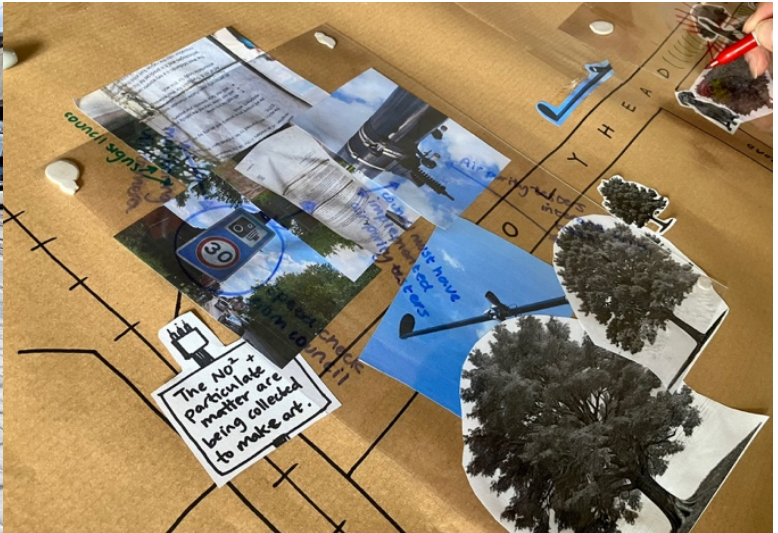
This study pioneers a novel methodology for investigating public engagement with artificial intelligence in urban environments, termed ‘everyday AI observatories’. Researchers conducted participatory observations across five city streets in the United Kingdom and Australia, combining techniques from art-based research, participatory design, and Science and Technology Studies to explore the infrastructural presence of AI, focusing on lived experiences and material participation. This approach moves beyond algorithmic analysis to focus on how AI manifests in the street. Data mapping techniques were employed to visualize the spatial distribution of AI infrastructure and its impact on different communities, allowing for a nuanced understanding of how AI shapes public space and social interactions. The study specifically addresses a critical gap in current AI research by focusing on the ‘reciprocity deficits’ between AI infrastructures and the everyday publics they impact, examining how the deployment of AI often lacks transparency, democratic legitimacy, and public consent. By combining situated observations with spatial data, the study reveals how AI can amplify existing socio-economic dynamics and contribute to inequalities in urban environments, providing a framework for evaluating AI as a socio-technical system with profound implications for public life and urban governance.
AI’s Everyday Presence in Urban Life
This research details a comprehensive investigation into how artificial intelligence is experienced by everyday people in urban environments, achieved through the establishment of five “Everyday AI Observatories” in cities across the UK and Australia. Researchers collaborated with local groups and stakeholders to explore the presence of AI in public spaces, employing a range of methods, including accessibility data walks, sensing walks, diagramming workshops, and direct engagement with passersby. Analysis of the collected data revealed consistent themes concerning how AI is framed as part of transactional infrastructures, with participants describing a sense that data technologies were implemented in exchange for access to services or future market share. Researchers also documented the “designed invisibility” of AI systems, noting how these technologies often operate without clear public awareness or understanding, and how street environments are increasingly stratified through statistical governance. Through collaborative writing and analysis, these observations were connected to broader theoretical frameworks, deepening the understanding of these complex interactions, culminating in the development of the concept of “reciprocity deficits,” which describes the imbalance between the data extracted from everyday publics and the benefits returned to them.
Invisible AI, Public Awareness, and Urban Life
This research demonstrates that artificial intelligence, increasingly embedded in urban environments, often operates invisibly to the everyday public, creating a disconnect between the technology and those it impacts. Through design-based participatory interventions, ‘everyday AI observatories’, in streets across the UK and Australia, the team explored how people encounter and understand AI in lived environments. The study reveals a key tension between the increasing deployment of AI and a lack of reciprocal awareness or engagement from the public, termed “reciprocity deficits”. This invisibility, coupled with a framing of streets as transactional spaces, hinders meaningful public participation with and understanding of these technologies, impacting public trust in urban governance and raising concerns about equitable access to and benefit from AI-driven urban infrastructure. The authors suggest that future work should focus on developing methods to bridge this gap and foster more reciprocal relationships between AI systems and the communities they serve, ultimately promoting greater public understanding and trust.
🗞 Reciprocity Deficits: Observing AI in the street with everyday publics
🧠 ArXiv: https://arxiv.org/abs/2510.23342