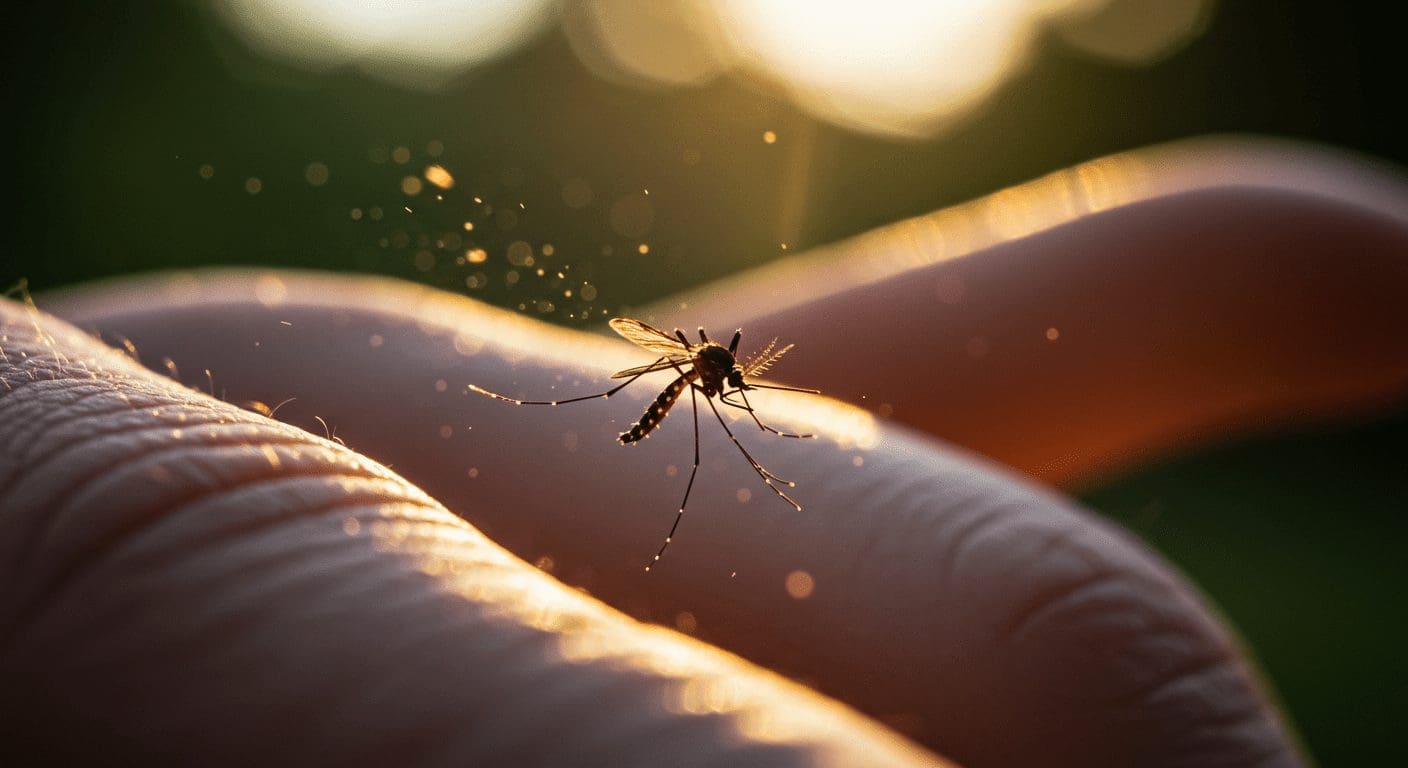
Anandasankar Ray and his team at the University of California, Riverside, have developed a machine learning-based approach to identify novel mosquito repellents to address global health challenges posed by diseases like malaria and dengue. Their research focuses on overcoming the limitations of current repellents, such as high cost, frequent reapplication needs, and resistance issues, particularly with pyrethroids.
By screening millions of compounds, they have identified effective natural sources and more potent synthetic alternatives, including pyrethroid analogs up to 100 times stronger than existing options. Funded by a $2.5 million NIH grant, their work seeks to provide safe, affordable, and culturally acceptable solutions for mosquito control, potentially reducing disease transmission and improving quality of life in affected regions.
Understanding Human-Mosquito Interaction Through Sensory Systems
Current mosquito repellents face notable challenges. DEET, while effective, is costly and requires frequent reapplication, posing issues in low-income areas. Spatial repellents, relying on pyrethroids, encounter resistance problems, diminishing their efficacy over time. The need for alternative solutions is evident as existing methods struggle with cost, maintenance, and resistance.
Anandasankar Ray and his team at UC Riverside have developed a novel approach to identifying mosquito repellents by leveraging machine learning and cheminformatics. Their research involves screening over 10 million compounds to identify effective solutions derived from natural sources such as food and flavoring materials. This method not only accelerates the discovery process but also ensures that the resulting repellents are both effective and pleasant in odor.
In addition to natural compounds, the team is exploring synthetic alternatives, including pyrethroid analogs that demonstrate significantly higher efficacy than current options. These analogs are designed to address growing resistance issues among mosquito populations, ensuring sustained effectiveness over time. The research focuses on four key areas: improved topical repellents, spatial repellents, long-lasting pyrethroid analogs, and enhanced spatial formulations. Each category is tailored to specific challenges in mosquito control, providing a comprehensive strategy for diverse environmental and usage conditions.
To refine their findings, Ray’s team utilizes mosquito mutants to study receptor pathways involved in detecting repellents. This approach enhances understanding of how mosquitoes perceive and respond to various compounds, enabling the development of more targeted solutions. Additionally, they test volatile compounds for practical effectiveness, ensuring that the resulting repellents are both efficient and user-friendly.
Collaborations with Anandasankar Ray further enhance the research’s scope and impact. The team’s work has also led to the creation of a spinoff company, Sensorygen, which is advancing the development of natural repellents for market application. This integrated approach highlights the potential of machine learning and cheminformatics in transforming mosquito control strategies, providing practical solutions to global health challenges.
More information
External Link: Click Here For More