Magic state distillation is a crucial process for achieving universal, fault-tolerant quantum computation, but current methods demand significant resources, limiting their practical application. Diego Ruiz, Jérémie Guillaud, and Christophe Vuillot, all from Alice & Bob, alongside Mazyar Mirrahimi from Laboratoire de Physique de l’École Normale Supérieure and associated institutions, present a new distillation scheme that dramatically reduces these demands for qubits affected by biased noise.
Their approach prepares high-fidelity magic states using only 53 qubits and 5.5 rounds of operations, representing a reduction in circuit complexity of over one order of magnitude compared to existing methods for unbiased qubits and over two orders of magnitude compared to standard distillation techniques. This advancement stems from a novel ‘unfolded’ distillation process, which operates directly at the physical qubit level and maintains strong performance even with modest noise bias or high physical error rates, paving the way for more efficient and scalable quantum computers.
Creating Magic States for Fault Tolerance
Quantum computing promises to solve complex problems beyond the reach of classical computers, but building these machines is profoundly challenging due to the fragility of quantum information. Errors inevitably creep into quantum calculations, hindering the ability to perform long and reliable computations. Fault-tolerant quantum computation offers a pathway to overcome these errors by encoding information across multiple physical qubits, creating redundancy and resilience. However, implementing the necessary quantum operations without introducing further errors requires sophisticated techniques. A critical component of fault-tolerant quantum computing is the ability to create “magic states”, special quantum states needed to perform universal quantum computations beyond simple, error-resistant operations.
Preparing these magic states with sufficient fidelity is a significant hurdle, as current methods often require substantial overhead in terms of both the number of qubits and the time needed for computation. Traditional approaches to magic state preparation, known as distillation, operate at the logical level by manipulating encoded quantum information, thereby increasing the computational cost. Researchers have developed a novel approach called “unfolded distillation” that dramatically reduces this overhead. Their method leverages the inherent biases present in certain types of quantum noise, enabling the preparation of high-fidelity magic states with far fewer qubits and computational steps.
By performing distillation at the physical level, rather than the logical level, they achieve a significant reduction in resource requirements, potentially paving the way for more practical and scalable quantum computers. This new technique minimises the number of qubits needed, reducing the requirement to 53, and significantly decreases the number of computational cycles, making it far more efficient than existing methods. Furthermore, unfolded distillation remains effective even with relatively high error rates in the physical qubits and can be implemented using only nearest-neighbour connections on a two-dimensional lattice, simplifying the hardware requirements. This advance represents a substantial step towards realizing the full potential of fault-tolerant quantum computation and building quantum computers capable of tackling real-world problems.
Unfolded Distillation Creates Efficient Magic States
Researchers have developed a new method for creating high-fidelity quantum states, known as magic states, which are essential for universal fault-tolerant quantum computation. This approach significantly reduces the resources needed compared to existing techniques, offering a pathway to more practical quantum computers. The team’s method leverages the unique properties of “biased-noise” qubits, where certain types of errors are far more likely than others, to streamline the process of preparing magic states. The breakthrough lies in a technique called “unfolded distillation,” which performs error correction directly at the physical qubit level, rather than requiring complex encoding and decoding steps.
By carefully designing the quantum circuit based on the structure of a specific quantum code, researchers achieved a dramatic reduction in the number of qubits and processing cycles required. The new scheme prepares a magic state with a logical error rate of 3 × 10^-7 using only 53 physical qubits and fewer than six cycles of error correction, a substantial improvement over previous methods. This represents a significant advance because existing magic state distillation techniques demand considerable overhead in both qubit count and computational time. The team’s approach requires over one hundred times fewer qubit-cycles than alternative methods when operating at comparable error rates.
Furthermore, the method remains effective even with a more modest level of noise bias, requiring only a slightly larger number of qubits, and continues to perform well at higher physical error rates where other techniques struggle. The key to this efficiency lies in the exploitation of biased-noise qubits, which are naturally suited for this type of direct error correction. This allows for a simpler circuit design that relies only on nearest-neighbour connections between qubits, making it more readily implementable on existing quantum hardware. The results demonstrate a promising path toward building more scalable and fault-tolerant quantum computers by minimising the resources needed for essential quantum operations.
Efficient Magic State Preparation Under Bias
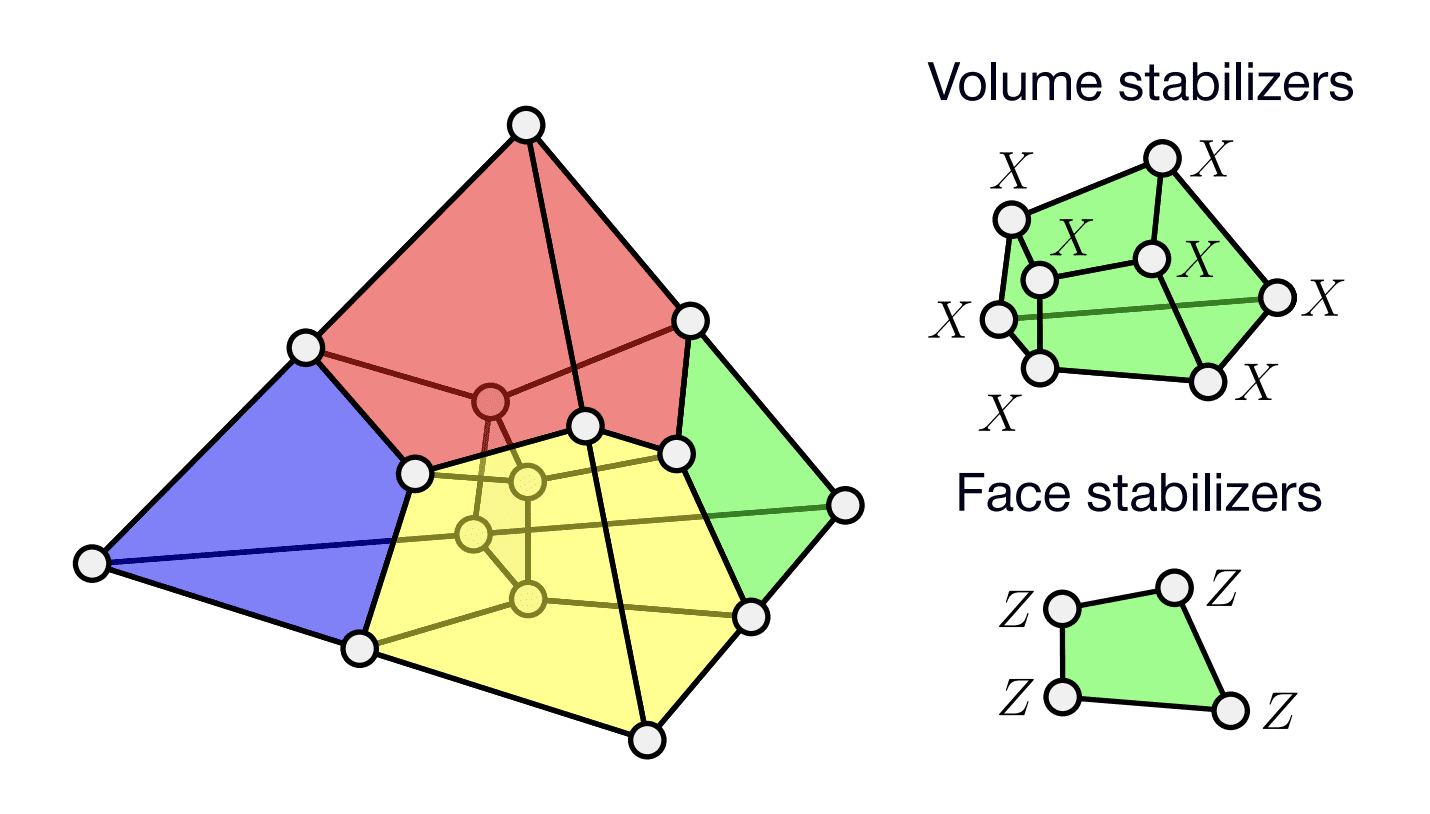
This research introduces a novel method for preparing magic states, which are essential components for universal fault-tolerant quantum computation. The team’s scheme significantly reduces the resources needed compared to existing approaches, particularly for qubits affected by a dominant type of noise, known as biased noise. By leveraging this bias, the method prepares a magic state using only 53 qubits and 5.5 rounds of error correction, representing a substantial reduction in the required circuit volume, more than an order of magnitude lower than current methods for unbiased qubits. The key innovation lies in unfolding a specific error-correcting code in two dimensions, allowing distillation to occur directly at the physical level.
This approach not only reduces qubit requirements but also maintains high fidelity even with more moderate noise bias and at higher physical error rates, thereby overcoming the limitations found in previous biased-noise schemes. The researchers demonstrate that even at a reduced noise bias, a high-fidelity magic state can be prepared, albeit with a slightly increased qubit count and error correction rounds. The method streamlines the process of magic state preparation by exploiting the inherent biases present in certain types of quantum noise, allowing for the creation of high-fidelity magic states with fewer qubits and computational steps. This approach offers a promising path toward building more scalable and fault-tolerant quantum computers by minimising the resources needed for essential quantum operations.
👉 More information
🗞 Unfolded distillation: very low-cost magic state preparation for biased-noise qubits
🧠 DOI: https://doi.org/10.48550/arXiv.2507.12511