
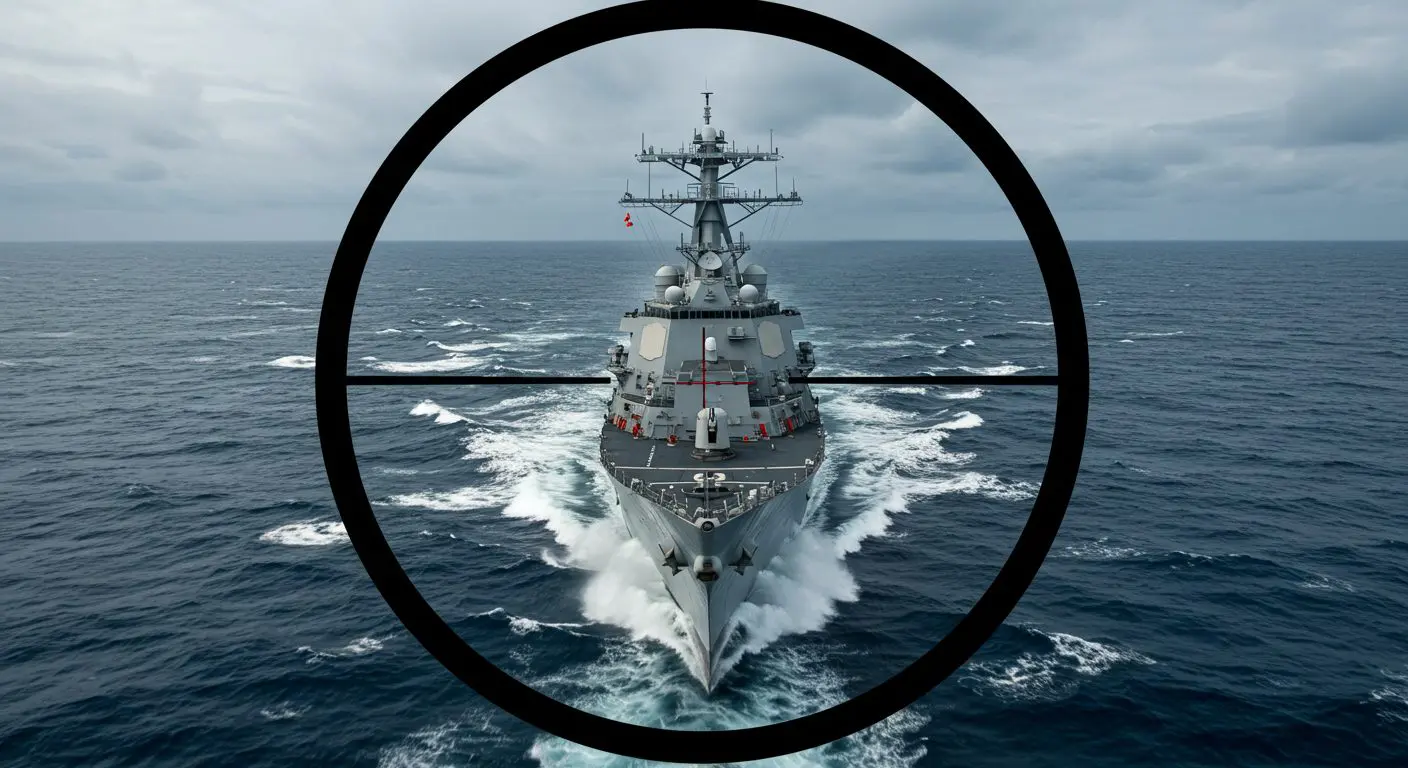
Lockheed Martin has demonstrated an advancement in maritime surveillance through the integration of artificial intelligence with Synthetic Aperture Radar (SAR) technology. SAR, a recognised standard for sea-based imaging, traditionally necessitates manual image interpretation; however, the newly developed system facilitates automated target recognition and analysis. A recent flight test successfully showcased the capability of the AI-powered SAR to classify targets, differentiating between combatant and civilian vessels in near real-time, thereby enhancing situational awareness and decision-making processes.
The system’s functionality extends beyond simple identification. It incorporates autonomous sensor control, enabling the radar to dynamically re-task itself based on detected targets. This capability was achieved utilising Machine Learning Operations (MLOps) tools, facilitating rapid retraining of the AI algorithms. Crucially, the technology operates on low Size, Weight, and Power (SWaP) hardware, allowing for rapid edge processing in the field without reliance on extensive cloud computing infrastructure or ground stations. Further testing is planned throughout the year, with collected data intended to refine and mature multiple Lockheed Martin autonomous systems, including collaborative combat aircraft and broader family of systems applications. This article details a significant step towards fully automated maritime surveillance capabilities.
Ongoing development will focus on refining and expanding the capabilities demonstrated in recent flight tests. Data gathered throughout the remainder of the year will be instrumental in maturing multiple Lockheed Martin autonomous systems, extending beyond initial maritime applications to encompass collaborative combat aircraft and broader family of systems deployments. The core principle guiding this integration is the leveraging of the AI-powered Synthetic Aperture Radar (SAR) Automatic Target Recognition (ATR) capability across diverse platforms.
Specifically, the collected data will facilitate improvements to the Machine Learning Operations (MLOps) tools employed for rapid AI retraining. This iterative process is designed to enhance the accuracy and reliability of target classification, particularly in complex or contested maritime environments. The emphasis on low Size, Weight, and Power (SWaP) hardware remains a priority, ensuring the technology can be readily integrated into a range of airborne and surface platforms without necessitating substantial modifications or reliance on external infrastructure. This commitment to edge processing capabilities allows for near real-time analysis and response, independent of cloud computing or ground station connectivity. The ultimate goal is to create a seamlessly integrated suite of autonomous systems capable of providing enhanced situational awareness and informed decision-making across multiple operational domains.
More information
External Link: Click Here For More