Quantum physicist Dr. Christian Schilling, radiologist and neuroscientist Professor Sophia Stoecklein, climate researcher Professor Matthias Garschagen, stroke expert Professor Arthur Liesz, and biochemist Professor Lucas Jae have each been awarded Consolidator Grants from the European Research Council (ERC). These LMU researchers will receive up to two million euros over five years to expand their innovative research across fields including climate change, stroke, quantum physics, mitochondria, and cancer diagnosis. This funding recognizes LMU’s commitment to achieving significant scientific breakthroughs and shaping the research landscape, demonstrating excellence in diverse scientific areas.
ERC Grants Awarded to Five LMU Researchers
LMU researchers have secured five Consolidator Grants from the European Research Council (ERC), totaling up to two million euros each over five years. These grants support excellent researchers expanding innovative research across diverse fields including climate change, strokes, quantum physics, mitochondria, and cancer diagnosis. LMU President Matthias Tschöp highlights that these awards recognize researchers capable of significant breakthroughs and demonstrate the university’s commitment to outstanding research across multiple disciplines.
Professor Sophia Stoecklein’s CONNECT project focuses on improving cancer diagnostics through functional magnetic resonance imaging (fMRI). She aims to establish fMRI as a quantitative tool by creating a database of thousands of datasets and utilizing AI to detect network deviations in cancer patients. This approach seeks to identify crucial communication between tumors and the brain before visible symptoms appear, potentially enabling earlier detection of progression or metastases and more targeted therapies.
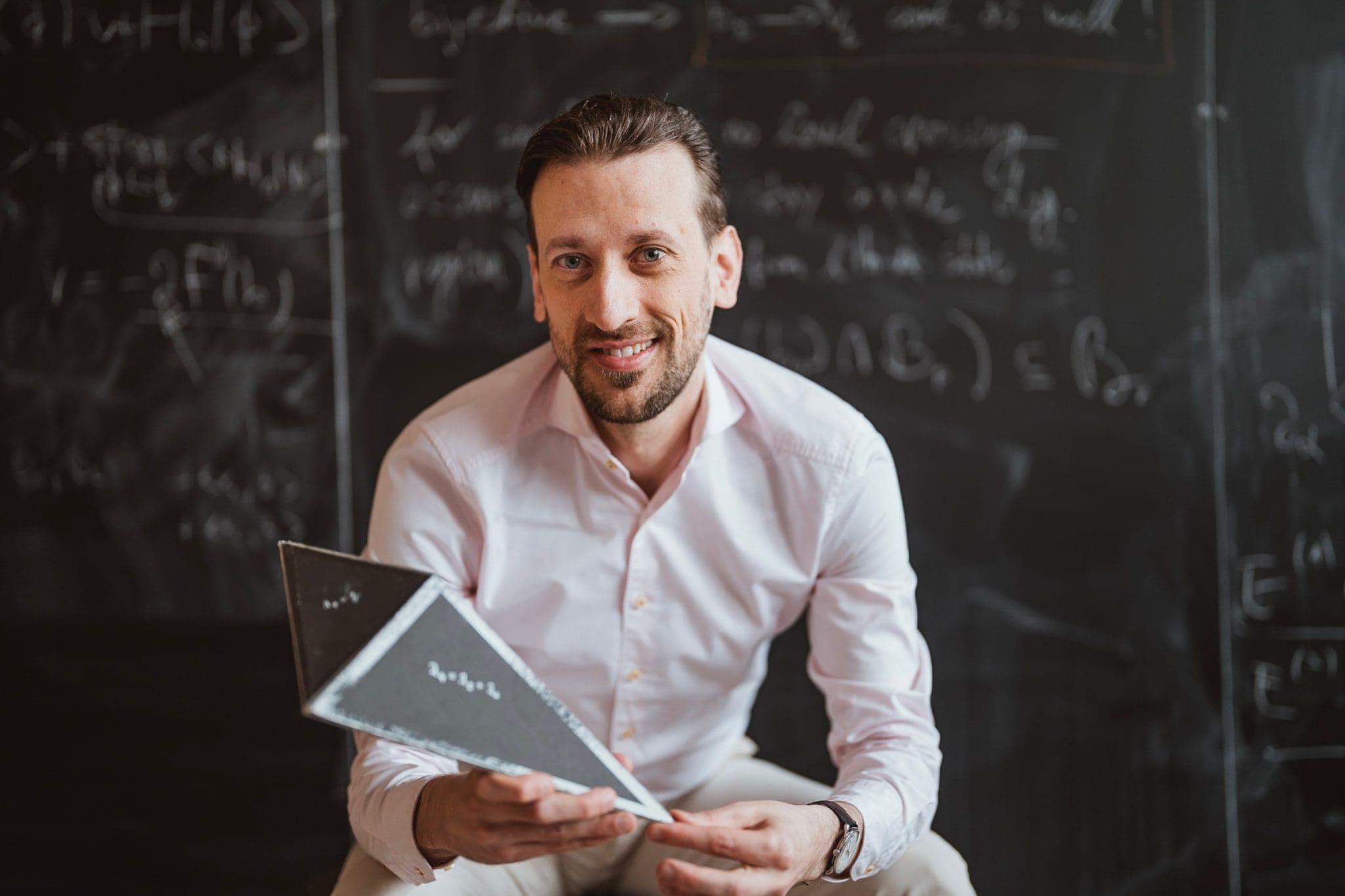
Dr. Christian Schilling’s beyondDFT project seeks a fundamental transformation in electronic structure theory. His approach utilizes one-body reduced density-matrix functional theory (1RDMFT) to more accurately calculate the properties of materials, particularly strongly correlated systems which pose challenges for current methods. Schilling aims to develop new functional models and compress quantum correlations, ultimately reducing computing costs and establishing a new standard for electronic structure calculations in physics, chemistry, and materials science.
Mapping Brain Networks in Cancer Patients
Professor Sophia Stoecklein’s ERC project, CONNECT, aims to establish functional connectivity MRI as a quantifiable imaging tool for cancer diagnostics. Her research focuses on how malignant brain tumors, like glioblastoma, extend beyond visible lesions and interact with brain-wide neuronal circuits, forming synaptic connections. By building a comprehensive database of thousands of fMRI datasets, Stoecklein’s team will develop AI-supported methods to detect and map these network deviations in individual patients, potentially identifying early signs of progression or metastasis.
The CONNECT project will also investigate the biological mechanisms behind these network abnormalities, analyzing structural pathways and molecular signatures from tumor samples. Evaluating the approach in two clinical cohorts, researchers hope to identify regions of strong tumor-brain interaction, offering targets for more precise therapies. This is crucial because network changes often occur before tumors are visible on standard imaging, enabling earlier detection and intervention.
Stoecklein’s approach could extend beyond cancer, potentially offering insights into other brain network disorders like Alzheimer’s disease. The project seeks to “make the communication between tumor and brain visible,” enabling diagnosis and therapy by focusing on processes beyond what’s traditionally observable. This innovative application of fMRI promises a significant advancement in personalized cancer care and neurological disease understanding.
We tend to focus on what we can see, yet crucial processes unfold beyond the visible. CONNECT aims to make the communication between tumor and brain visible, and thus accessible for diagnosis and therapy.
Goals and Targets for Climate Change Adaptation
Professor Matthias Garschagen’s project, GOALT, addresses a critical gap in climate change adaptation: the lack of a robust method for evaluating and setting effective goals and targets. Current adaptation efforts aren’t happening quickly or deeply enough, particularly in coastal cities. Garschagen aims to establish a new theoretical framework explaining when goals and targets improve adaptation action, and will build an empirical knowledge base through global assessment and detailed analysis in cities like Hamburg, Mumbai, Manila, and Cape Town.
The GOALT project will create an integrated model to assess the desirability, feasibility, and impact of potential adaptation goals under varying conditions. This research will culminate in a comprehensive methodology to guide adaptation goals and targets, with the intention of transferring this knowledge to other contexts. Garschagen anticipates the project’s outcomes will serve as a key reference point for adaptation research and drive significant improvements in policy and action.
Ultimately, Garschagen’s work seeks to move beyond simply acknowledging the need for adaptation, to developing a systematic approach for setting and achieving meaningful progress. The project’s focus on both theoretical understanding and practical application, through case studies in diverse coastal cities, aims to address a crucial challenge in the face of increasing climate impacts.
Calculating Electronic Structure of Materials
Dr. Christian Schilling is developing a novel approach for calculating the electronic structure of materials, moving beyond the limitations of density functional theory (DFT). DFT struggles with strongly correlated many-body systems, leading to unreliable predictions for material properties crucial for fields like energy generation and microelectronics. Schilling’s project, beyondDFT, utilizes one-body reduced density-matrix functional theory (1RDMFT), building on a theoretical framework he’s refined over several years to create more efficient functional theories.
The beyondDFT project aims to achieve more accurate approximations for ground states and then develop functional models for excited states. Schilling’s model incorporates his conceptual advances in 1RDMFT alongside innovative methods from entanglement theory. A key goal is to design a scheme to compress quantum correlations, accelerating 1RDMFT algorithms and ultimately reducing computing costs associated with these complex calculations.
Schilling believes his framework has the potential to become a new standard tool for electronic structure calculation across physics, chemistry, and materials science. By addressing the shortcomings of existing methods, beyondDFT promises more accurate predictions of material behavior, potentially accelerating the development of novel materials with improved properties and functionality for various industrial applications.
Mitochondrial Alarm Signals and Function
The provided text does not contain information about mitochondrial alarm signals or function. However, it does mention biochemist Professor Lucas Jae, indicating research in that area is being conducted at LMU. Unfortunately, the source offers no details about his specific project or findings related to mitochondria.
Therefore, based strictly on the provided text, a relevant response is limited to acknowledging the presence of mitochondrial research at LMU through Professor Jae’s work, without detailing any specific findings or mechanisms. The text highlights that LMU conducts excellent research in various fields, including biochemistry, suggesting ongoing investigation into cellular processes like mitochondrial function.
The source emphasizes that the awarded ERC grants support researchers capable of achieving significant breakthroughs. While the specifics of Professor Jae’s work are absent, the grant suggests his research on mitochondria aims for impactful results, potentially furthering our understanding of cellular signaling and function within these crucial organelles. Further information would be needed to elaborate on the specifics of his research.
ERC Consolidator Grants are awarded to researchers who are capable of achieving significant scientific breakthroughs and shaping the research landscape.
Prof. Dr. Matthias Tschöp