National Taiwan University and DaYeh University researchers have studied the characteristics of Cudoped lead apatite LK99 (LK-99). This material is synthesized by removing Cu2S using an ammonia solution. The team evaluated LK99 superconducting properties. They found that it is better classified as a diamagnetic semiconductor. It is not a room-temperature superconductor.
The study also revealed that the superconductor-like behavior in LK99 (LK-99) predominantly arises from a transition in resistivity, which occurs due to the influence of Cu2S. The findings contribute to ongoing research on room-temperature superconductors.
What are the Characteristics of Cudoped Lead Apatite LK99?
The research article discusses the characteristics of Cudoped lead apatite LK99, which is synthesized by removing Cu2S using an ammonia solution. A team of researchers from the Department of Physics and Graduate Institute of Applied Physics at National Taiwan University conducted the study, and the Instrumentation Center at National Taiwan University participated. The Department of Materials Science and Engineering at DaYeh University was also involved.
The researchers evaluated the superconducting properties of Cu-doped lead apatite LK99. They synthesized LK99 samples using a process proposed by a Korean team, which was the first to describe the process. The researchers also examined whether the Korean team’s results were related to Cu2S. They used an ammonia solution (NH3H2O) to remove Cu2S.
Through X-ray diffraction (XRD), a distinct Cu2S phase was identified in the LK99 samples. Energy dispersive X-ray spectroscopy (EDX) confirmed this finding. Following treatment using an ammonia solution effectively eliminated this phase. The appearance of blue Cu2 ions in the solution and the elimination of the Cu2S peak in XRD supported this conclusion.
Is LK99 a Superconductor or a Diamagnetic Semiconductor?
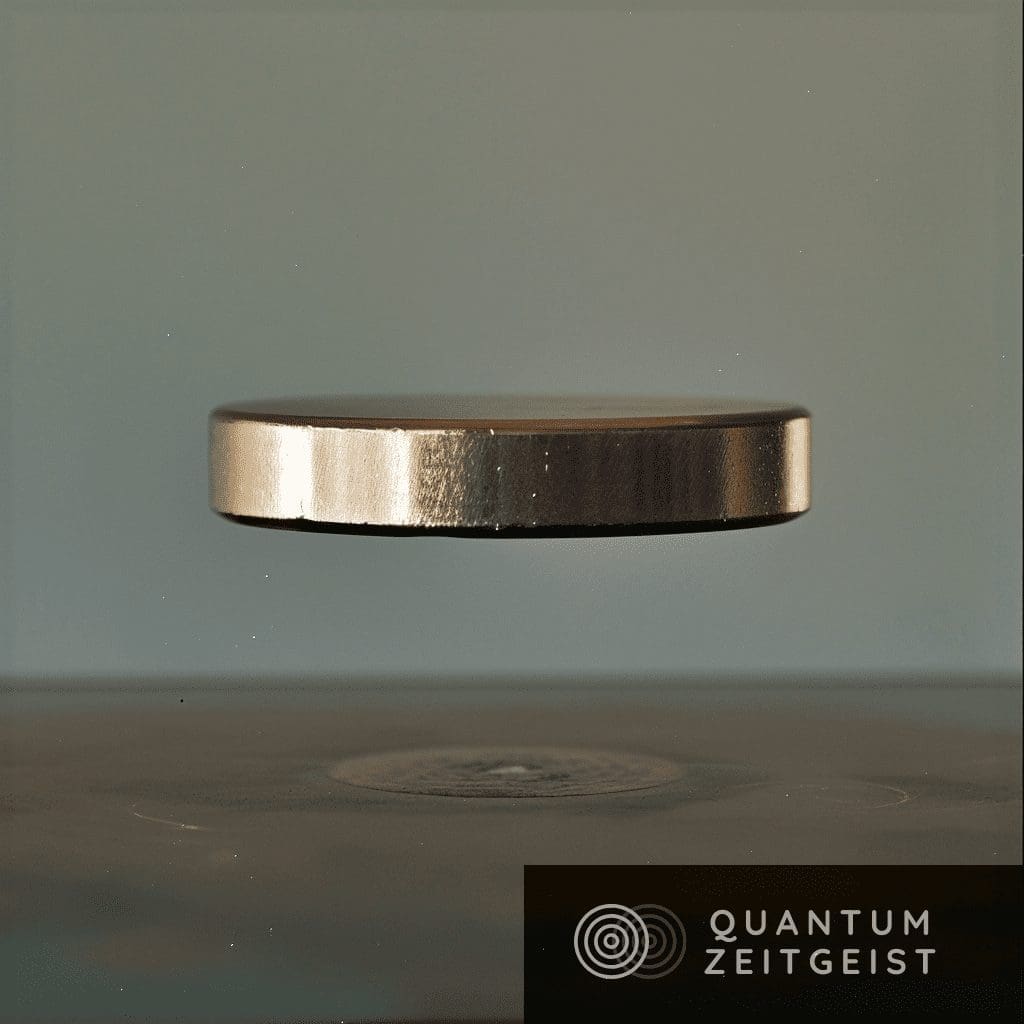
The magnetic and electrical properties of LK99 with and without Cu2S suggest that the superconductor-like behavior in LK99 predominantly arises from a transition in resistivity due to the influence of Cu2S. As such, LK99 is better classified as a diamagnetic semiconductor than a room-temperature superconductor. The room-temperature superconductors still require further research.
A Korean research team’s discovery of a room-temperature ambient pressure superconductor, Cudoped lead apatite, denoted as LK99, caused excitement and sensation across the scientific community worldwide.
Theoretical calculations also showed that under proper doping and lattice arrangement, LK99 may exhibit superconductivity. However, many research teams from various countries tried to reproduce the results of the Korean research team’s LK99 through experimentation but failed to prove that it is not a room-temperature superconductor but a semiconductor with diamagnetism.

What is the Role of Cu2S in LK99?
One notable work argued that the so-called superconducting behavior in LK99 is most likely attributed to a reduction in resistivity resulting from the first-order structural phase transition of Cu2S at nearly 385 K. This transition could explain some of LK99’s unusual electrical properties.
Another work suggested that the synthesized LK99 may have a significant fraction of cuprous sulfide Cu2S, which has a known phase transition from an ordered low-temperature phase to a high-temperature superionic phase at 104C (377 K) and thus exhibits sharp transitions in electrical resistivity and heat capacity.
This finding coincides with the temperature-induced transitions reported for LK99 and implies that the synthesized LK99 must be free of any Cu2S to allow unambiguous confirmation of its superconducting properties. Thus, a method of post-growth annealing on LK99 was conducted to probe the impact of Cu2S.
How was Cu2S Removed from LK99?
In this study, the researchers tried to remove the Cu2S phase in LK99 using an ammonia solution for the first time. X-ray diffraction (XRD) confirmed a significant removal of the Cu2S phase in the sample by steeping it in the ammonia solution. Furthermore, the researchers could reproduce the results of magnetic and electrical measurements similar to those demonstrated by the Korean team and found that the results needed to be adjusted because of the influence of Cu2S.
What is the Conclusion of the Study?
The researchers concluded that Pb9CuPO46O is a diamagnetic semiconductor material, not a room-temperature superconductor. The study provides valuable insights into the characteristics of Cudoped lead apatite LK99 and the role of Cu2S in its properties. The study’s findings contribute to the ongoing research on room-temperature superconductors and could guide future studies in this field.
Publication details: “The characteristics of Cu-doped lead apatite (LK-99) synthesized with the removal of Cu2S using ammonia solution: A diamagnetic semiconductor”
Publication Date: 2024-02-01
Authors: Zhujialei Lei, Chang‐Yu Lin, I Nan Chen, Cheng Tung Chou, et al.
Source: APL Materials
DOI: https://doi.org/10.1063/5.0183271