

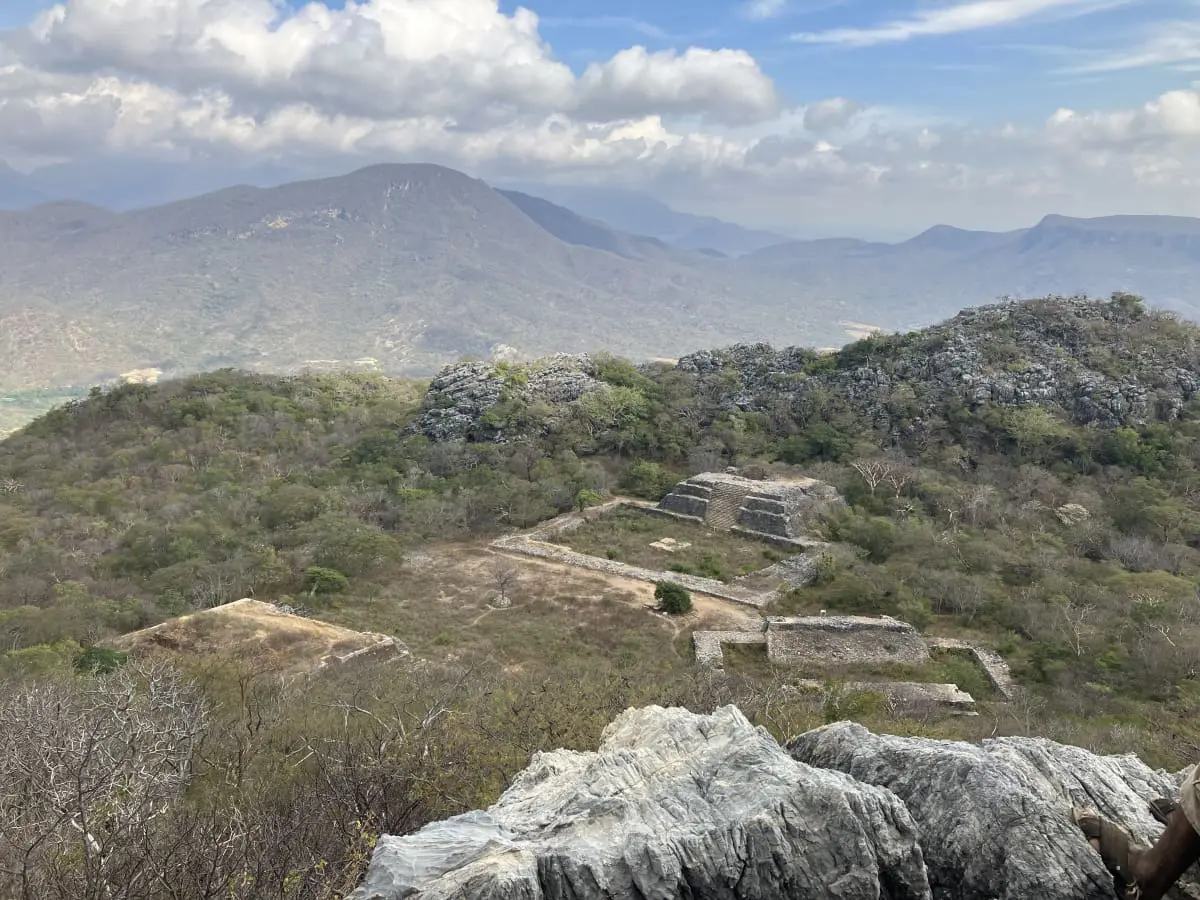
The remnants of a long-abandoned pre-Columbian Mexican city, hidden beneath a dense forest canopy in southern Oaxaca, have been meticulously mapped using cutting-edge remote sensing technology, revealing a sprawling metropolis that challenges previous assumptions about its purpose and layout. Guiengola, a 15th-century Zapotec site, is a fortified city covering 360 hectares, with over 1,100 buildings, four kilometers of walls, and a sophisticated urban design featuring temples, ballcourts, and separate neighborhoods for elites and commoners.
This discovery, made possible by the use of lidar (light detection and ranging) technology, provides a unique glimpse into the level of political and social organization of the Zapotecs on the eve of the Spanish conquest, and is expected to shed new light on their agency in negotiating with European colonizers, as researchers continue to unravel the secrets of this remarkably well-preserved city, frozen in time for over 500 years.
Introduction to Remote Sensing in Archaeology
Remote sensing tools have revolutionized the field of archaeology, allowing researchers to uncover and analyze ancient sites with unprecedented precision and speed. One such tool is lidar (light detection and ranging), which uses pulsing laser beams to provide detailed, three-dimensional topographic information about the earth’s surface. This technology has been instrumental in revealing the secrets of Guiengola, a 15th-century Zapotec site in southern Oaxaca, Mexico. By analyzing data generated by lidar scans, researchers can map the size and layout of built structures, infer their use based on artifacts found at the locations, and explore how power was distributed within the city.
The use of remote sensing tools like lidar has significantly reduced the time and effort required to discover and analyze ancient sites. In the case of Guiengola, what would have taken years of ground-based exploration can now be accomplished in a matter of hours. This is particularly significant for sites like Guiengola, which are covered by dense forest canopy, making traditional excavation methods challenging and time-consuming. The application of lidar technology has enabled researchers to uncover the full extent of the site, revealing a sprawling, fortified city that was previously thought to be simply a fortress.
The discovery of Guiengola’s true nature has significant implications for our understanding of the Zapotecs’ level of political and social organization. By analyzing the layout of the city, including the distribution of temples, ballcourts, and residential areas, researchers can gain insights into the daily lives of the people who lived there. The fact that the city was abandoned just before the Spanish arrival and its people moved to a nearby location, where their descendants still live today, provides a unique opportunity to study the impact of colonialism on indigenous populations.
Uncovering the Secrets of Guiengola
Guiengola, located in southern Oaxaca, Mexico, is a 15th-century Zapotec site that has been the subject of recent research using remote sensing tools. The site covers an area of approximately 360 hectares, with over 1,100 buildings, four kilometers of walls, and a network of internal roads. The city’s layout is characterized by a clearly organized urban plan, with separate neighborhoods for elites and commoners. The presence of temples, ballcourts, and other communal spaces suggests a high level of social complexity and organization.
The use of lidar technology has enabled researchers to map the size and layout of the built structures at Guiengola, including the location of residential areas, temples, and ballcourts. By analyzing the distribution of these features, researchers can infer how power was distributed within the city. For example, the amount of building space dedicated to elite areas, such as temples and ballcourts, compared to commoner areas, provides insights into the social hierarchy of the city. The fact that the city is remarkably well-preserved, with many houses still standing, allows researchers to study the daily lives of the people who lived there in unprecedented detail.
The research conducted at Guiengola has been funded by various institutions, including the Wenner-Gren Foundation, Indiana University College of Arts and Sciences, and the Canadian Social Sciences and Humanities Research Council. The publication of the research in Ancient Mesoamerica provides a comprehensive overview of the site and its significance for our understanding of Zapotec culture and society.
Power Dynamics in Guiengola
The distribution of power within Guiengola is a key area of research, with significant implications for our understanding of Zapotec social organization. By analyzing the layout of the city, including the location of temples, ballcourts, and residential areas, researchers can gain insights into how power was distributed among different groups. The presence of ballcourts, which were built for the purpose of practicing a ritual ballgame, is particularly significant, as these structures represent both the underworld and fertility.
The calculation of building space dedicated to elite areas, such as temples and ballcourts, compared to commoner areas, provides a quantitative measure of power distribution within the city. This analysis suggests that the city was characterized by a high level of social complexity, with a clear distinction between elite and commoner areas. The fact that the city is remarkably well-preserved allows researchers to study the daily lives of the people who lived there in unprecedented detail, providing insights into the social dynamics of the city.
The research conducted at Guiengola has significant implications for our understanding of Zapotec culture and society, particularly in terms of power dynamics. By analyzing the distribution of power within the city, researchers can gain insights into the social hierarchy of the city and how it was maintained. This knowledge can be used to inform our understanding of other ancient cities and societies, providing a more nuanced understanding of the complexities of human social organization.
The use of remote sensing tools like lidar has revolutionized the field of archaeology, allowing researchers to uncover and analyze ancient sites with unprecedented precision and speed. The discovery of Guiengola’s true nature as a sprawling, fortified city provides significant insights into Zapotec culture and society, particularly in terms of power dynamics.
By analyzing the layout of the city and the distribution of power within it, researchers can gain a more nuanced understanding of the complexities of human social organization. The research conducted at Guiengola has significant implications for our understanding of ancient cities and societies, providing a unique opportunity to study the impact of colonialism on indigenous populations.
External Link: Click Here For More


