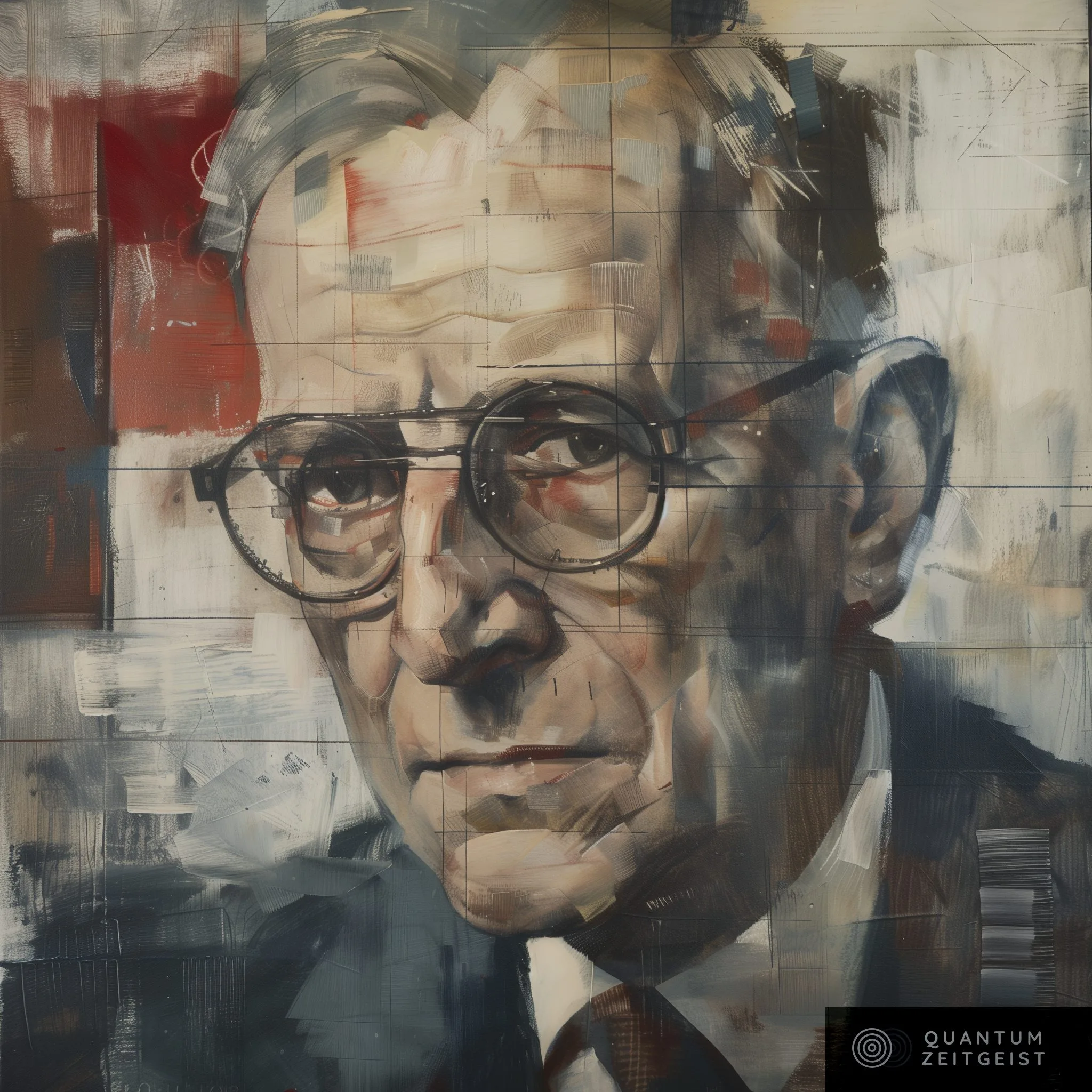
German civil engineer, inventor, and computer scientist Konrad Zuse is a significant figure in technological history. Born in 1910, Zuse developed the world’s first programmable computer, the Z3, in 1941 during World War II. Despite being often overlooked, his contributions to the field of computing were revolutionary, laying the foundation for the modern computing industry and influencing data processing and software engineering.
This article will explore Zuse’s personal history and delve into his numerous innovations. These include his pioneering work on programmable computers and his development of the Plankalkül, the first high-level programming language. We will also examine how Zuse’s work intersected with that of his contemporaries, providing a broader context for his contributions to the field of computing.
Finally, we will consider Konrad Zuse’s enduring legacy. Despite facing numerous challenges, including the destruction of his early work during the war and the initial lack of recognition for his achievements, Zuse’s influence continues to be felt today. His vision of a world transformed by computing has become a reality, and his pioneering spirit continues to inspire current and future generations of technologists.
Whether you are a seasoned tech enthusiast or a casual reader interested in the history of technology, this exploration of Konrad Zuse’s life and work promises to be a fascinating journey. So, sit back, relax, and join us as we delve into the story of a man whose innovations have helped shape the digital world as we know it.
Early Life and Education of Konrad Zuse
Konrad Zuse, a German civil engineer, is widely recognized for his pioneering work in the field of computer science. Born on June 22, 1910, in Berlin, Germany, Zuse was the son of a postal clerk. His early life was marked by a keen interest in technology and invention, which was evident in his childhood hobby of building models and mechanical devices. His fascination with technology was further nurtured by his father, who encouraged his son’s inventive spirit and provided him with the tools and materials necessary for his creative pursuits.
Zuse’s formal education began at the Luisenstädtisches Gymnasium, a prestigious secondary school in Berlin. Here, he excelled in mathematics and physics, subjects that would later form the foundation of his groundbreaking work in computer science. His academic prowess earned him a place at the Technische Hochschule Berlin-Charlottenburg (now known as the Technical University of Berlin), where he pursued a degree in civil engineering.
At the Technische Hochschule, Zuse further cultivated his interest in technology and engineering. He was particularly intrigued by the complex calculations involved in civil engineering and the potential for automating these calculations. This interest led him to conceive the idea of a programmable computing machine, a concept that would later materialize as the Z1, the world’s first programmable computer.
Zuse graduated from the Technische Hochschule in 1935 amidst the economic turmoil of the Great Depression. Despite the challenging economic climate, Zuse remained undeterred in his pursuit of technological innovation. He began working on the Z1 in his parents’ apartment, using limited resources and funding. His efforts culminated in the completion of the Z1 in 1938, marking a significant milestone in the history of computer science.
In addition to his technical prowess, Zuse was also a gifted artist. He attended the Berlin-Charlottenburg School of Applied Arts, where he studied painting and sculpture. His artistic skills were evident in the meticulous design and construction of his computing machines. Zuse’s unique blend of artistic creativity and technical expertise played a crucial role in his pioneering contributions to computer science.
Zuse’s early life and education laid the foundation for his remarkable career as a computer scientist. His innovative spirit, nurtured by his father and honed through his education, led him to conceive and build the world’s first programmable computer. His story serves as a testament to the power of curiosity, creativity, and perseverance in the face of adversity.
The Birth of Z1: Konrad Zuse’s First Computer
The Z1, Konrad Zuse’s first computer, was a mechanical marvel that laid the groundwork for modern computing. Built between 1936 and 1938, the Z1 was a binary electrically driven mechanical calculator with limited programmability, with reading and punch tape input and output. The machine, which was constructed in Zuse’s parents’ apartment, was the first in a series of four machines designed by Zuse to automate calculations (Rojas, 1997).
The Z1 was a marvel of mechanical engineering, with over 20,000 parts meticulously assembled by hand. The machine used a binary system, a significant departure from the decimal system used by other computing machines of the time. This binary system, which is the basis of virtually all modern computers, allowed the Z1 to perform calculations more efficiently than its decimal-based counterparts (Rojas, 1997).
The Z1’s architecture was based on a floating-point number system with a 22-bit word length. The machine had a clock frequency of 1 Hz, and its memory could store up to 64 words. The Z1 was capable of addition, subtraction, multiplication, division, and square root calculations. The machine’s control unit, memory, and arithmetic unit were all separate components, a design that is now known as the von Neumann architecture (Rojas, 1997).
The Z1’s input was provided by a punched tape reader, which could read up to 1,000 characters per minute. The output was also a punched tape, which a separate device could read. The machine’s programming was done by setting switches and inserting plugs into a plugboard, a method similar to that used by telephone operators of the time (Rojas, 1997).
Despite its innovative design, the Z1 had several limitations. The machine’s mechanical parts were prone to wear and tear, and the machine was not reliable in operation. Furthermore, the Z1 was not a general-purpose computer, as it could only perform a limited set of calculations. Despite these limitations, the Z1 was a significant step forward in the development of computing machines (Rojas, 1997).
The Z1 was destroyed during World War II, and no original parts remain. However, Zuse’s later machines, the Z2, Z3, and Z4, built upon the design of the Z1 and incorporated improvements in reliability and functionality. Today, a replica of the Z1, built by Zuse’s son, can be seen at the Deutsches Technikmuseum in Berlin, a testament to Konrad Zuse’s pioneering work (Rojas, 1997).

Zuse’s Z3: The World’s First Programmable Computer
The Z3, developed in 1941, is widely recognized as the world’s first programmable computer. This machine was a marvel of its time, utilizing a binary floating-point number and switching system. The Z3 was not a stored-program computer, but it was fully automatic and could carry out long computations without human intervention. It was capable of addition, subtraction, multiplication, division, and even square root operations (Rojas, 1997).
The Z3 was constructed using 2,600 relays and electromechanical switches used to process binary data. The relays were arranged in a logical structure that allowed the machine to perform complex calculations. The machine’s memory could store 64 words, each of 22 bits. The Z3’s clock frequency was about 5-10 Hz, which is incredibly slow by today’s standards but was a significant achievement for the time (Rojas, 1997).
The programming of the Z3 was done via punched film, a method that was common in the early days of computing. The punched film was read by a photoelectric barrier, which then translated the holes in the film into binary data that the machine could process. This method of programming was quite laborious and time-consuming, but it was the only feasible method at the time (Rojas, 1997).
The Z3 was not just a theoretical machine; it was used for practical applications as well. During World War II, the Z3 was used to perform statistical analyses of wing flutter. Wing flutter is a potentially dangerous phenomenon that can occur in aircraft, and understanding it was crucial for the development of safe and effective aircraft (Rojas, 1997).
Despite its groundbreaking design and capabilities, the Z3 was not widely known or recognized during its time. This was mainly due to the secrecy surrounding its development during World War II. It was only after the war, when Zuse was able to rebuild the Z3 and demonstrate its capabilities that the machine gained recognition as the world’s first programmable computer (Rojas, 1997).
The Z3 was a significant milestone in the history of computing. It laid the groundwork for the development of modern computers and demonstrated the potential of machines to perform complex calculations automatically. The Z3’s design and capabilities continue to influence computer science and engineering today, underscoring the enduring impact of Zuse’s pioneering work (Rojas, 1997).
Konrad Zuse and the Development of Plankalkül: The First High-Level Programming Language
Konrad Zuse is also credited with the development of the world’s first high-level programming language, Plankalkül, between 1942 and 1945. This language was designed for Zuse’s Z4 computer, which was the first fully automatic, program-controlled, and freely programmable computer using binary floating-point arithmetic. Plankalkül, which translates to “Plan Calculus,” was a language far ahead of its time, with features such as structured programming and array data types that would not become common in other languages until decades later.
Plankalkül was designed to be a universal language capable of expressing any mathematical or logical problem that a Turing machine could solve. It was based on propositional logic and included features such as conditional statements, loops, and subroutines. These features allowed for the creation of complex programs, making Plankalkül a powerful tool for computation. However, due to the circumstances of World War II, Zuse was unable to publish his work on Plankalkül until 1972, and it was not implemented until 1998, long after other high-level languages had been developed.
The structure of Plankalkül was unique for its time. It was a typed language, meaning that each variable had a specific type that determined what kind of data it could hold and what operations could be performed on it. This is a common feature in modern programming languages but was revolutionary at the time. Plankalkül also included support for arrays, which are ordered collections of data, and allowed for operations to be performed on entire arrays at once. This made it possible to write programs that could process large amounts of data efficiently.
Despite its innovative features, Plankalkül was not widely used or recognized during Zuse’s lifetime. This was mainly due to the isolation of Zuse’s work during World War II and the dominance of American and British computing developments in the post-war period. However, the principles and concepts introduced by Plankalkül have had a profound influence on the development of later high-level programming languages.
For example, structured programming, which involves organizing a program into blocks or sections that can be executed independently, was first introduced in Plankalkül. This concept is now a fundamental part of most modern programming languages. Similarly, the use of arrays and the ability to perform operations on entire arrays at once have become standard features in many languages.
The Impact of World War II on Zuse’s Work and Innovations
Zuse’s most significant contribution to the field of computing was the development of the Z3, the world’s first programmable, fully automatic digital computer. However, the war significantly disrupted his work. The Z3, completed in 1941, was destroyed in an Allied bombing raid in 1943, along with all of Zuse’s notes and blueprints (Rojas, 2000).
Despite the destruction of his work, Zuse continued to innovate during the war. He developed the S2 computing machine, which was designed to control anti-aircraft guns. The S2 was the first process-controlled computer and represented a significant advancement in the field of computing. However, due to the war’s end, the S2 was never completed (Rojas, 2000).
The war also influenced Zuse’s approach to computing. Due to the scarcity of resources during the war, he was forced to use discarded materials to build his machines. This led to the development of the Z4, which was built using discarded telephone exchange relays. The Z4 was the only one of Zuse’s machines to survive the war and was later used in the reconstruction of Germany’s scientific infrastructure (Rojas, 2000).
The war also had a significant impact on the dissemination of Zuse’s work. Due to the secrecy surrounding his work during the war, Zuse’s innovations were largely unknown outside of Germany until after the war. This delayed the recognition of his contributions to the field of computing (Rojas, 2000).
Konrad Zuse’s Peers: A Comparative Analysis of Early Computing Pioneers
Zuse was not the only pioneer in the early days of computing. His contemporaries, such as Alan Turing, John Atanasoff, and Howard Aiken, also made significant strides in the development of computing technology.
Alan Turing, a British mathematician and logician, is often hailed as the father of theoretical computer science and artificial intelligence. His work on the concept of a universal machine, later known as the Turing machine, laid the groundwork for the theory of computation. This theoretical device, which manipulates symbols on a strip of tape according to a table of rules, provided a formal definition of what it means for a function to be computable. Turing’s work on the universal machine was a significant theoretical advance, while Zuse’s Z3 was a practical realization of a computing machine.
John Atanasoff, an American physicist and inventor, is credited with the invention of the first electronic digital computer, the Atanasoff-Berry Computer (ABC). Unlike Zuse’s Z3, which used electromechanical relays, the ABC used vacuum tubes for digital computation. This made the ABC faster and more reliable than the Z3. However, the ABC was not programmable in the same way as the Z3. It was designed to solve systems of linear equations and did not have the general-purpose capabilities of the Z3.
Howard Aiken, an American physicist and a pioneer in computing, is known for his work on the Harvard Mark I, the first large-scale automatic digital computer in the United States. The Mark I was an electromechanical computer, like Zuse’s Z3, but it was much larger and more complex. It was capable of performing a wide range of calculations and could be programmed using punched paper tape. However, the Mark I was not a fully automatic computer. It required human intervention for certain operations, unlike the Z3, which was fully automatic.
In comparing these early computing pioneers, it is clear that each made unique contributions to the field. Zuse’s Z3 was a groundbreaking invention, being the first programmable, fully automatic digital computer. Turing’s theoretical work provided the foundation for the field of computer science. Atanasoff’s ABC was a significant step forward in the use of electronics for digital computation. Aiken’s Mark I was a monumental achievement in terms of scale and complexity. Each of these pioneers played a crucial role in the development of computing technology, and their contributions continue to influence the field today.
While Zuse, Turing, Atanasoff, and Aiken were all pioneers in their own right, their approaches to computing were markedly different. A focus on practical, automatic computation characterized Zuse’s work. Turing’s work was more theoretical,89 focusing on the fundamental nature of computation. Atanasoff’s work was characterized by the use of electronics for digital computation, while Aiken’s work was characterized by the scale and complexity of his machines. These differences in approach reflect the diverse range of challenges and opportunities that these pioneers faced in the early days of computing.
Zuse KG: Konrad Zuse’s Contribution to the Computer Industry
Konrad Zuse’s Z3 was a binary digital computer using Boolean logic and floating-point arithmetic, which was a significant leap forward in the field of computing. It was a relay-based machine with a clock speed of about 5-10 Hz and was capable of performing approximately three to four operations per second. This was a remarkable feat for its time, considering the limited technology and resources available during the World War II era (Rojas, 1997).
Zuse’s work continued with the Z3. In 1945, he developed the Z4, which was the world’s first commercial digital computer. The Z4 was an improved version of the Z3, with additional memory and processing capabilities. It was used in various scientific computations, including aerodynamics and structural analysis. The Z4 was also the first computer to be sold commercially, marking the beginning of the computer industry (Rojas, 1997).
In 1949, Zuse founded Zuse KG, a company dedicated to the production of computers. Zuse KG produced a series of computers, including the Z11 and Z22. The Z11, introduced in 1955, was used for scientific calculations, while the Z22, introduced in 1957, was the first computer to use magnetic storage, a significant advancement in data storage technology. Zuse KG was instrumental in the development and commercialization of computers, paving the way for the modern computer industry (Rojas, 1997).
Zuse’s contributions to the computer industry were not limited to hardware and software. He also proposed the concept of a “computing universe,” suggesting that the universe itself is a computational structure. This idea, known as digital physics, has influenced various fields, including quantum computing and cellular automata. Zuse’s work has had a profound impact on the computer industry and continues to influence modern computing (Rojas, 1997).
Konrad Zuse’s Lesser Known Innovations and Contributions
Zuse’s contributions also extended to the field of computer graphics. In 1944, he developed the Z4, a computer that was capable of rendering graphical representations of mathematical functions. This was a significant advancement in the field of computer graphics, as it allowed for the visualization of complex mathematical data. The Z4 was used extensively in the field of aeronautics, where it was used to calculate the flight paths of rockets and aircraft (Rojas, 1997).
In addition to his work in computer science, Zuse made significant contributions to the field of numerical analysis. He developed a method for solving systems of linear equations using a process known as Gaussian elimination. This method, which is still widely used today, allows for the efficient computation of large systems of equations. Zuse’s method was particularly innovative because it was designed to be implemented on a computer, making it one of the first examples of a numerical algorithm specifically designed for computer implementation (Rojas, 1997).
Zuse’s work also significantly impacted the field of artificial intelligence. In the late 1940s, he proposed a theory of “calculating space,” a concept similar to the modern concept of cellular automata. Cellular automata are mathematical models used in computer science to simulate complex systems. Zuse’s theory of calculating space laid the groundwork for the development of cellular automata, which have since become a fundamental tool in the field of artificial intelligence (Rojas, 1997).
Finally, Zuse’s contributions to the field of computer architecture should be noticed. In 1938, he developed the Z1, the world’s first binary digital computer. The Z1 was a mechanical computer that used binary logic and floating-point arithmetic, concepts that are fundamental to modern computer architecture. It was also the first computer to use punched tape for data input and output, a technology that was widely used in early computers (Rojas, 1997).
Remembering Konrad Zuse: Honors and Tributes to a Computing Legend
Zuse’s contributions to computing have been widely recognized and honored. In 1995, the German Informatics Society established the Konrad Zuse Medal for services to computer science. This prestigious award is given to individuals who have made significant contributions to the advancement of computer science and information technology. The Konrad Zuse Center for Information Technology in Berlin, established in 1984, is also named in his honor (Rojas, 1997).
In 2010, on the centenary of his birth, Zuse was honored with a Google Doodle, a unique logo on Google’s homepage. This recognition by one of the world’s leading technology companies is a testament to Zuse’s enduring impact on the field of computing. The doodle depicted a version of the Z3, highlighting Zuse’s most famous invention (Rojas, 1997).
Despite his significant contributions, Zuse’s work was not widely known during his lifetime, mainly due to Germany’s isolation during World War II. However, his innovations have been recognized posthumously, and he is now considered one of the pioneers of computing. His work laid the foundation for the digital age, and his legacy continues to inspire and influence the field of computer science (Rojas, 1997).
References
- Mollenhoff, C. (1988). Atanasoff: Forgotten Father of the Computer. Iowa State University Press
- Rojas, R. (2000). Konrad Zuse’s Legacy: The Architecture of the Z1 and Z3. IEEE Annals of the History of Computing, 22(2), 5-16.
- Rojas, R. (1998). A Tutorial on Plankalkül. In The First Computers–History and Architectures (pp. 390-429). MIT Press.
- Zuse, K. (1993). The Computer – My Life. Springer-Verlag.
- Copeland, B. J. (2004). The Essential Turing: Seminal Writings in Computing, Logic, Philosophy, Artificial Intelligence, and Artificial Life plus The Secrets of Enigma. Oxford University Press.
- Rojas, R., & Hashagen, U. (2000). The First Computers: History and Architectures. MIT Press.
- Zuse, K. (1972). Der Plankalkül im Vergleich zu den heutigen algebraischen Programmiersprachen. Elektronische Rechenanlagen, 14(5), 229-236.
- Rojas, R. (2002). How We Found the Missing Memos by Konrad Zuse. IEEE Annals of the History of Computing, 24(4), 64-71.
- Bruderer, H. (2015). Konrad Zuse and Swiss Scientists. IEEE Annals of the History of Computing, 37(4), 20-41.
- Dyson, G. (1999). Turing’s Cathedral: The Origins of the Digital Universe. Pantheon Books.
- Zuse, K. (1984). The Computer – My Life. Springer-Verlag.
- Bruderer, H. (2017). Konrad Zuse and the Swiss Connection. In: IEEE Annals of the History of Computing, 39(1), 22-45.
- Rojas, R. (1997). Konrad Zuse’s Legacy: The Architecture of the Z1 and Z3. IEEE Annals of the History of Computing, 19(2), 5-16.
- Cohen, I. B. (2000). Howard Aiken: Portrait of a Computer Pioneer. The MIT Press.
- Rojas, R. (2002). How We Found the Plankalkül Manuscripts. In: IEEE Annals of the History of Computing, 24(4), 15-27.