Europe’s deep tech sector just received a significant boost with the launch of a new €1 billion investment fund, spearheaded by Kembara, which has already secured a first close of €750 million. The fund aims to address chronic underfunding in the European deep tech landscape and prevent the sale of innovative companies to foreign entities. Kembara will deploy €40 million cheques into 20 European Deep Tech companies at Series B and C funding stages, leveraging a team with over 100 years of combined experience in the field. As Seb Johnson notes, “This is EXACTLY what Europe needs more. More late stage capital. More investment into Deep Tech.” This injection of capital signals a pivotal moment for the continent’s burgeoning deep tech ecosystem.
Kembara Fund Launches €750m for European Deep Tech
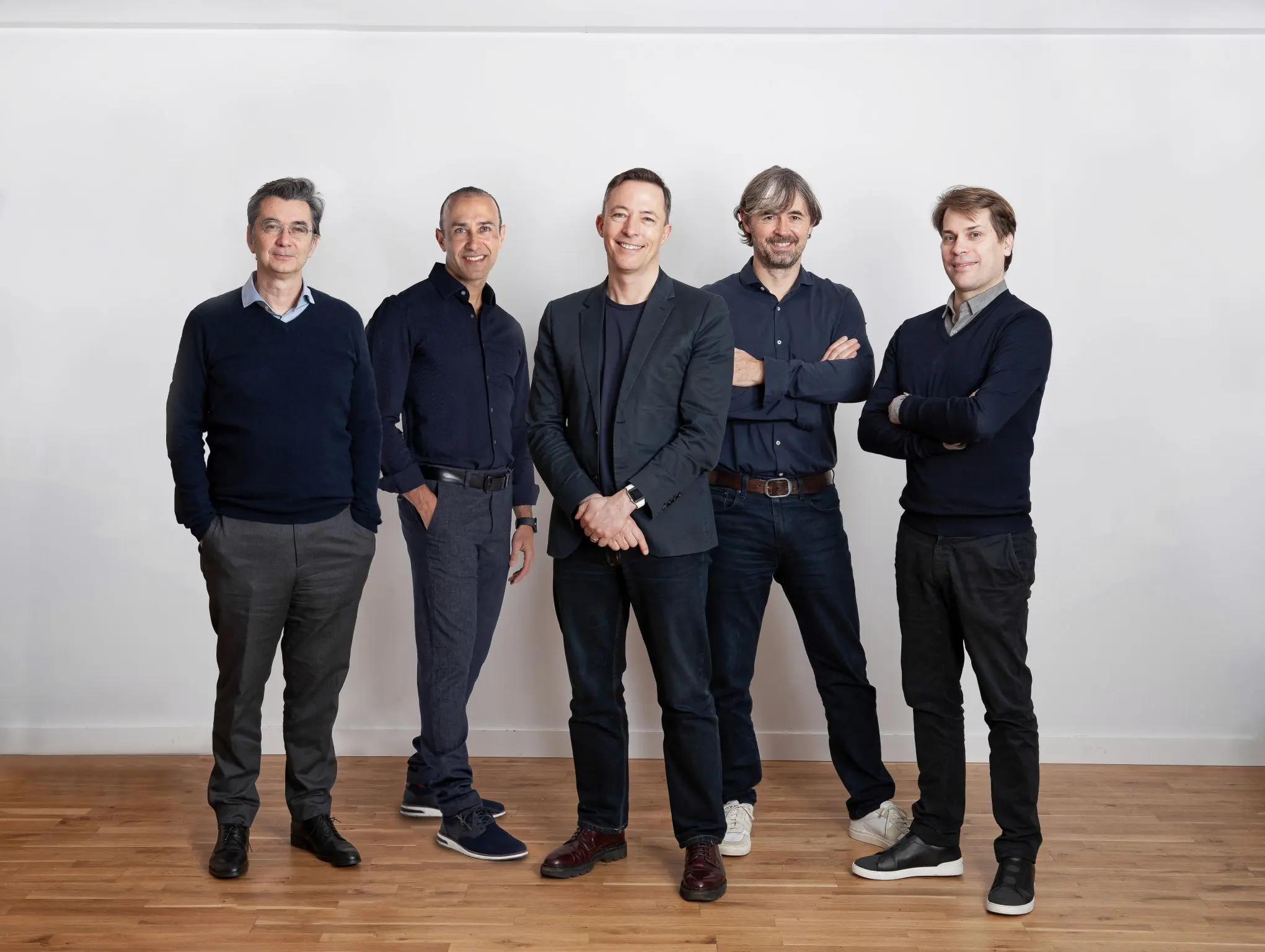
A new €1 billion fund has launched in Europe, focused on bolstering growth-stage Deep Tech ventures, with an initial €750 million secured in its first close. Kembara intends to address the historical underfunding of European Deep Tech companies and prevent their acquisition by foreign entities. The founding team boasts over a century of combined experience in building, operating, and investing in Deep Tech, comprising Javier Santiso, Yann de Vries, Robert Trezona, Pierre Festal, and Siraj Khaliq. Notably, the team’s prior investments include prominent companies like SpaceX, OpenAI, and Groq, demonstrating a strong track record. More late stage capital.
More investment into Deep Tech,” said Seb Johnson. A discussion with Yann de Vries regarding the fund’s strategy is available on YouTube and Spotify via the “Scaling Europe” show.
Founding Team’s Extensive Deep Tech Investment Experience
Javier Santiso, founder/CEO of Mundi Ventures, joins Yann de Vries, formerly of Atomico and Lilium, and Robert Trezona, founder of Kiko Ventures and ex-IP Group investor, in leading the initiative. Pierre Festal, a partner at Promus Ventures, and Siraj Khaliq, founder & CTO of The Climate Corporation and former deep tech partner at Atomico, further strengthen the fund’s expertise. This collective experience extends to notable investments in pioneering companies, including SpaceX, OpenAI, and Groq, demonstrating a proven track record of identifying and supporting disruptive technologies. More late stage capital. Beyond these headline names, the founding members have also backed Anduril, Ceres Power, Hinge Health, The Exploration Company, Fernride and RobCo, showcasing a diverse portfolio and deep understanding of the deep tech landscape.
For too long European Deep Tech has been underfunded and sold off to foreign companies.
Deep technology fundamentally operates at the intersection of core scientific breakthroughs and industrial scalability. Unlike software ventures which can rapidly iterate on existing frameworks, deep tech—be it in quantum computing, synthetic biology, or advanced material science—requires massive, multi-year expenditure to progress past the laboratory stage. Success hinges on transitioning technologies from a Technology Readiness Level (TRL) 2 or 3 into robust commercial products, a process necessitating significant industrial piloting and validation that few venture capital cycles are structured to fund.
The challenge of industrializing these frontier technologies lies specifically in bridging the “valley of death”—the period between successful proof-of-concept research and market-viable, mass-produced goods. This gap demands capital that is patient, risk-tolerant, and deeply knowledgeable about the physics and chemistry underlying the innovation. The funds are therefore structured not merely as venture bets, but as strategic capital aimed at de-risking the immense technical hurdles that define the advanced manufacturing and research pipelines of next-generation industrial systems.
Furthermore, the global push for digital sovereignty means that deep tech assets are viewed through a geopolitical lens. Nations are increasingly recognizing that technological leadership is inextricably linked to economic security. By providing significant, domestic liquidity, funds like Kembara are effectively building out national technological resilience, ensuring that crucial intellectual property and cutting-edge industrial supply chains remain under European stewardship rather than becoming targets for external acquisition.
Technically, many of these advanced platforms involve complex modeling and optimization, such as predicting molecular interactions or simulating quantum entanglement states. The investment therefore supports the requisite compute infrastructure and specialized scientific talent needed to tackle grand challenges, including achieving carbon neutrality and advancing energy density. This shift underscores a movement toward capital prioritizing foundational science rather than simply incremental market improvements.