

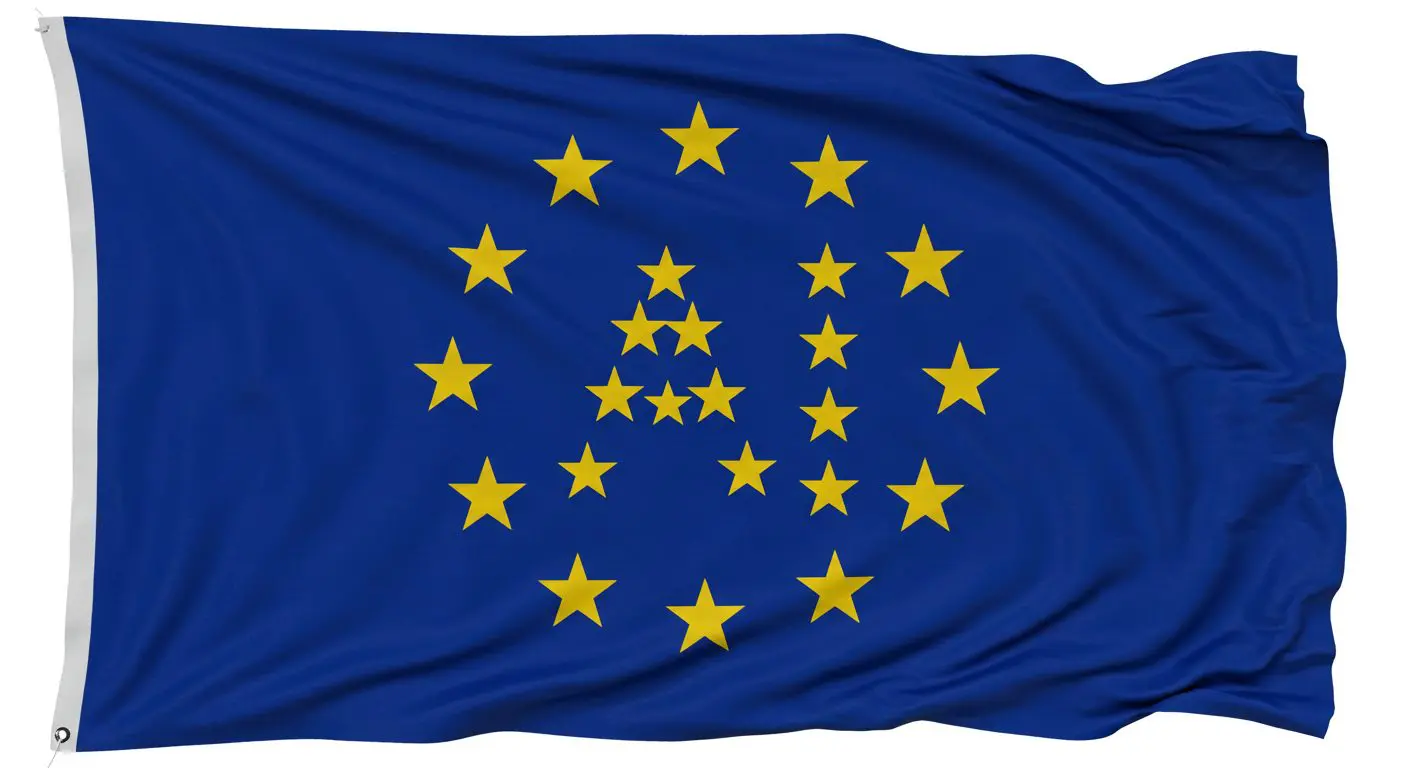
On the 8th of October 2025, the European Commission rolled out two sweeping strategies designed to cement the continent’s leadership in artificial intelligence. The first, the Apply AI Strategy, targets the rapid deployment of AI across key industries and the public sector, while the second, the AI in Science Strategy, seeks to embed AI at the heart of European research. Together, they promise a coordinated push that will see AI move from laboratory curiosity to a cornerstone of everyday life, from smarter hospitals to more efficient governance, and from advanced scientific discovery to a robust, AI‑driven economy.
How the Apply AI Alliance Will Coordinate Europe’s AI Future
The Apply AI Strategy is built on a three‑fold promise: accelerate time‑to‑market, strengthen the AI workforce, and weave together the continent’s most influential AI actors. A central pillar is the Apply AI Alliance, a new forum that brings together industry leaders, public‑sector bodies, academia, social partners, and civil society. By creating a common language and shared objectives, the Alliance will reduce silos that have historically slowed AI adoption. For instance, the Alliance will coordinate access to test beds and shared data repositories, ensuring that a pharmaceutical company in Brussels can benchmark a diagnostic algorithm against a public‑sector dataset in Barcelona without navigating separate regulatory hurdles.
Time‑to‑market is a recurring bottleneck in AI projects, and the Commission’s strategy tackles it head‑on. The Alliance will link infrastructure, data, and testing facilities, allowing innovators to prototype, validate, and commercialise new AI solutions in a fraction of the time it would normally take. This integration is underpinned by the Frontier AI initiative, which pools public and private investment into high‑performance computing and specialised AI talent hubs across the EU.
The strategy also recognises that technology alone is insufficient. To build an AI‑ready workforce, the Commission will fund training programmes and reskilling schemes that target both technical specialists and the broader workforce that will operate alongside AI systems. These programmes will be delivered in partnership with universities and industry training providers, ensuring that the curriculum reflects real‑world needs.
Monitoring progress is essential. The AI Observatory, a new entity created under the Apply AI Strategy, will track AI trends, assess sectorial impacts, and provide early warnings on emerging risks. By feeding data back into the Alliance’s decision‑making, the Observatory ensures that policy remains responsive to rapid technological change.
Finally, the strategy dovetails with the EU’s pioneering AI Act. The AI Act Service Desk will be a practical resource for companies and public bodies, offering guidance on compliance, risk assessment, and the legal responsibilities that accompany AI deployment. Together, the Apply AI Alliance and the AI Act Service Desk form a comprehensive ecosystem that supports innovation while safeguarding citizens’ rights.
€600 Million to Power EU Science with AI Gigafactories
The AI in Science Strategy takes a different tack, concentrating on the scientific community’s need for computational power and data. At its core is a €600 million investment from Horizon Europe, earmarked to give EU researchers and start‑ups access to AI gigafactories, massive, shared computing facilities capable of running the most demanding machine‑learning workloads. By standardising access to such infrastructure, the Commission aims to level the playing field for small and medium‑sized research groups that would otherwise struggle to afford state‑of‑the‑art hardware.
This €600 million is part of a larger commitment: the Commission plans to double Horizon Europe’s annual AI investment to over €3 billion. Half of that increase will focus on AI in science, funding everything from advanced data‑curation platforms to cross‑disciplinary research clusters. The strategy also includes a dedicated programme to attract global scientific talent and highly skilled professionals to “Choose Europe.” By offering competitive packages and streamlined visa processes, the EU seeks to reverse the brain drain that has long plagued its research sector.
A key feature of the AI in Science Strategy is the support for scientists to identify strategic data gaps. Researchers will receive funding to collect, curate, and integrate datasets that are currently missing from public repositories. This initiative addresses a perennial bottleneck: many AI models falter because they lack high‑quality, domain‑specific data. By bridging these gaps, the Commission hopes to accelerate breakthroughs in fields ranging from climate modelling to genomics.
The €600 million also funds the development of AI‑friendly data infrastructures. This includes secure, federated learning platforms that allow disparate institutions to collaborate on sensitive data, such as patient records, without compromising privacy. By providing the tools for ethical data sharing, the EU is positioning itself as a leader in responsible AI research.
RAISE: Europe’s Virtual Institute for AI-Driven Research
At the heart of the AI in Science Strategy lies RAISE, the Resource for AI Science in Europe. RAISE is not a physical laboratory but a virtual institute that coordinates AI resources across the continent. It pools expertise, datasets, and computational assets from universities, national research organisations, and private companies, creating a single, searchable catalogue of AI tools and services.
RAISE’s structure mirrors that of a global consortium. Member institutions contribute AI models, training data, and hardware, and in return gain access to the collective pool. This shared model reduces duplication of effort and accelerates the development of specialised AI applications. For example, a team in Dublin working on protein folding can tap into a GPU cluster hosted by a partner in Munich, while simultaneously sharing their trained model back to the community.
Beyond resource pooling, RAISE will host a series of thematic working groups that tackle specific scientific challenges. One group might focus on climate prediction, another on drug discovery, and yet another on precision agriculture. Each group will convene experts from across Europe, ensuring that the best ideas and techniques are cross‑pollinated.
The virtual nature of RAISE also means that it can evolve rapidly. New datasets can be added, new algorithms can be integrated, and new members can join without the constraints of physical infrastructure. This flexibility is essential in a field where breakthroughs can emerge overnight.
The AI Act Service Desk Ensuring Europe’s First Comprehensive AI Law
The EU’s AI Act, the world’s first comprehensive legal framework for AI, sets out stringent requirements for high‑risk systems. To translate these legal mandates into practice, the Commission has established the AI Act Service Desk. This desk functions as a one‑stop shop for organisations seeking to understand their obligations under the Act.
The Service Desk offers a range of services: risk‑assessment templates, compliance checklists, and guidance on documentation for regulatory audits. It also provides a forum for stakeholders to raise concerns, share best practices, and discuss emerging technical challenges. By centralising expertise, the desk reduces the burden on companies that might otherwise struggle to navigate a complex regulatory landscape.
Importantly, the Service Desk works hand in hand with the AI Observatory. Data collected by the Observatory, such as incident reports, performance metrics, and user feedback, feeds into the Service Desk’s advisory services. This feedback loop ensures that the legal framework remains grounded in real‑world experience and can be updated as AI technologies evolve.
The AI Act Service Desk also supports the public sector, which often faces additional scrutiny when deploying AI in sensitive domains like law enforcement or social welfare. By offering tailored guidance, the desk helps public bodies implement AI responsibly while maintaining transparency and accountability.
Looking Ahead
The dual launch of the Apply AI and AI in Science strategies marks a decisive moment for Europe’s AI ambitions. By marrying industry acceleration with scientific infrastructure, the Commission is building a self‑reinforcing ecosystem where AI tools developed in research labs can be rapidly commercialised, and where industry demands feed back into scientific priorities.
The key to success will be the continued focus on workforce development and data governance. As the Alliance and RAISE grow, they must ensure that the talent pipeline keeps pace with technological advances. Likewise, the AI Observatory and Service Desk will need to evolve their monitoring and compliance mechanisms to address emerging ethical and security concerns.
If Europe can maintain this momentum, it stands to not only keep pace with rivals in the United States and China but to set the standards for responsible, inclusive, and innovative AI. The next decade will see whether the continent’s coordinated strategy translates into tangible breakthroughs, whether in a more accurate cancer diagnostic tool, a climate‑change model that informs policy, or a new generation of AI‑driven public services that make governance more responsive. Whatever the outcome, the EU’s bold investment in both the human and technological foundations of AI signals a commitment to shaping the future of this transformative technology.


