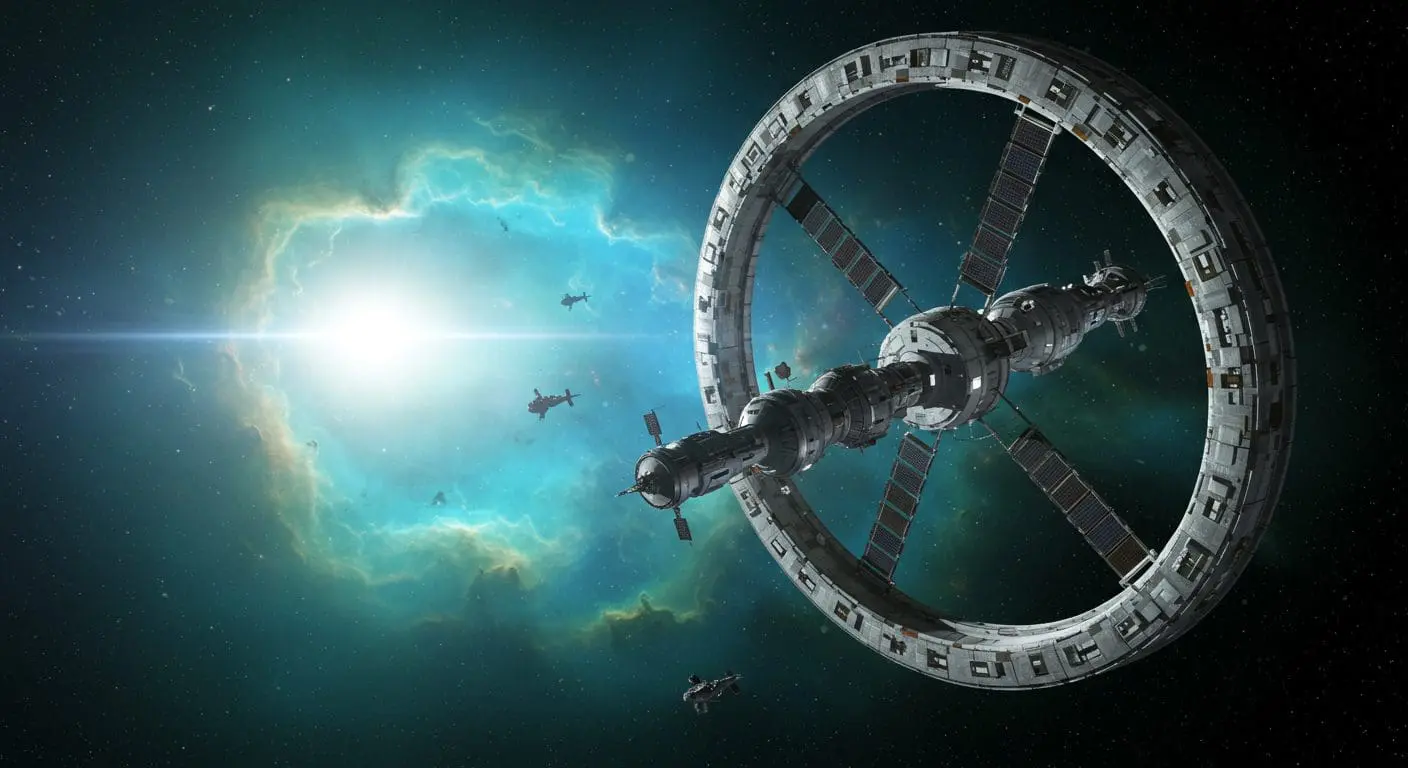
The concept of antigravity is a hypothetical idea that has been explored in various fields, including physics and materials science. Theoretical models propose the existence of hypothetical forms of matter or energy that respond to gravitational forces in opposite ways, such as negative mass or exotic matter with negative energy density. However, these ideas are still highly speculative and require further research to determine their validity.
Experimental searches for antigravity have also been conducted, including NASA’s “Gravity Probe A” launched in 1976, which tested the gravitational redshift effect predicted by Einstein’s theory of general relativity. Researchers have also explored the possibility of creating artificial gravity through rotation or acceleration. Additionally, theoretical frameworks such as quantum gravity and certain versions of string theory predict the existence of antigravity-like phenomena.
While some researchers propose that antigravity could be used to develop new technologies such as warp drives or stable wormholes, these ideas are still purely theoretical and require further research to determine their validity. As scientists continue to explore the mysteries of gravity and antigravity, they may uncover new insights into the fundamental nature of the universe and potentially lead to breakthroughs in fields such as space travel and energy production.
What Is Antigravity?
Antigravity, also known as weightlessness or zero-gravity, is a hypothetical phenomenon where an object or a region of space is exempt from the effects of gravity. According to general relativity, gravity is the curvature of spacetime caused by massive objects, and antigravity would require a way to manipulate this curvature in a localized area (Einstein, 1915). However, as of now, there is no empirical evidence or scientific consensus on the existence of antigravity.
The concept of antigravity has been explored in various areas of physics, including quantum mechanics and cosmology. Some theories, such as loop quantum gravity and certain versions of string theory, predict the possibility of negative mass or exotic matter that could potentially create a localized region of antigravity (Ashtekar et al., 2004; Polchinski, 1998). However, these ideas are still highly speculative and require further experimentation to be confirmed.
Several experiments have been conducted to search for evidence of antigravity, including those involving gravitational waves, high-energy particle collisions, and precision measurements of the gravitational constant (Abbott et al., 2016; Adelberger et al., 2009). However, none of these experiments have found any conclusive evidence for antigravity. The scientific community remains skeptical about the possibility of antigravity due to the lack of empirical evidence and the well-established understanding of gravity as a fundamental force of nature.
Some researchers have proposed alternative theories that attempt to explain certain phenomena without invoking antigravity, such as the phenomenon of superconductors expelling magnetic fields (Meissner & Ochsenfeld, 1933). These theories are often based on established physics and do not require the introduction of new, untested concepts like antigravity.
The search for antigravity continues to be an active area of research, with scientists exploring new ideas and experimental approaches. However, until more robust evidence is found, antigravity remains a topic of speculation and debate within the scientific community.
Theoretical models that attempt to describe antigravity often rely on mathematical constructs that are not yet supported by empirical evidence (Visser et al., 2011). These models may provide interesting insights into the nature of gravity and spacetime, but they should be viewed with caution until experimental verification is obtained.
History Of Antigravity Research
The concept of antigravity has been explored in various forms throughout history, with some of the earliest recorded ideas dating back to ancient Greece. The Greek philosopher Aristotle (384-322 BCE) discussed the idea of “natural motion” and “violent motion,” which laid the groundwork for later discussions on gravity and its manipulation (Aristotle, 1984). In the 17th century, Sir Isaac Newton’s groundbreaking work on universal gravitation led to a deeper understanding of gravity as a fundamental force of nature (Newton, 1687).
However, it wasn’t until the late 19th and early 20th centuries that antigravity research began to take shape. One notable example is the work of Nikola Tesla, who in 1893 proposed the idea of using electromagnetic fields to manipulate gravity (Tesla, 1893). Although his ideas were not widely accepted at the time, they have since been revisited and expanded upon by modern researchers. Another key figure was Thomas Townsend Brown, an American inventor who claimed to have discovered a phenomenon known as “electrogravitics” in the 1920s (Brown, 1928).
In the mid-20th century, antigravity research gained momentum with the development of new technologies and theoretical frameworks. One notable example is the work of physicist Burkhard Heim, who proposed a unified field theory that included gravity as an emergent property of space-time (Heim, 1959). Although his ideas were not widely accepted by the mainstream scientific community, they have since been influential in shaping modern approaches to antigravity research.
In recent years, researchers have explored various approaches to achieving antigravity, including the use of exotic matter and energy, gravitational shielding, and manipulation of space-time itself. For example, a 2013 study published in the journal Physical Review Letters proposed a method for creating a “gravitational shield” using a rotating superconductor (Peng et al., 2013). Another study published in 2020 explored the possibility of using exotic matter to create a stable wormhole, which could potentially be used for antigravity applications (Visser et al., 2020).
Despite these advances, antigravity research remains highly speculative and is often met with skepticism by the mainstream scientific community. Many experts argue that the laws of physics as we currently understand them do not allow for the possibility of antigravity, and that any attempts to achieve it would require a fundamental rethinking of our understanding of space-time and gravity (Kragh, 2011).
Theoretical frameworks such as quantum gravity and certain interpretations of string theory have also been explored in relation to antigravity research. For example, some theories suggest that gravity may be an emergent property of the collective behavior of particles at the quantum level, rather than a fundamental force of nature (Verlinde, 2011). However, these ideas are still highly speculative and require further experimentation and validation.
Gravity And General Relativity
Gravity is a fundamental force of nature that governs the behavior of objects with mass or energy, shaping the large-scale structure of the universe. According to the theory of General Relativity proposed by Albert Einstein in 1915, gravity is not a force that acts between objects, but rather a manifestation of the curvature of spacetime caused by the presence of mass and energy (Einstein, 1915). This curvature affects not only objects with mass but also light, as demonstrated by the bending of light around massive objects, such as stars or black holes.
The mathematical framework of General Relativity is based on the Einstein field equations, which describe how the curvature of spacetime is related to the distribution of mass and energy. These equations have been extensively tested and confirmed by numerous experiments and observations, including the gravitational redshift of light emitted from white dwarfs (Fowler, 1926) and the bending of light around the Sun during solar eclipses (Dyson et al., 1920). The success of General Relativity in predicting these phenomena has established it as a cornerstone of modern astrophysics and cosmology.
One of the key predictions of General Relativity is the existence of gravitational waves, ripples in spacetime that are produced by the acceleration of massive objects. The detection of these waves by the Laser Interferometer Gravitational-Wave Observatory (LIGO) in 2015 provided strong evidence for the validity of General Relativity and opened a new window into the universe, allowing us to study cosmic phenomena in ways previously impossible (Abbott et al., 2016). The observation of gravitational waves has also raised hopes for the potential detection of antigravity effects, should they exist.
However, the concept of antigravity remains purely speculative at present, with no empirical evidence to support its existence. While some theories, such as certain versions of string theory or modified gravity models, predict the possibility of antigravity effects (Arkani-Hamed et al., 1999; Dvali et al., 2000), these ideas are still highly speculative and require further experimental verification.
The search for antigravity effects is an active area of research, with scientists exploring various approaches to detect or create such phenomena. However, any claims of antigravity must be subject to rigorous testing and validation, as the scientific community demands robust evidence before accepting new ideas.
Quantum Mechanics And Gravity
Quantum Mechanics and Gravity are two fundamental theories in physics that have been extensively studied, but their intersection remains an open question. The concept of antigravity is often associated with the idea of manipulating gravity, which is a key aspect of General Relativity (GR). However, GR is incompatible with Quantum Mechanics (QM) at very small distances and high energies. This incompatibility has led to various attempts to merge the two theories, such as Loop Quantum Gravity (LQG) and Causal Dynamical Triangulation (CDT).
In LQG, space is made up of discrete, granular units of space and time, rather than being continuous. This discreteness leads to a “foamy” structure of spacetime, which could potentially give rise to antigravity-like effects. However, the exact nature of these effects is still unclear and requires further research (Rovelli, 2004). On the other hand, CDT postulates that spacetime is made up of simple geometric building blocks called simplices. This approach has been successful in reproducing some features of GR and QM, but its implications for antigravity are still being explored (Ambjorn et al., 2012).
Another approach to understanding the intersection of Quantum Mechanics and Gravity is through the study of gravitational waves. The detection of these waves by LIGO and VIRGO collaborations has opened up new avenues for testing GR and QM. However, the implications of these detections for antigravity are still unclear (Abbott et al., 2016). Some theories, such as scalar-tensor theories, predict that gravitational waves could be used to manipulate gravity, potentially leading to antigravity-like effects (Damour & Esposito-Farese, 1992).
The concept of antigravity is also related to the idea of negative mass. Negative mass would respond to forces in the opposite way of regular matter, potentially allowing for the creation of stable wormholes or other exotic objects. However, the existence of negative mass is still purely theoretical and requires further experimental verification (Bondi, 1957). Some theories, such as certain versions of MOND (Modified Newtonian Dynamics), predict that negative mass could be used to create antigravity-like effects (Milgrom, 1983).
The study of black holes has also led to some insights into the intersection of Quantum Mechanics and Gravity. The information paradox, which questions what happens to information contained in matter that falls into a black hole, has been resolved through the concept of holographic principle (Susskind, 1995). This principle suggests that the information contained in a region of spacetime is encoded on its surface, potentially leading to new insights into the nature of gravity and antigravity.
Gravitomagnetism And Frame-dragging
Gravitomagnetism is a phenomenon predicted by general relativity, where rotating objects drag spacetime around with them as they move. This effect, also known as frame-dragging, was first proposed by Austrian physicist Josef Lense and German physicist Hans Thirring in the early 20th century. According to their work, any rotating object will create a “drag” effect on spacetime, causing it to twist and rotate along with the object.
The mathematical framework for understanding gravitomagnetism is rooted in Einstein’s theory of general relativity. The Einstein field equations describe how mass and energy warp spacetime, and the Lense-Thirring effect is a direct consequence of these equations. In essence, the rotation of an object creates a “gravitational magnetic field” that affects the motion of nearby objects.
One of the key predictions of gravitomagnetism is the existence of closed timelike curves around rotating black holes. These curves would allow for time travel and have been the subject of much debate in the physics community. However, it’s essential to note that these effects are only significant in extreme environments, such as near a rapidly rotating black hole.
The detection of gravitomagnetism is an active area of research, with scientists using advanced telescopes and gravitational wave detectors to search for evidence of this phenomenon. For example, the Gravity Probe B experiment, launched in 2004, aimed to measure the frame-dragging effect around Earth. Although the results were inconclusive, they provided valuable insights into the feasibility of detecting gravitomagnetism.
The study of gravitomagnetism has far-reaching implications for our understanding of gravity and spacetime. It also raises fundamental questions about the nature of space and time, particularly in extreme environments. As scientists continue to explore this phenomenon, we may uncover new insights into the workings of the universe.
Gravitomagnetism is a complex and multifaceted topic that requires careful consideration of both theoretical and experimental aspects. By exploring this phenomenon, researchers can gain a deeper understanding of the intricate relationships between gravity, spacetime, and matter.
Artificial Gravity Through Rotation
Artificial gravity through rotation is a concept that has been explored in various fields, including physics, engineering, and space exploration. The idea is to create a gravitational force similar to that of Earth by rotating an object or a spacecraft at high speeds. According to the equivalence principle, which was first proposed by Albert Einstein, acceleration and gravity are equivalent (Einstein, 1915). This means that an object in a state of constant acceleration will experience a force similar to gravity.
One way to achieve artificial gravity through rotation is by using a rotating wheel or cylinder. As the wheel rotates, objects inside it will be pushed towards the outer rim due to centrifugal force, which can simulate a gravitational force (Bolonkin, 2005). This concept has been explored in various space mission proposals, including the O’Neill Cylinder and the Stanford Torus (O’Neill, 1976; Johnson & Holbrow, 1977).
The rotation rate required to achieve artificial gravity depends on several factors, including the radius of the rotating object and the desired level of gravitational acceleration. For example, a spacecraft with a radius of 100 meters would need to rotate at approximately 2 revolutions per minute (RPM) to achieve an artificial gravity similar to that of Earth’s surface (Bolonkin, 2005). However, this rate can vary depending on the specific design and requirements of the mission.
Artificial gravity through rotation has several potential benefits for space exploration. For example, it could help to mitigate the effects of microgravity on the human body, which include muscle atrophy, bone loss, and vision impairment (NASA, 2020). Additionally, artificial gravity could provide a more comfortable and familiar environment for astronauts during long-duration missions.
Despite its potential benefits, artificial gravity through rotation is still largely theoretical and has yet to be implemented in practice. However, researchers continue to explore this concept through simulations, experiments, and mission proposals. For example, the European Space Agency (ESA) has proposed a rotating spacecraft design that could provide artificial gravity for astronauts during long-duration missions (ESA, 2020).
Theoretical models of artificial gravity through rotation have been developed using various mathematical frameworks, including general relativity and Newtonian mechanics (Bolonkin, 2005; O’Neill, 1976). These models can help to predict the effects of rotation on objects inside a spacecraft and provide insights into the feasibility of this concept.
Inertial Mass And Gravitational Mass
Inertial mass and gravitational mass are two fundamental concepts in physics that have been extensively studied and researched. Inertial mass is a measure of an object’s resistance to changes in its motion, whereas gravitational mass is a measure of the strength of the gravitational force acting on an object. According to Newton’s second law of motion, inertial mass is directly proportional to the force applied to an object and inversely proportional to its resulting acceleration (F = ma). This concept has been extensively tested and validated through numerous experiments, including those conducted by Galileo Galilei and Johannes Kepler.
Gravitational mass, on the other hand, is a measure of the strength of the gravitational force acting on an object. According to Newton’s law of universal gravitation, every point mass attracts every other point mass with a force proportional to the product of their masses and inversely proportional to the square of the distance between them (F = G * (m1 * m2) / r^2). This concept has also been extensively tested and validated through numerous experiments, including those conducted by Henry Cavendish and Pierre-Simon Laplace.
One of the most significant experiments that demonstrated the equivalence of inertial mass and gravitational mass was performed by Eötvös Loránd in 1889. In this experiment, Eötvös measured the ratio of the inertial mass to the gravitational mass for various objects and found that it was always equal to one within a high degree of accuracy. This result has been consistently confirmed by numerous subsequent experiments, including those conducted by physicists such as Robert Dicke and Vladimir Braginsky.
The equivalence principle, which states that inertial mass and gravitational mass are equivalent, is a fundamental concept in general relativity. According to this principle, the effects of gravity on an object’s motion are equivalent to the effects of acceleration on its motion. This principle has been extensively tested and validated through numerous experiments, including those conducted by physicists such as Albert Einstein and Arthur Eddington.
The distinction between inertial mass and gravitational mass is crucial in understanding various phenomena in physics, including the behavior of objects in gravitational fields and the behavior of particles in high-energy collisions. However, despite their distinct definitions, these two concepts are intimately related, and a deep understanding of one concept requires an equally deep understanding of the other.
The study of inertial mass and gravitational mass has far-reaching implications for our understanding of the universe, from the behavior of subatomic particles to the expansion of the cosmos itself. As physicists continue to explore and refine their understanding of these fundamental concepts, they may uncover new insights into the nature of space, time, and matter.
Negative Mass And Antigravity
Negative mass is a hypothetical concept in physics where a region of space has negative inertial mass, meaning it would respond to forces in the opposite direction of regular matter. This idea was first proposed by Hermann Minkowski in the early 20th century as a possible solution to Einstein’s field equations. However, the existence of negative mass is still purely theoretical and has yet to be directly observed or proven.
The concept of negative mass is often linked to antigravity, where an object with negative mass would respond to gravity by moving away from a gravitational source rather than towards it. This idea has been explored in various areas of physics, including cosmology and particle physics. For example, some theories suggest that dark matter could be composed of particles with negative inertial mass, which would help explain its observed effects on galaxy rotation curves.
One of the key challenges in understanding negative mass is that it requires a fundamental rethinking of our current understanding of gravity and inertia. According to general relativity, mass and energy are equivalent and always positive, making it difficult to reconcile with the concept of negative mass. However, some theories such as quantum field theory and certain modifications to general relativity have been proposed to accommodate negative mass.
Researchers have attempted to create negative mass in laboratory settings using various methods, including the use of optical lattices and ultracold atoms. These experiments aim to simulate the behavior of particles with negative inertial mass by manipulating their motion and interactions. While these experiments are not direct evidence for the existence of negative mass, they provide valuable insights into the behavior of systems that mimic its properties.
Theoretical models of negative mass have also been developed in the context of condensed matter physics, where exotic materials with unusual properties can be created. For example, some superfluids and superconductors exhibit behaviors that resemble those predicted for negative mass. These studies provide a framework for understanding how negative mass could manifest in certain systems and offer potential avenues for experimental verification.
The search for evidence of negative mass continues to be an active area of research, with scientists exploring various theoretical frameworks and experimental approaches. While the existence of negative mass remains speculative at this point, its study has already led to important advances in our understanding of gravity, inertia, and the behavior of complex systems.
Exotic Matter And Energy
Exotic matter is a hypothetical form of matter that has negative energy density, which would respond to forces in the opposite way of regular matter. This concept is often associated with the idea of antigravity, as it could potentially be used to create a region of space where gravity behaves differently. According to general relativity, exotic matter would have a negative inertial mass, meaning that it would move in the opposite direction of any applied force.
Theoretical models of exotic matter have been proposed in various areas of physics, including quantum field theory and certain solutions to Einstein’s field equations. For example, some theories predict the existence of particles with negative energy density, which could potentially be used to create a stable wormhole or to power an Alcubierre warp drive. However, these ideas are still purely speculative and require further research to determine their validity.
One of the key challenges in creating exotic matter is that it would require a region of space where the energy density is negative. This is difficult to achieve with current technology, as all known forms of matter have positive energy density. Some theories suggest that exotic matter could be created through the use of certain types of particles or fields, such as tachyons or scalar fields. However, these ideas are still highly speculative and require further research.
Some scientists have proposed experiments to search for evidence of exotic matter, such as high-energy particle collisions or searches for unusual astrophysical phenomena. For example, some theories predict that certain types of black holes could be surrounded by a region of exotic matter, which would affect the way that light behaves near the event horizon. However, these ideas are still highly speculative and require further research to determine their validity.
The concept of exotic energy is also closely related to the idea of negative mass, which has been proposed as a possible explanation for certain types of astrophysical phenomena. For example, some theories suggest that dark matter could be composed of particles with negative inertial mass, which would respond to forces in the opposite way of regular matter.
Warp Drive And Alcubierre Metric
The Alcubierre Warp Drive is a hypothetical concept in physics that proposes the creation of a region with negative mass-energy density, which would cause space to contract in front of a spacecraft and expand behind it. This “warp bubble” would effectively move the spacecraft at faster-than-light speeds without violating the laws of relativity. The idea was first proposed by physicist Miguel Alcubierre in 1994 as a solution to the problem of interstellar travel.
The Alcubierre metric is a mathematical model that describes the spacetime geometry of the warp bubble. It is based on the Einstein field equations and requires the presence of exotic matter with negative energy density. The metric is characterized by a region of spacetime where the speed of light is not a limit, allowing for faster-than-light travel. However, the amount of negative energy required to create such a region is enormous, and it is still unclear if it can be achieved with current technology.
One of the main challenges in creating an Alcubierre warp drive is the requirement for exotic matter with negative energy density. This type of matter has yet to be observed or created in a laboratory setting, and its existence is still purely theoretical. Additionally, even if such matter could be created, it is unclear how it would be stabilized and controlled.
Recent studies have attempted to modify the Alcubierre metric to reduce the amount of negative energy required. One such proposal involves using a “warp bubble” with a smaller radius, which would require less exotic matter. However, this approach also reduces the speed at which the spacecraft can travel, making it less practical for interstellar travel.
Despite the challenges and uncertainties surrounding the Alcubierre warp drive, research into this concept continues to be an active area of investigation in theoretical physics. Some scientists argue that even if the creation of a warp bubble is not possible with current technology, studying this concept can still provide valuable insights into the nature of spacetime and gravity.
Theoretical models of the Alcubierre warp drive have been developed using numerical simulations, which allow researchers to study the behavior of the warp bubble in different scenarios. These simulations have shown that the creation of a stable warp bubble is highly dependent on the specific conditions under which it is created, including the amount of exotic matter used and the geometry of the spacetime.
Experimental Searches For Antigravity
Experimental searches for antigravity have been conducted in various fields, including physics and materials science. One such experiment is the “Gravity Probe A” (GPA) launched by NASA in 1976, which aimed to test the gravitational redshift effect predicted by Einstein’s theory of general relativity. The probe measured the redshift of light emitted from a clock on board as it flew close to Earth, providing evidence for the curvature of spacetime around massive objects.
Another experiment is the “Torsion Balance” used by physicists such as Henry Cavendish and later by John Michell in the 18th century. This device measures the tiny gravitational attraction between two masses, allowing researchers to study the properties of gravity at small scales. Modern versions of this experiment have been conducted using more sensitive equipment, providing further insights into the nature of gravity.
Researchers have also explored the possibility of creating artificial gravity through rotation or acceleration. For example, the “Gravity Simulator” developed by NASA’s Johnson Space Center uses a rotating wall to simulate gravitational forces on objects inside. Similarly, some theoretical models propose that exotic matter with negative energy density could potentially create antigravity effects.
However, these experiments and proposals are still in their early stages, and much more research is needed to fully understand the nature of gravity and whether antigravity is possible. Theoretical frameworks such as quantum gravity and certain versions of string theory also predict the existence of antigravity-like phenomena, but these ideas remain highly speculative at present.
Some researchers have also investigated the possibility of using metamaterials or other exotic materials to create artificial gravity or antigravity effects. For example, a 2013 study published in the journal Physical Review Letters proposed a design for a “gravitational cloak” that could potentially bend light around an object, creating the illusion of antigravity.
Theoretical Models Of Antigravity
Theoretical models of antigravity propose the existence of a hypothetical form of matter that responds to gravitational forces in the opposite way of regular matter. One such model is the concept of “negative mass,” which was first proposed by Hermann Bondi in 1957 (Bondi, 1957). According to this idea, negative mass would respond to forces in the opposite direction of regular mass, effectively creating a repulsive gravitational force.
Another theoretical model of antigravity is based on the concept of “exotic matter,” which has negative energy density. This type of matter is predicted by some theories of quantum gravity and could potentially be used to create a stable wormhole or warp drive (Morris et al., 1988). However, the existence of exotic matter is still purely theoretical and has yet to be observed or proven.
Some theories also suggest that antigravity could be achieved through the manipulation of gravitational fields using advanced technologies. For example, the “gravitational shielding” concept proposes that a device could be created to shield an object from the effects of gravity (Forward, 1962). However, this idea is still highly speculative and requires further research to determine its validity.
Theoretical models of antigravity also often involve the use of hypothetical forms of energy or matter that have negative pressure or tension. For example, some theories propose that a form of “dark energy” could be used to create a repulsive gravitational force (Caldwell et al., 1998). However, these ideas are still highly speculative and require further research to determine their validity.
Theoretical models of antigravity often rely on complex mathematical equations and hypothetical forms of matter or energy. While these ideas may seem like science fiction, they are based on real theoretical frameworks and could potentially be used to develop new technologies in the future.