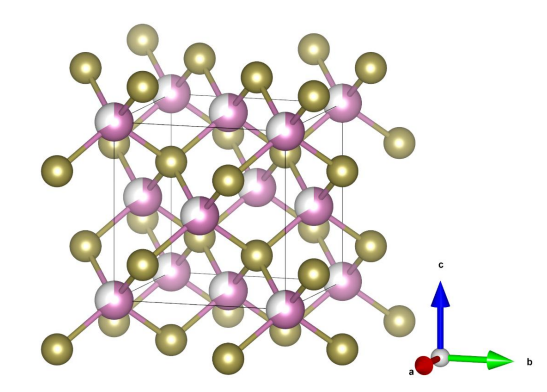
Indium telluride represents a crucial material bridging traditional semiconductors and novel electronic states, holding considerable promise for applications ranging from efficient energy conversion to advanced memory technologies. Maximilian Buchta, Felix Hoff, and Lucas Bothe, alongside colleagues at their institutions, now demonstrate a remarkable stability in the material’s properties, even as film thickness varies significantly. The team investigates high-quality indium telluride thin films grown with precise control, and their analysis reveals that key characteristics remain remarkably consistent across a broad range of thicknesses, from just a few atomic layers to over twenty nanometres. This finding sharply contrasts with other similar materials where properties change dramatically with size, and the researchers attribute this stability to the unique chemical bonding within indium telluride, paving the way for more reliable and predictable performance in future devices.
Sesquichalcogenides represent a crucial link between traditional semiconductors and quantum materials, offering significant potential in thermoelectrics, phase change memory, and topological insulators. While research has largely focused on antimony and bismuth compounds, which exhibit substantial property changes as films become thinner, the behaviour of germanium-based sesquichalcogenides remains less explored. This work investigates the structural, optical, and vibrational properties of germanium selenide, GeSe, prepared using molecular beam epitaxy. The research demonstrates that GeSe possesses a unique combination of structural stability and strong light-matter interaction, stemming from its layered structure and the presence of metavalent bonding. Detailed optical spectroscopy reveals strongly coupled excitonic resonances and coherent phonon modes, indicating significant potential for optoelectronic applications. These findings establish GeSe as a promising material platform for developing novel devices that exploit coherent light-matter interactions and advanced functionalities.
Indium Vacancies Stabilize In₂Te₃ Crystal Structure
Researchers have revealed the critical role of indium vacancies in stabilizing the crystal structure of indium telluride (In₂Te₃). The material adopts a zinc sulfide-type crystal structure, but to balance the electronic charge, one-third of the indium sites are vacant. This vacancy distribution is essential for the material’s bonding and electronic properties. The team successfully grew high-quality In₂Te₃ films on silicon substrates, carefully controlling their thickness. Epitaxial growth techniques were employed to minimize strain during film formation, and the films exhibited gradual strain relaxation as thickness increased.
Optical spectroscopy and Raman spectroscopy confirmed the crystal structure and quality of the films, with results consistent with established literature. Calculations of electron sharing within the In₂Te₃ unit cells demonstrate significant covalent bonding between atoms. Importantly, the frequencies of coherent phonons remained stable across a broad range of excitation conditions and film thicknesses, indicating robust bonding and structural integrity. These findings demonstrate that high-quality In₂Te₃ thin films can be grown with robust properties, making them promising for applications requiring stable electronic behaviour and coherent phonon effects.
Consistent Indium Telluride Film Properties Across Thicknesses
Recent research demonstrates remarkably consistent properties in indium telluride (In₂Te₃) thin films, even as their thickness varies significantly. Researchers grew high-quality films ranging from 2. 7 to 24 nanometers on silicon substrates, meticulously controlling the growth process. Structural analysis confirmed the films adopt the zinc sulfide crystal structure, with a consistent in-plane lattice constant. Atomic force microscopy revealed exceptionally smooth surfaces, indicating high surface quality.
The films exhibited excellent texture and phase purity. Notably, the properties of the In₂Te₃ films showed minimal dependence on film thickness, a surprising result compared to other chalcogenides. The team identified two distinct in-plane rotational domains within the films, suggesting a unique bonding mechanism within In₂Te₃. These findings open new avenues for developing advanced electronic and optical devices based on this stable and consistent material.
🗞 Robust Material Properties in Epitaxial In Te Thin Films Across Varying Thicknesses
🧠 ArXiv: https://arxiv.org/abs/2510.18449