


Infleqtion, a leading quantum information company, has secured a $1.15 million grant from the Department of Energy to advance its Superstaq software platform, which optimizes quantum computing performance. This is the first DOE SBIR Phase IIB award given to software for quantum computing. The grant will help Infleqtion further develop its pioneering work on Superstaq, which has already demonstrated up to 10x performance gains by taking specific device characteristics into consideration.
According to Matthew Kinsella, CEO of Infleqtion, this grant is a testament to the company’s groundbreaking work and will be a catalyst for ongoing breakthroughs in quantum software. The platform uses proprietary cross-layer optimization techniques to enhance execution, error mitigation, and hardware-specific operation.
Infleqtion collaborates with leading quantum centers, including the Advanced Quantum Testbed at Lawrence Berkeley National Laboratory and QSCOUT at Sandia National Laboratories, on the development of Superstaq.
Advancing Quantum Computing: Infleqtion’s Breakthrough Software Platform
Infleqtion, a pioneering quantum information company, has been awarded a $1.15M grant by the Department of Energy (DOE) under the SBIR Phase IIB program to advance its work on Superstaq, a software platform designed to optimize quantum computing performance. This grant marks the first DOE SBIR Phase IIB award given to software for quantum computing and is expected to pave the way for energy-efficient computing.
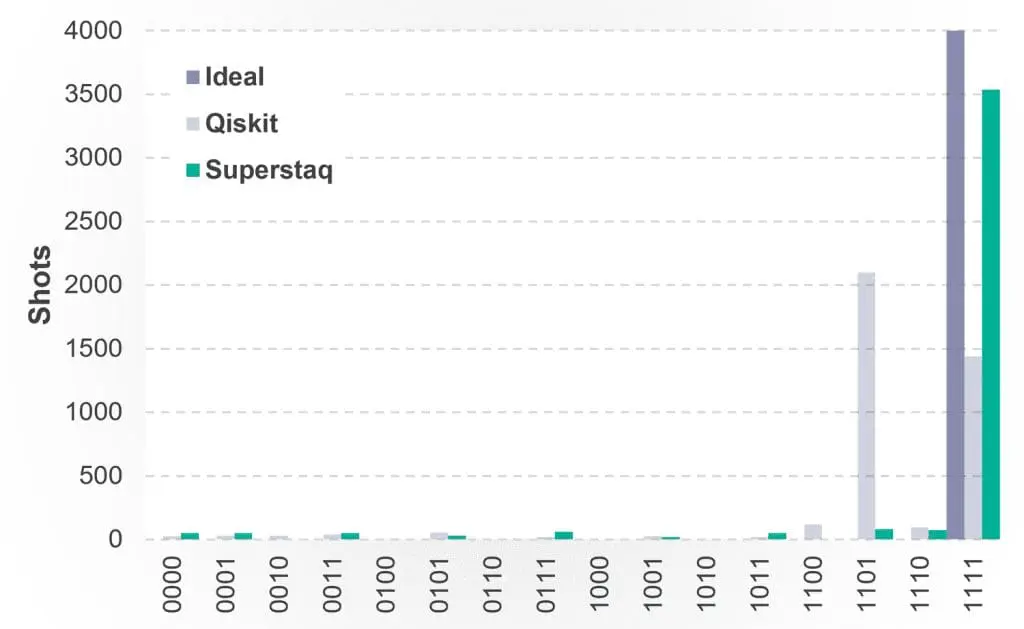
The significance of this grant lies in the recognition of the critical role that software plays in advancing quantum computing. According to Matthew Kinsella, CEO of Infleqtion, “One of the biggest opportunities to accelerate progress toward fault-tolerant quantum computing lies not in the hardware, but in the software.” This is a unique area of focus for Infleqtion, which has already demonstrated how Superstaq can enable up to 10x performance gains by taking specific device characteristics into consideration.
The Limitations of Quantum Computing: Reliability and Performance Issues
Quantum technology has the potential to transform industries such as defense, finance, energy, healthcare, life sciences, and more. However, progress with quantum computing continues to be hampered by reliability and performance issues, which are exacerbated by software stacks that lack device-specific optimizations. These limitations have hindered the realization of commercially relevant quantum computing applications.
Infleqtion’s Superstaq platform addresses this issue by integrating a deep understanding of quantum hardware with end-user applications. The platform uses proprietary cross-layer optimization techniques to enhance execution, error mitigation, and hardware-specific operation. By optimizing the performance of quantum computers, Superstaq enables faster and more reliable program execution.
Collaborations and Milestones: Advancing Quantum Software
Infleqtion collaborates on the Superstaq platform with leading quantum centers, including the Advanced Quantum Testbed (AQT) at Lawrence Berkeley National Laboratory and QSCOUT at Sandia National Laboratories. These collaborations have led to several impactful demonstrations and published results for the broader scientific community.
Christopher Spitzer, Berkeley Lab’s Quantum Program Manager, noted that “Since 2021, the Advanced Quantum Testbed at Lawrence Berkeley National Laboratory has collaborated with the Superstaq team through its user program… This research collaboration has led to several impactful demonstrations and published results for the broader scientific community.”
Susan Clark, QSCOUT Principal Investigator, added that “QSCOUT has been engaged with the Superstaq team since 2021, and many of the QSCOUT user teams have been able to use their noise-aware, circuit optimization software to tailor their codes to our trapped-ion hardware.”
The Future of Quantum Computing: Technical Objectives and Public Benefits
The SBIR Phase IIB project will drive further advancement of Superstaq, with a focus on four technical objectives: efficient quantum characterization, optimized compilation for mid-circuit measurement, low-level compilation, and experimental demonstration of pristine resource state distillation. These objectives are aimed at further advancing the capabilities of quantum software to act as a force-multiplier towards commercially relevant applications.
The potential public benefits of these advancements are far-ranging and include advancements in fields such as drug discovery, chemical simulations, aircraft design, logistics planning, and energy sector innovations.
Infleqtion’s Leadership in Quantum Computing: Global Collaborations
Infleqtion’s leadership in quantum computing has led to its selection as part of Japan’s Quantum Moonshot program, a cutting-edge initiative to advance Japan’s technological capabilities. As part of the program, Infleqtion will collaborate to develop a large-scale, neutral atom quantum computer with high-fidelity qubits.
Professor Kenji Ohmori of the Institute for Molecular Science, who leads the Moonshot program, said, “We are pleased to be leveraging Infleqtion’s expertise to push the boundaries of quantum computing. Together with Infleqtion’s software and hardware teams, we are developing a cutting-edge device to transform Japan’s technological capabilities, economy, industry, and security.”
External Link: Click Here For More


