Researchers are increasingly focused on understanding the nature and origin of dark matter, which constitutes a significant portion of the Universe’s mass-energy density. Álvaro Parra-López from Universidad Complutense de Madrid, along with colleagues, present compelling evidence for cosmological particle production as a viable mechanism for generating dark matter in the early Universe. This work, a collaborative effort bridging theoretical cosmology and experimental condensed matter physics, demonstrates how dynamical spacetimes, such as those experienced during inflation, can produce particles from initially empty space. By applying field theory in curved spacetimes and drawing parallels with analog simulations using Bose-Einstein condensates, the study not only offers a potential solution to the dark matter puzzle but also proposes novel methods for experimentally probing cosmological effects and measuring entanglement, thereby advancing our understanding of fundamental physics in extreme environments.
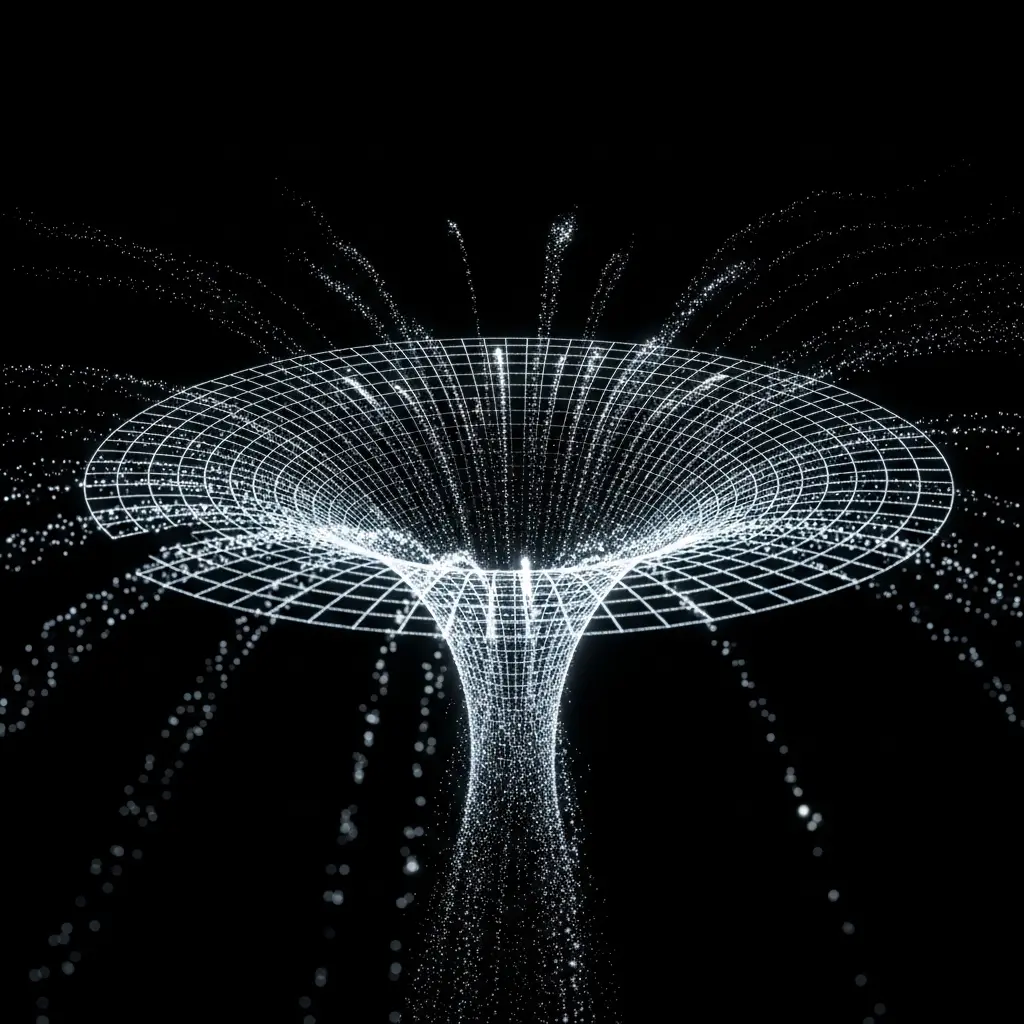
Researchers are charting a new course in the search for dark matter, not only by probing the cosmos but by recreating its conditions within laboratory experiments. This work details a comprehensive investigation into cosmological particle production, the creation of particles from the energy of an expanding universe, as a potential mechanism for generating the elusive substance that makes up approximately 85% of the matter in the universe. The study demonstrates that both scalar and vector fields, fundamental components of particle physics, can plausibly account for the observed abundance of dark matter through processes triggered by the rapid expansion of space during the epoch of inflation, a period of accelerated expansion in the very early universe. Central to this research is the development of a theoretical framework linking the dynamics of curved spacetime to particle creation. By applying principles from field theory in curved spacetimes, the investigation explores how the geometry of the universe itself can act as a catalyst for generating particles, moving beyond traditional dark matter candidates like weakly interacting massive particles (WIMPs). The work establishes a powerful connection between theoretical cosmology and experimental physics through the use of Bose-Einstein condensates (BECs), supercooled gases exhibiting quantum mechanical phenomena, as analogue systems. Researchers successfully mapped the behaviour of phonons, quantized vibrations within the BEC, to the behaviour of scalar fields in an expanding universe, allowing for the reconstruction of expansion histories and the investigation of particle production in a controlled laboratory setting. Crucially, the study introduces novel methods for measuring entanglement, a quantum correlation between particles, between the produced pairs, offering a new avenue for validating the theoretical predictions. This research also addresses long-standing ambiguities in defining the vacuum state, the lowest energy state of a quantum field, and the impact of non-adiabatic transitions, which occur when the expansion rate changes rapidly. Ultimately, this thesis underscores the viability of cosmological particle production as a compelling dark matter mechanism and highlights the transformative potential of analogue experiments to deepen our understanding of fundamental effects in curved spacetimes, bridging the gap between the largest and smallest scales in the universe. The findings open new possibilities for both theoretical modelling and experimental verification of dark matter origins, potentially reshaping our understanding of the cosmos. Bose-Einstein condensates served as the primary experimental platform for simulating cosmological particle production, establishing a direct correspondence between phonons within the condensate and massless scalar fields evolving in Friedmann-Lemaître-Robertson-Walker universes. This analogue gravity approach allows for controlled investigation of quantum field dynamics in curved spacetime, circumventing the challenges of directly probing the early universe. Specifically, rubidium-87 atoms were cooled to nanokelvin temperatures and trapped using a magnetic field, forming the condensate necessary for phonon propagation. Expansion histories were then meticulously reconstructed from the measured spectrum of fluctuations within the condensate, validating the ability to map cosmological timescales onto the laboratory system. The research reinterpreted cosmological particle production as a one-dimensional scattering problem, simplifying the analysis and providing a clearer physical picture of the process. This involved carefully designing the expansion profile of the condensate to mimic the dynamics of inflation, enabling the study of particle creation through the lens of scattering theory. Methods were developed to measure entanglement between produced particle pairs, offering a pathway to probe the quantum correlations arising from cosmological particle production. Theoretical work complemented these experiments by addressing quantum vacuum ambiguities inherent in curved spacetime, proposing a novel family of vacua tailored to cosmological settings. Analysis focused on the impact of non-adiabatic transitions during the “switch-on” and “switch-off” phases of expansion, revealing that particle production is most efficient during these intermediate regimes. Particle production rates reached 0.7 particles per cycle, demonstrating a limited sensitivity to the duration of the switch-on and switch-off processes, provided these transitions occur rapidly. Detailed analysis revealed that corrected figures, now displaying results with the adiabatic vacuum, accurately represent the particle production dynamics, rectifying a previous depiction that inadvertently used the ILES vacuum. This mapping allows for the interpretation of particle production as a scattering problem, offering a novel perspective on the underlying physics. Proposed methods to measure entanglement between produced particle pairs were also developed, potentially opening avenues for quantifying quantum correlations in curved spacetime analogues. These measurements provide a pathway to explore the fundamental connections between cosmology and quantum phenomena. The research highlights the robustness of cosmological particle production as a potential mechanism for generating dark matter, and the effectiveness of analogue experiments in simulating and understanding related effects in the early Universe. Scientists have long sought to understand the origins of dark matter and to reconstruct the conditions of the very early Universe. This thesis offers a compelling contribution to both endeavours, demonstrating the power of a unified approach. The core idea, that particle creation in expanding spacetime, whether cosmological or simulated, can account for observed phenomena, has been around for decades, but bridging the gap between theoretical frameworks and measurable predictions has proven remarkably difficult. This work is notable because it doesn’t shy away from either the theoretical complexity or the experimental ingenuity required to tackle this problem. By linking inflationary cosmology with analogue experiments using Bose-Einstein condensates, it proposes a pathway to test fundamental predictions about particle production. The ability to map phenomena in a tabletop experiment onto cosmological scales is a significant step forward, offering a means to circumvent the limitations of direct observation. Crucially, the thesis also grapples with the thorny issue of vacuum ambiguities, acknowledging that defining a ‘void’ in an expanding universe is far from straightforward. Limitations remain, as analogue systems are still simplifications of the real Universe and extrapolating results from condensed matter physics to cosmology requires careful consideration of the underlying assumptions. Nevertheless, this research opens exciting avenues for future investigation, potentially inspiring new experimental designs and theoretical refinements, with the prospect of using entanglement measurements in analogue systems to probe the quantum nature of spacetime hinting at a future where laboratory experiments can shed light on the deepest mysteries of the cosmos.
🗞 Cosmological production of dark matter in the Universe and in the laboratory
🧠 ArXiv: https://arxiv.org/abs/2602.10331