
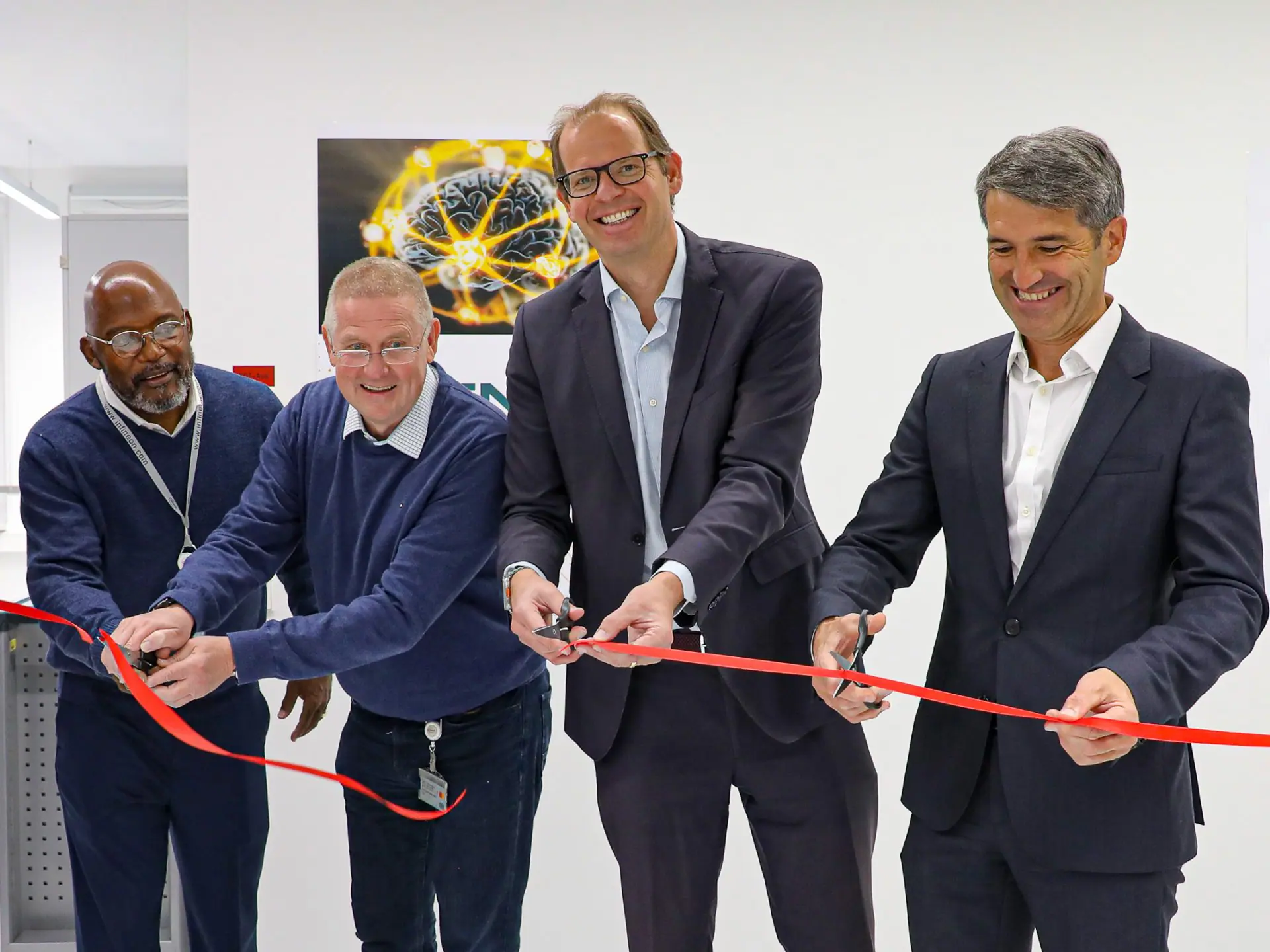
Infineon Technologies AG has launched a new laboratory for quantum electronics development near Munich. The lab aims to create and test microelectronic circuits for quantum computers that are reliable, small, and can be produced on an industrial scale. The lab will also focus on developing AI algorithms for early detection of variances in power systems. The company aims to revolutionize the core element of the quantum computer and make quantum computing scalable and usable. The lab is equipped with a cryostat to cool down to temperatures as low as -269 degrees Celsius, as qubits, the smallest units for calculations with quantum computers, are only stable under extreme conditions. The lab will also use AI to simulate and predict the aging and failure characteristics of microelectronics in the power sector.
New Quantum Lab
The lab will also focus on developing AI algorithms for early detection of power system variances. Richard Kuncic, Senior Vice President and General Manager Power Systems at Infineon, stated that the lab’s central task is to develop electronic systems for ion trap quantum computing. The lab has installed a cryostat to cool qubits, the smallest units for quantum computer calculations, to extremely low temperatures for stability.
Quantum Electronics Laboratory Opens in Munich
Infineon Technologies AG, a semiconductor manufacturer, has established a new laboratory for quantum electronics development in Oberhaching, near Munich. The lab’s primary goal is to create and test microelectronic circuits for quantum computers. These circuits are expected to be stable, compact, reliable, and capable of being produced on an industrial scale. The lab will employ approximately twenty researchers who will also focus on developing AI algorithms for early detection of variances in power systems.
Reinventing Quantum Computing
The semiconductor manufacturer aims to reinvent the core element of quantum computing. A key task of the new quantum laboratory will be to develop and test electronic systems for ion trap quantum computing. The goal is to integrate these systems into the Quantum Processing Unit, a necessary step for making quantum computing scalable and practical. Quantum computers, due to their computing power, have the potential to revolutionise many applications. However, before they can be industrialised, several development steps need to be mastered, a process the new laboratory is set to expedite.
Innovative Cryostat for Quantum Computing
The company has installed an innovative cryostat, a type of super-refrigerator, which can cool down to temperatures as low as 4 Kelvin (-269 degrees Celsius). Qubits, the smallest units for calculations with quantum computers, are extremely sensitive and only adequately stable under extreme conditions, typically temperatures below -250 degrees Celsius and at the lowest possible pressures. The electronic systems must continue to function perfectly despite these extreme conditions. In such cold environments, many materials change their properties, including their electric behaviour.
Quantum Computers: From Research to Industrialisation
While there are already a significant number of quantum computers, these are installations made by and for research facilities. Several development steps need to be mastered before scaling to powerful quantum computers and industrialising the technology. This includes the precise electronic manipulation of hundreds and thousands of qubits. The team in Oberhaching is developing optical detectors for reading out the quantum states of the ions, working closely with the Infineon quantum laboratory in Villach, which specialises in ion traps.
AI in Power Semiconductors
In the area of power semiconductors, the laboratory will use Artificial Intelligence to simulate and better predict the ageing and failure characteristics of microelectronics in the Power sector. This requires not only the development of necessary algorithms but also practical measurements to establish the data basis for training neural networks and verifying their behaviour. This will help better estimate the service life of power converters and will aid in detection of anomalies. These insights are crucial for effective proactive maintenance, which is ultimately to prevent equipment failure and thus optimise periods of use.
“Infineon plans to reinvent the core element of the quantum computer. One of the central tasks of the new quantum laboratory will be to develop and test electronic systems for ion trap quantum computing with the objective of integrating these systems in the Quantum Processing Unit. This is a prerequisite for making quantum computing scalable and useable,” says Richard Kuncic, Senior Vice President and General Manager Power Systems at Infineon Technologies. “Thanks to their computing power, quantum computers will revolutionize many applications. But before quantum computers will have to be industrialized, a process which we are driving ahead in our new laboratory.”
Summary
Infineon Technologies AG has launched a new laboratory near Munich, focusing on the development of microelectronic circuits for quantum computers, with the aim of creating scalable, reliable systems that can be industrially produced. The lab will also work on developing AI algorithms for early detection of variances in power systems, and use artificial intelligence to simulate and predict the ageing and failure characteristics of microelectronics in the power sector.
- Infineon Technologies AG has launched a new laboratory in Oberhaching, near Munich, for the development of quantum electronics.
- The lab aims to create and test microelectronic circuits for quantum computers that are stable, small, reliable, and can be produced on an industrial scale.
- The team of approximately twenty researchers will also focus on developing AI algorithms for early detection of variances in power systems.
- Richard Kuncic, Senior Vice President and General Manager Power Systems at Infineon Technologies, stated that the lab’s central task is to develop and test electronic systems for ion trap quantum computing.
- The lab has installed a cryostat, a super-refrigerator that can cool down to temperatures as low as 4 Kelvin (-269 degrees Celsius), as qubits, the smallest units for calculations with quantum computers, are only stable under extreme conditions.
- The team in Oberhaching is developing optical detectors for reading out the quantum states of the ions, in collaboration with the Infineon quantum laboratory in Villach, which specializes in ion traps.
- The lab will also use Artificial Intelligence to simulate and predict the aging and failure characteristics of microelectronics in the Power sector, which will aid in proactive maintenance and optimise periods of use.