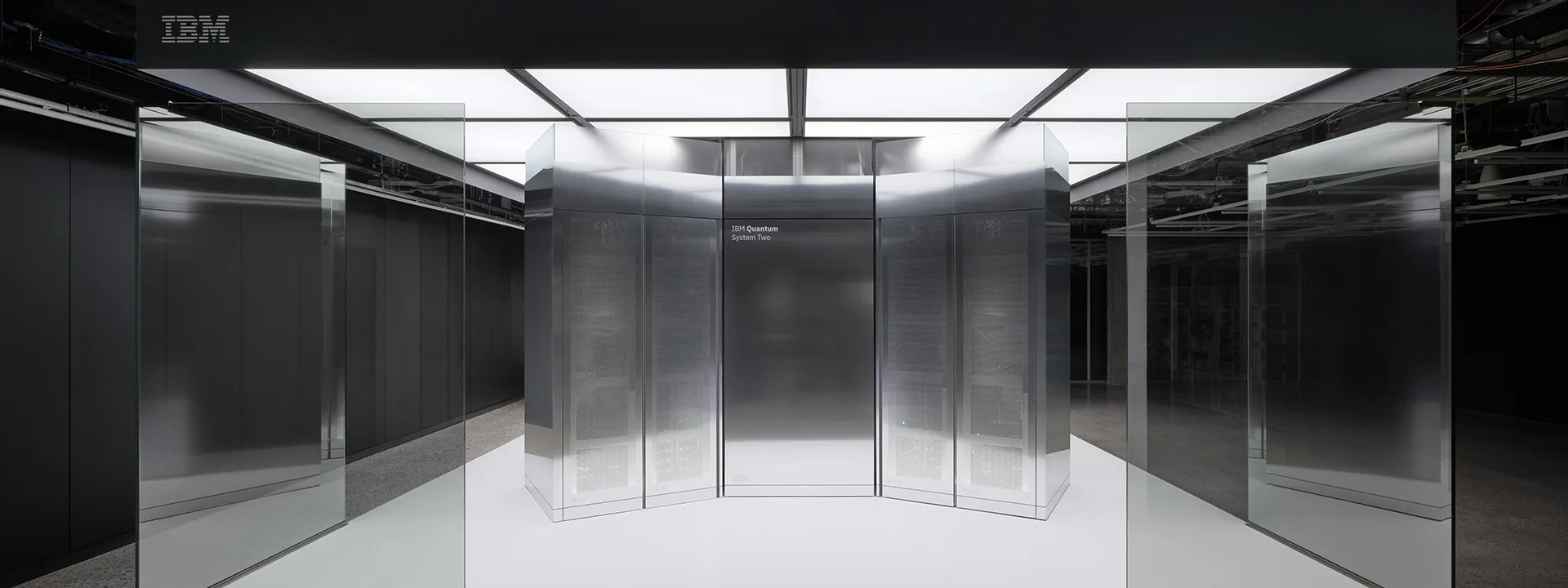
IBM’s Senior Vice President showcased the company’s most advanced quantum computer to Richard Quest. The IBM Quantum System Two, located in a research center north of New York City, is a fully functional quantum computer with three of the most advanced quantum processors ever built. The system can simulate the physical world, making complex calculations easier. The quantum processor, the most important part of the technology, is kept at 15 million Kelvin, over 100 times colder than outer space. IBM has deployed quantum computers in Japan, South Korea, Spain, Canada, Germany, and the U.S.
IBM’s Quantum Computing: A Glimpse into the Future
IBM, originally known as International Business Machine, has been a significant player in the tech industry for decades. The company, once known as ‘Big Blue’ due to the color of its computers, has been responsible for numerous technological advancements, including the creation of punch cards, floppy disks, and the computers that helped put a man on the moon. Today, IBM is pushing the boundaries of technology even further, with a focus on artificial intelligence (AI) and quantum computing.
Quantum Computing: A New Era of Technology
IBM’s latest venture is the development of what they claim to be the world’s most advanced quantum computer, the IBM Quantum System Two. This system is a building block for creating quantum supercomputers, machines that are capable of performing calculations at speeds far beyond those of classical computers. The Quantum System Two houses three of the most advanced quantum processors ever built, making it a fully functional quantum computer.
Quantum computers operate differently from classical computers. While classical computers use bits that can be either a 0 or a 1, quantum computers use quantum bits, or qubits, which can exist in multiple states at once. This allows quantum computers to perform complex calculations much more efficiently than classical computers. For example, they can simulate the physical world and nature, making them ideal for complex calculations in fields such as chemistry, physics, and materials science.
The Quantum System Two: A Closer Look
The Quantum System Two is a marvel of modern technology. The quantum processor, the most crucial part of the system, is housed at the bottom of a refrigerator-like structure. This area is one of the coldest places in the universe, with temperatures reaching 15 million Kelvin, over 100 times colder than outer space. This extreme cooling is essential for the functioning of the quantum computer.
The Quantum System Two is not just a standalone machine. It is connected to a network that allows users from around the world to send their programs to the system. These programs are converted into microwave pulses, which travel down to the quantum processor. After the calculations are performed, the results are converted back into zeros and ones and sent back to the user.
Quantum Computing: A Global Endeavor
IBM is not keeping its quantum technology to itself. The company has partnered with governments and regions around the world, deploying Quantum System Two computers in countries such as Japan, South Korea, Spain, Canada, Germany, and the United States. IBM’s CEO, Arvind Krishna, describes quantum computing as the company’s “big bet for the future,” with the company’s focus shifting from hybrid cloud and AI to include quantum computing as the technology matures.
The Future of AI and Quantum Computing
While AI and quantum computing are still in their early stages, they are already having a significant impact on the world. However, there are concerns that universities, traditionally at the forefront of technological advancements, are falling behind in these fields due to the computing-intensive nature of AI and quantum computing. To prevent a divide between those who have access to these technologies and those who do not, there is a need to democratize the value creation dimension of AI and quantum computing. This means not just using these technologies, but also understanding how to create and develop them, as they will be a significant source of competitive advantage in the future.
External Link: Click Here For More