
University of Tokyo associate professor Nobuyuki Yoshioka, alongside IBM Principal Research Scientist Antonio Mezzacapo and their collaborators, have developed a novel algorithm for “Krylov quantum diagonalization” (KQD) to extend the capabilities of quantum computers in simulating condensed matter systems. This algorithm, detailed in a June 2025 publication in Nature Communications, focuses on efficiently finding the ground state—the lowest-energy state—of complex systems. By maximizing the capabilities of existing IBM quantum computers, KQD represents a key step toward achieving quantum advantage, enabling computations beyond the reach of classical supercomputers in fields like chemistry and high-energy physics.
Quantum Algorithm Development for Computational Advantage
Quantum algorithm development is crucial for realizing the potential of quantum computers, as algorithms drive the utility of the hardware. Researchers at the University of Tokyo and IBM have focused on developing algorithms like Krylov quantum diagonalization (KQD) to efficiently find the ground state of complex systems—the lowest-energy state—which is vital for fields like chemistry and physics. KQD aims to surpass classical methods and the limitations of approaches like the variational quantum eigensolver (VQE) in solving these computationally challenging problems.
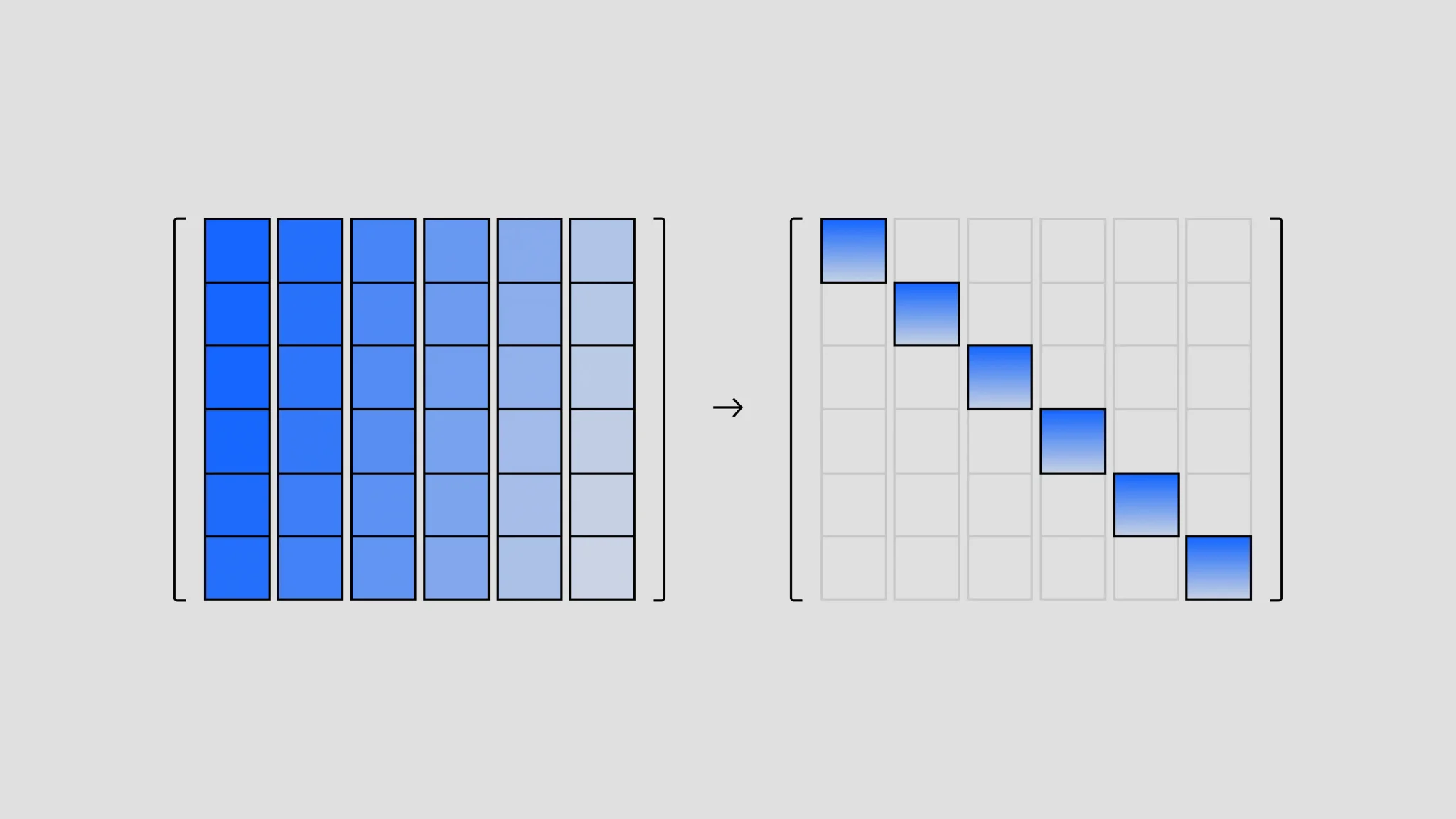
KQD functions by using a quantum computer to solve a linear algebra problem, specifically matrix diagonalization, which simplifies the process of finding a system’s ground state. This builds upon the earlier Krylov method—developed in 1931—by leveraging quantum mechanics to generate Krylov subspaces. The time-evolution of qubits mimics classical operations used to construct these subspaces, offering a potentially more efficient and accurate path to solutions than classical approaches or VQE, particularly for complex many-body systems.
Today’s 100+ qubit quantum computers are advanced enough to deliver valuable results, but realizing that value requires clever algorithm design. Hanhee Paik of IBM Research highlights the utility of algorithms that solve challenging problems with current resources. Researchers anticipate these algorithms will scale and extend as more powerful, error-corrected computers like the planned IBM Quantum Starling (expected by 2029) become available, enabling even larger and deeper computations.
The Krylov Quantum Diagonalization (KQD) Method
The Krylov Quantum Diagonalization (KQD) method is a technique for finding the ground state of a system, which represents the lowest-energy state. This is achieved by solving a linear algebra problem on a quantum computer; specifically, diagonalizing matrices to simplify calculations. Researchers, including Nobuyuki Yoshioka and Antonio Mezzacapo, developed KQD as a potentially more efficient and exact alternative to previously used methods like the variational quantum eigensolver (VQE), which struggles with scalability.
KQD leverages the mechanics of a quantum computer to handle the computationally difficult parts of classical Krylov diagonalization. The method constructs Krylov subspaces—parts of the matrix that capture its important features—using the time evolution of qubits. By setting up qubits to represent mathematical operators from these subspaces, the problem can be solved exactly. This approach, combined with error mitigation, promises more precise results than existing methods for complex systems.
Prior to KQD, the variational quantum eigensolver (VQE) was commonly used for finding ground states, but it faced scaling issues and didn’t always deliver a solution. KQD builds upon a classical technique developed by Aleksey Krylov in 1931, improving it by utilizing quantum computation to generate Krylov subspaces. This allows researchers to efficiently solve problems involving complex, multi-dimensional systems, like those found in chemistry and materials science.
KQD vs. Variational Quantum Eigensolver (VQE)
Until a few years ago, the variational quantum eigensolver (VQE) was the standard quantum method for finding a system’s ground state. However, VQE faces scaling difficulties and doesn’t always deliver a solution. Researchers then sought more efficient and exact alternatives, leading to the development of Krylov quantum diagonalization (KQD). KQD aims to more effectively tackle the computationally intensive task of finding ground states for complex, multi-dimensional systems—like those found in large molecule simulations.
KQD builds on the 1931 Krylov method, which speeds up calculations by focusing on key parts of a matrix called Krylov subspaces. The University of Tokyo and IBM researchers realized the mechanics of a quantum computer could handle the most challenging aspects of Krylov diagonalization. Specifically, the time-evolution of qubits mirrors operations used to generate these Krylov subspaces, allowing for more precise calculations.
Combined with error mitigation techniques, KQD offers the potential for better, more accurate results compared to VQE. This is crucial as quantum computers mature and researchers seek algorithms that maximize the capabilities of current hardware. KQD is particularly valuable because it could deliver results with existing computational resources, even before the advent of fault-tolerant quantum computers with thousands of qubits.
Importance of Algorithms for Quantum Computing
Algorithms are crucial for realizing the potential of quantum computers, even at this early stage of development. The source highlights that while hardware is improving, the key to “quantum advantage” lies in developing powerful algorithms that maximize existing quantum capabilities. Researchers like those at the University of Tokyo and IBM are focusing on algorithm design, recognizing it’s algorithms – not just hardware – that drive progress, as demonstrated by early work from Paul Benioff, Peter Shor, and Lov Grover.
A significant focus is on efficiently finding the “ground state” of a system – its lowest-energy state. The Krylov quantum diagonalization (KQD) algorithm developed by Yoshioka and Mezzacapo offers a potentially more efficient and exact alternative to previously used methods like the variational quantum eigensolver (VQE). KQD leverages the quantum computer to handle classically difficult parts of the calculation, particularly generating Krylov subspaces, and could deliver more precise results.
Today’s 100+ qubit quantum computers are advanced enough to deliver valuable results, but require clever algorithm design to realize that value. Hanhee Paik of IBM Research emphasizes the usefulness of algorithms that solve challenging problems with current resources. Work on algorithms like KQD will scale as hardware improves, with computers like the planned IBM Quantum Starling (expected by 2029) enabling larger, deeper computations.
Especially at this stage of the technology, before we reach thousands of error-corrected qubits, algorithms that allow us to solve challenging computational problems with the current level of computational resources are very useful.
Hanhee Paik
UTokyo and IBM’s Collaboration in Quantum Research
The University of Tokyo and IBM researchers have collaborated to develop a quantum algorithm called Krylov quantum diagonalization (KQD). Published in Nature Communications in June 2025, KQD efficiently finds the ground state of a system – its lowest-energy state – which is crucial for simulating complex physical systems. This is particularly valuable because calculating ground states for many-body systems is challenging even for classical supercomputers, with implications for fields like chemistry and high-energy physics.
KQD builds on the classical Krylov method, utilizing quantum computers to handle the computationally intensive task of generating Krylov subspaces. By leveraging the time-evolution of qubits, the algorithm offers a potentially more efficient and accurate approach to solving linear algebra problems than previous methods like the variational quantum eigensolver (VQE). Combined with error mitigation techniques, KQD aims to deliver precise results for simulating complex systems.
This work is vital because quantum computers are now advanced enough to tackle problems beyond the reach of classical computers, but are still in an early developmental stage. Developing well-designed algorithms, like KQD, is key to realizing the full potential of today’s quantum hardware and scaling solutions as more powerful computers, such as IBM’s planned Quantum Starling, become available by 2029.
We use diagonalization to compute the energy landscape of a wide range of physical systems.