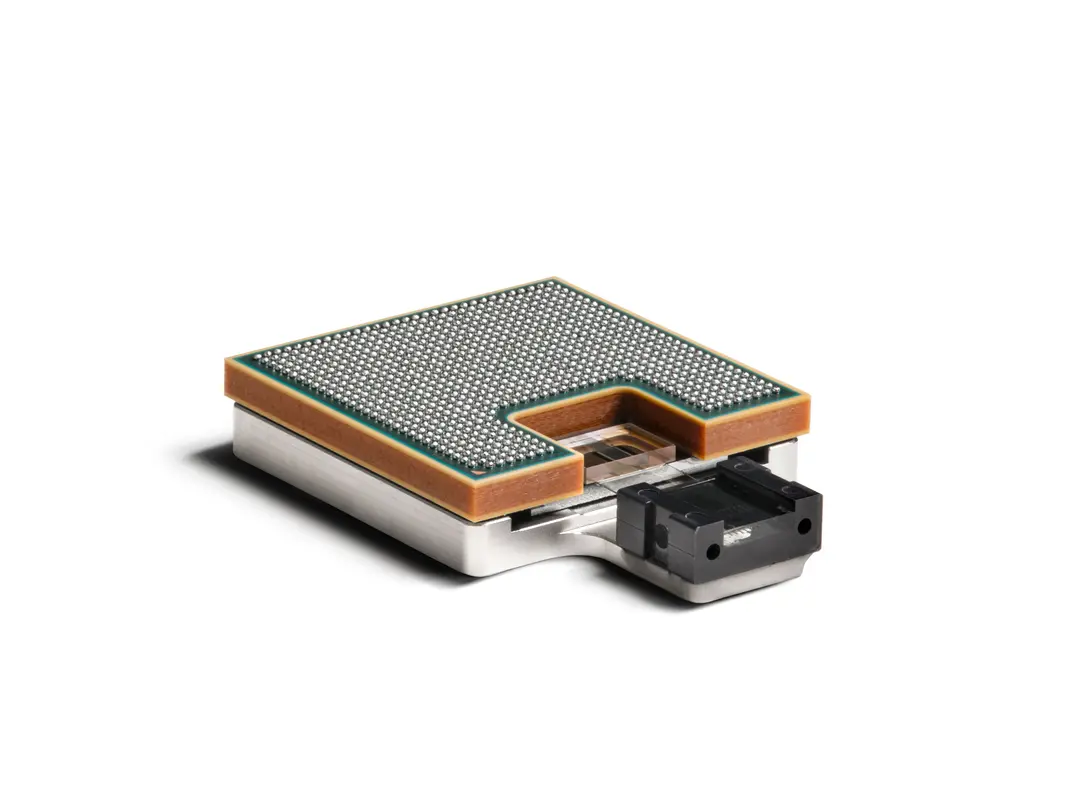
Scientists at IBM Research have made a breakthrough in developing a new technology that could revolutionize the way computers communicate with each other. Led by the Chiplet and Advanced Packaging team, they have created a system called co-packaged optics, which enables much denser connections between optical fibers and silicon chips. This innovation can potentially increase bandwidth by as much as 8,000% and reduce production costs.
The technology uses polymer optical waveguides, tiny devices that can line up high-density optical fibers bundles right at a silicon chip’s edge. According to John Knickerbocker, a team member, this development could significantly impact the field of artificial intelligence, enabling faster and more efficient processing of large amounts of data. The team has demonstrated the viability of this technology through rigorous testing, including heat and cold cycles, high-humidity conditions, and mechanical stress testing. IBM is now working to bring this technology to market, soliciting client feedback and positioning component suppliers for mass production.
In a significant advancement in optical interconnects, researchers at IBM have developed a novel co-packaged optics module that promises to revolutionize the way data is transmitted between chips. This innovation has the potential to increase bandwidth density by 1,000% to 1,200%, while reducing energy consumption by 80%.
The key to this breakthrough lies in the use of polymer optical waveguides, which enable high-density bundles of optical fibers to be integrated directly onto silicon chips. This approach allows for much denser connections than traditional optical fibers, with a pitch as small as 20-25 microns, compared to the conventional 250-micron pitch.
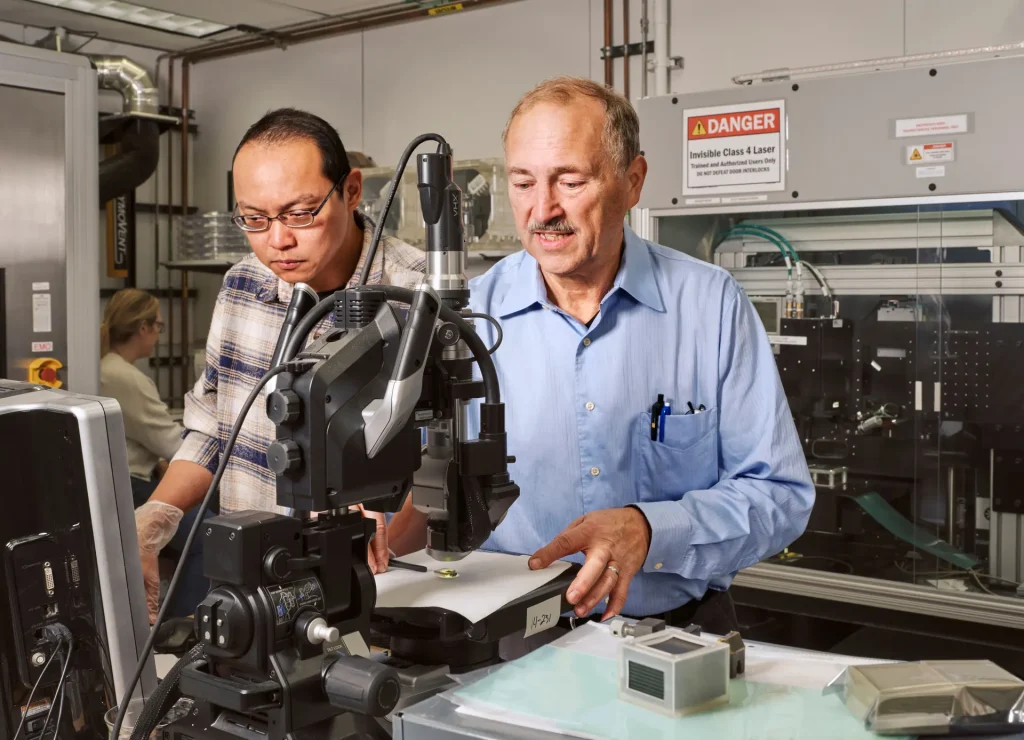
The IBM Research team, led by John Knickerbocker, has demonstrated the viability of this technology through rigorous testing, including heat and cold cycles, high-humidity conditions, and mechanical stress testing. The results show that the co-packaged optics module can achieve an insertion loss of less than 1.2 decibels per full optical link, with cross-talk as low as 30 decibels.
This development has far-reaching implications for artificial intelligence (AI), where high-bandwidth and low-latency interconnects are essential for efficient model training. By enabling multiple wavelengths of light to be transmitted per optical channel, the bandwidth increase could be boosted by at least 4,000% and as much as 8,000%.
The co-packaged optics module is designed to be compatible with standard electronic passive advanced packaging assembly processes, which can lead to lower production costs. IBM plans to produce these modules at its Bromont facility, with a roadmap for further development and commercialization.
This innovation has the potential to transform the way data is transmitted between chips, enabling faster, more efficient, and more reliable communication. As AI continues to drive technological advancements, breakthroughs like this will be crucial in unlocking its full potential.
External Link: Click Here For More