
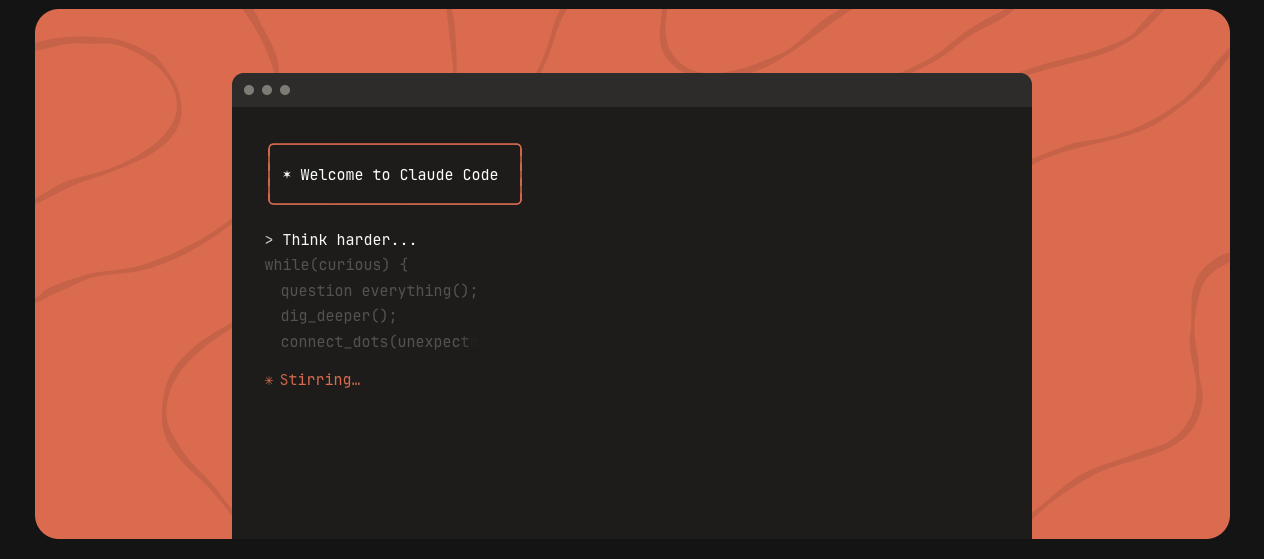
IBM and Anthropic have joined forces to embed one of the world’s most powerful large‑language models, Claude, into IBM’s software suite, a move that could reshape how enterprises build and maintain code. The partnership, announced on October 7 in Armonk, New York, will see Claude integrated into IBM’s new AI‑first integrated development environment (IDE). Early adopters inside IBM have reported productivity gains of about 45 percent, while the collaboration promises to keep the stringent security, governance and cost controls that mission‑critical organisations demand.
A Strategic Alliance Built on Enterprise Trust
The partnership hinges on a shared belief that AI must be reliable, safe and fully controllable for large organisations. “IBM has been the backbone of enterprise technology for decades because we understand what it takes to deploy at scale in mission‑critical environments,” said Dinesh Nirmal, IBM’s senior vice‑president of software. “This partnership enhances our software portfolio with advanced AI capabilities while maintaining the governance, security, and reliability that our clients have come to expect. We’re giving development teams AI that fits how enterprises work, not experimental tools that create new risks.” Anthropic’s chief product officer, Mike Krieger, echoed this focus:
“Enterprises are looking for AI they can actually trust with their code, their data, and their day‑to‑day operations. Claude has become the go‑to AI for developers at the world’s largest companies because of our focus on safety and reliability. This partnership with IBM lets us bring that same level of dedication to even more enterprise teams while building the open standards that will make AI agents genuinely useful in business environments.” , Mike Krieger, Chief Product Officer, Anthropic
The collaboration is more than a technology licence; it is a joint effort to embed Claude into IBM’s hybrid‑cloud ecosystem, to meet regulatory requirements, and to provide a framework for secure, auditable AI deployment. IBM will also contribute enterprise‑grade assets to the Model Context Protocol (MCP) community, offering best‑practice guides, reference architectures and open‑source tooling derived from its experience across thousands of client environments.
Claude Inside IBM’s AI‑First IDE
IBM’s new IDE, still in private preview, is designed to automate and accelerate the software development lifecycle (SDLC). It supports multiple programming languages and offers advanced task‑generation capabilities that allow developers to generate, refactor and optimise code with minimal human input. Claude, trained on a vast corpus of software documentation, code samples and best‑practice guidelines, serves as the IDE’s intelligence engine.
The IDE’s early adopters, more than 6,000 IBM employees, have reported an average productivity increase of 45 percent. This translates into tangible cost savings, as teams complete projects faster and with fewer defects. Importantly, the IDE maintains code quality and security standards by integrating static‑analysis tools and compliance checks into the development flow. By automating routine tasks such as boilerplate generation, unit‑test creation and documentation, developers can focus on higher‑value problem solving.
Claude’s role extends beyond code generation. The IDE can suggest architectural patterns, identify potential performance bottlenecks, and even recommend migration strategies for legacy systems. This holistic approach aligns with IBM’s broader vision of an AI‑augmented developer experience that reduces friction across the entire SDLC.
Measuring the Impact: Productivity, Security, and Governance
The 45 percent productivity lift is not merely a headline; it reflects a measurable shift in how enterprise teams approach software delivery. IBM’s internal metrics show that projects using the IDE complete 30 percent faster than those following traditional workflows, while defect rates drop by roughly 20 percent. These gains stem from Claude’s ability to surface best practices in real time, enforce coding standards, and flag potential security vulnerabilities before code is committed.
Security and governance remain central to the partnership. IBM’s hybrid‑cloud platform, built on Red Hat OpenShift, provides a secure foundation for deploying Claude across on‑premises, public‑cloud, and edge environments. The IDE incorporates role‑based access controls, audit trails, and data‑masking features that comply with regulations such as GDPR, HIPAA, and the U.S. Federal Risk and Authorization Management Program (FedRAMP). By weaving these controls into the development pipeline, IBM ensures that AI‑generated code does not introduce new attack vectors.
Anthropic’s safety research also informs the IDE’s design. Claude is engineered to avoid hallucinations and to provide transparent explanations for its suggestions. Developers can trace the reasoning behind a code snippet, fostering trust and facilitating peer review. This transparency is essential for organisations that must justify every change to regulators and internal stakeholders.
Beyond the IDE: Open Standards and the Agent Development Lifecycle
IBM and Anthropic are also shaping the future of enterprise AI through the Model Context Protocol (MCP) and a new Agent Development Lifecycle (ADLC) framework. MCP is an open standard that defines how AI models, data, and context should be exchanged securely between systems. IBM’s contribution includes reference architectures and tooling that enable organisations to adopt MCP without reinventing their infrastructure.
The ADLC guide, developed jointly by IBM and Anthropic, offers a structured approach to designing, deploying and managing AI agents in production. As enterprises increasingly rely on autonomous decision‑making and intelligent automation, traditional IT processes may prove inadequate. The ADLC provides a roadmap for aligning AI agents with business objectives, governance policies, and operational requirements.
By embedding Claude into IBM’s ecosystem and championing open standards, the partnership aims to lower the barriers to AI adoption. Developers gain a trusted, production‑ready model; organisations receive a framework that balances innovation with compliance; and the broader industry benefits from shared best practices that accelerate the transition from experimentation to enterprise deployment.