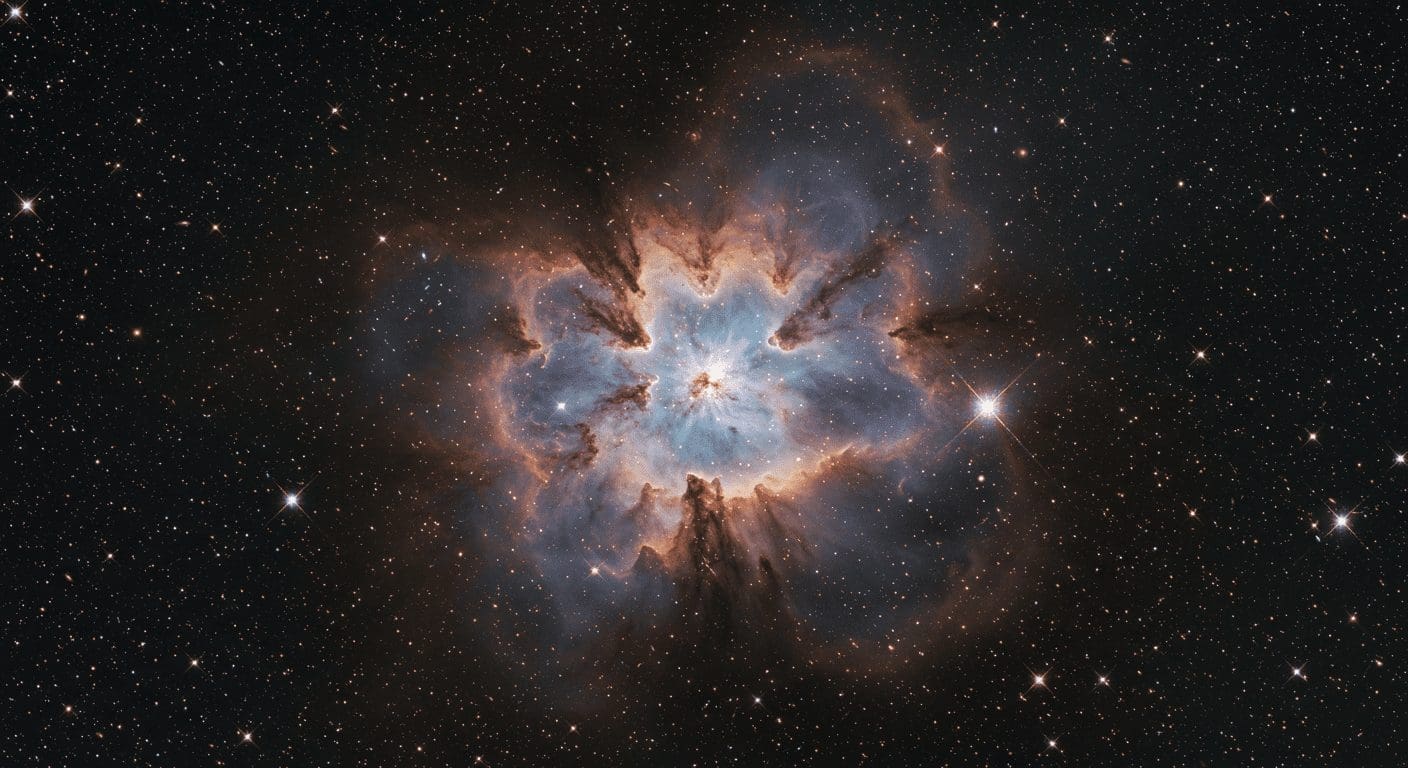
The Hubble Space Telescope was launched in 1990. It has revolutionized our understanding of the universe. It provides critical insights into cosmic expansion and dark energy. Its observations revealed evidence for this mysterious force driving accelerated expansion, reshaping cosmological models.
Hubble’s data also contributed to galaxy evolution studies. It did this through deep field images capturing thousands of galaxies at various stages of development. Additionally, its measurements of the Hubble constant have been pivotal. They have refined theories about the universe’s expansion rate. This happened despite discrepancies between different methods.
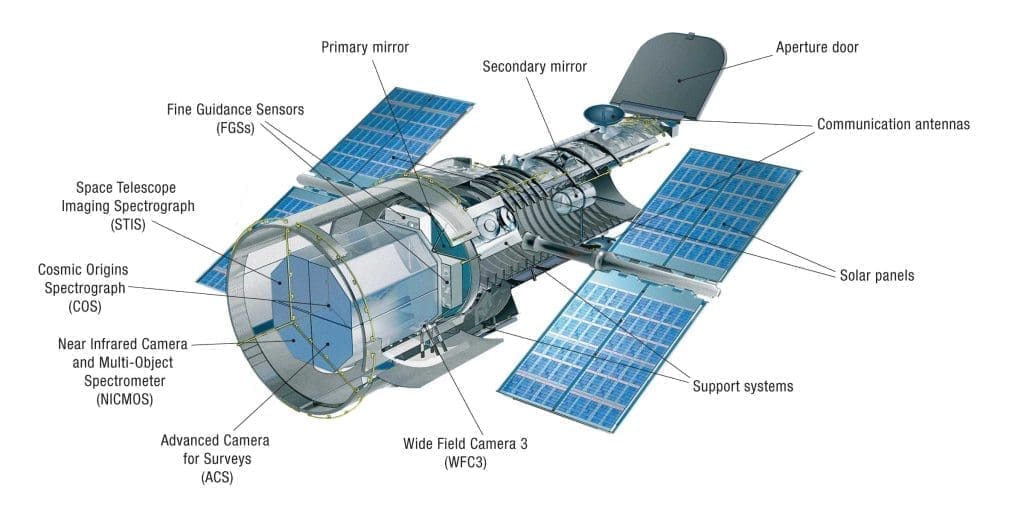
Maintaining and upgrading the telescope presented significant challenges, including a flaw in its primary mirror shortly after deployment. A 1993 servicing mission corrected this issue with innovative optics, demonstrating complexity and ingenuity. Subsequent missions focused on replacing aging components. They also integrated new technology. This included the Wide Field Camera 3 during the final 2009 servicing mission. These efforts ensured Hubble’s continued productivity and adaptability, even as newer telescopes emerged.
Despite technical hurdles, Hubble’s ability to be serviced and upgraded has been key to its longevity and scientific impact. Each mission addressed immediate issues while positioning the telescope for future discoveries. Its legacy is a testament to human ingenuity and perseverance. It advances astronomical research and inspires new generations of scientists and engineers. Hubble’s contributions remain foundational to our understanding of the cosmos, ensuring its enduring influence in astrophysics.
The History Of The Hubble Space Telescope
Hubble’s early contributions included precise measurements of the Hubble constant, quantifying the universe’s expansion rate. Ground-based limitations had caused debates over this value, but Hubble’s space-based vantage point resolved many discrepancies. This was achieved through studies of Cepheid variables, stars used as standard candles for measuring cosmic distances.
Key discoveries from Hubble include the iconic deep-field images. These images captured thousands of galaxies, offering insights into the early universe and pivotal in understanding galaxy formation and evolution. Instruments such as the Wide Field Camera 3 and Advanced Camera for Surveys enhanced observational capabilities. These instruments contributed to breakthroughs in astrophysics.
Hubble’s role in confirming accelerated cosmic expansion, attributed to dark energy, was significant. Observations of Type Ia supernovae proved that the universe’s expansion is accelerating. This discovery was recognized with the Nobel Prize in Physics in 2011.
The telescope’s impact on cosmology has been profound, reshaping our understanding of the universe’s structure and future. Its legacy continues to influence modern astronomy, highlighting the importance of space-based telescopes in advancing scientific knowledge.
Key Discoveries About Dark Energy And Its Role In Cosmic Expansion
The Hubble Space Telescope, launched in 1990, revolutionized astronomy by providing unprecedented views of the universe. Subsequent servicing missions overcame its initial challenges, such as a flawed mirror, enabling it to make groundbreaking discoveries. The telescope’s ability to capture high-resolution images across the electromagnetic spectrum has been instrumental in advancing our understanding of cosmic phenomena.
One of Hubble’s most significant contributions is confirming the universe’s accelerating expansion. By observing distant Type Ia supernovae, astronomers discovered that the expansion rate was increasing, a phenomenon attributed to dark energy. This finding, published in 1998 by Riess et al., marked a pivotal moment in cosmology and earned the researchers the Nobel Prize in Physics.
Hubble’s observations of galaxy clusters and cosmic microwave background radiation further supported the existence of dark energy. These studies revealed that dark energy constitutes approximately 68% of the universe’s total energy content, driving its accelerated expansion. The Planck satellite’s findings corroborated these results, providing a comprehensive model of the universe’s composition.
The telescope has also been instrumental in refining our understanding of dark energy’s properties. By studying the distribution of galaxies and large-scale cosmic structures, Hubble has helped constrain parameters related to dark energy’s equation of state. These insights are critical for testing theoretical models and predicting the long-term fate of the universe.
Ongoing research using Hubble continues to explore the nature of dark energy. Projects such as the Cosmic Assembly Near-infrared Deep Extragalactic Legacy Survey (CANDELS) aim to map the distribution of galaxies across cosmic time, offering new perspectives on dark energy’s influence. These efforts are essential for advancing our knowledge and addressing fundamental questions about the universe’s origins and future.
Galaxy Evolution Through Deep Field Observations
The Hubble Space Telescope, launched in 1990, has revolutionized our understanding of the cosmos by providing unprecedented clarity in astronomical observations. Positioned above Earth’s atmosphere, it captures images free from atmospheric distortion, enabling detailed studies of celestial objects.
Edwin Hubble’s groundbreaking work in the 1920s revealed that galaxies are receding from us. This discovery was confirmed through redshift measurements and the Doppler effect. This observation laid the foundation for the Big Bang theory, illustrating the universe’s expansion.
The Hubble Deep Field images were captured by prolonged exposures of small sky areas. They unveiled thousands of galaxies in various evolutionary stages. These images demonstrated how galaxies have evolved over billions of years, offering insights into their formation and growth processes.
Hubble’s role in confirming dark energy’s existence is pivotal. Astronomers observed distant supernovae. They detected an accelerating expansion of the universe. This suggests that dark energy constitutes a significant portion of the universe’s mass-energy content.
In conclusion, the Hubble Space Telescope has been instrumental in advancing our knowledge of galaxy evolution and the universe’s dynamics. Its contributions have shaped modern cosmology. They have paved the way for future missions like the James Webb Space Telescope. These missions continue humanity’s quest to unravel cosmic mysteries.
Hubble’s Contribution To Understanding The Big Bang Theory
The Hubble Space Telescope has been instrumental in confirming the universe’s expansion through redshift observations. By analyzing light from distant galaxies, astronomers observed that wavelengths were stretched, indicating movement away from us. This provided compelling evidence for an expanding universe, a cornerstone of the Big Bang theory.
Hubble’s precise measurements of the Hubble constant were achieved using Cepheid variables in distant galaxies. These stars pulsate at rates tied to their brightness, enabling accurate distance calculations. This resolved debates about the universe’s age, aligning it with Big Bang predictions and cosmological models.
Hubble’s discovery of dark energy was pivotal. Observations of Type Ia supernovae revealed that expansion was accelerating, suggesting a repulsive force counteracting gravity. This finding, detailed in studies like Riess et al., expanded our understanding of the universe’s dynamics post-Big Bang.
Hubble’s deep-field images offered glimpses into the early universe, showcasing galaxies in their infancy. These observations confirmed the Big Bang predictions of a hot and dense origin. They also detailed its subsequent expansion. This provided visual evidence supporting cosmological theories.
Contributions to studying the cosmic microwave background (CMB) further solidified Big Bang evidence. Hubble’s data complemented CMB studies. It offered insights into the universe’s early conditions and structure formation. These insights are essential for understanding our cosmic origins.
The Impact Of Hubble Data On Modern Cosmology Models
The Hubble Space Telescope, launched in 1990, has been instrumental in advancing our understanding of the universe’s expansion. Observing distant galaxies confirmed Edwin Hubble’s discovery that the universe is expanding. This confirmation was pivotal for cosmology, establishing the foundation for models like the Big Bang theory.
Hubble’s contribution to detecting the universe’s accelerating expansion came through observations of Type Ia supernovae. These supernovae serve as standard candles, allowing astronomers to measure cosmic distances accurately. Studies by Riess et al.. and Perlmutter et al.. revealed that these supernovae were dimmer than expected, indicating an accelerated expansion driven by dark energy.
Dark energy emerged as a critical concept following Hubble’s findings. This mysterious force, comprising about 68% of the universe’s mass-energy content, is thought to cause the acceleration. While its nature remains elusive, Hubble’s data has been essential in supporting theories and models incorporating dark energy into cosmology.
The Hubble Deep Field images have provided unprecedented insights into the early universe. By capturing thousands of galaxies at various developmental stages, these images have enhanced our understanding of galaxy evolution and the large-scale structure of the cosmos. This has been crucial for refining models of cosmic structure formation.
Hubble’s role in measuring the Hubble constant, which quantifies the universe’s expansion rate, is significant. While discrepancies exist between measurements from different methods, such as those using Cepheid variables versus the Cosmic Microwave Background, Hubble’s data remains vital in these refinements. Its observations continue to inform and challenge existing cosmological models.
Challenges In Maintaining And Upgrading The Telescope Over Time
Subsequent servicing missions have focused on upgrading instruments and replacing aging components. For example, during the second servicing mission in 1997, astronauts replaced the telescope’s failing gyroscopes, which are critical for pointing the telescope accurately. Gyroscopes again became a concern in later years, with three of six failing by 2005. This necessitated another servicing mission in 2009, where all six gyroscopes and other components like batteries and thermal blankets were replaced. These missions highlight the delicate balance between extending Hubble’s operational life and ensuring its continued scientific productivity.
The challenges of maintaining Hubble are not limited to technical issues but also involve the risks associated with human spaceflight. Each servicing mission required astronauts to perform complex tasks in the harsh space environment, often working with tools designed specifically for the telescope. The final servicing mission in 2009 was particularly significant after the retirement of NASA’s Space Shuttle program, which had been used for all previous Hubble missions. This mission underscored the importance of planning for contingencies and ensuring that upgrades are as robust as possible to minimize future interventions.
Another challenge has been keeping up with technological advancements while maintaining compatibility with Hubble’s original systems. For instance, engineers had to ensure that new components could integrate seamlessly with existing hardware when upgrading instruments like the Wide Field Camera 3 (WFC3) during the 2009 mission. This process required meticulous planning and testing to avoid introducing new problems. The success of such upgrades has allowed Hubble to remain a cutting-edge observatory even as newer telescopes like the James Webb Space Telescope come online.