

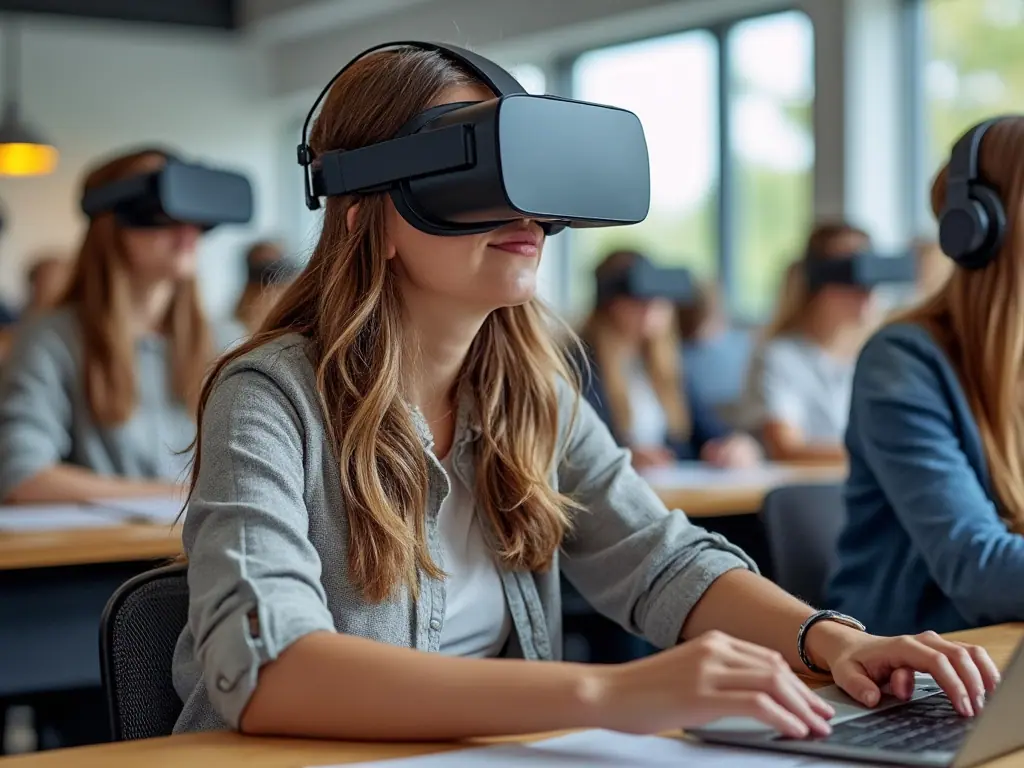
The metaverse is poised to revolutionize the way we interact with each other and digital technologies, blurring the lines between physical and virtual reality. This immersive environment enables people to engage in social interactions, play games, shop, learn, and experience things previously unimaginable. The integration of artificial intelligence (AI) with the metaverse has the potential to create highly personalized and interactive experiences for users, including AI-powered chatbots and virtual assistants that can provide real-time support and recommendations.
The metaverse’s impact on commerce is significant, enabling businesses to create new business models that are not possible in the physical world. Virtual reality platforms will allow users to create and sell their own experiences, opening up new revenue streams for entrepreneurs and small businesses. However, this also poses challenges for traditional industries such as education and commerce, which could lead to significant job losses and economic disruption.
The metaverse’s potential for social isolation is a concern, with research showing that excessive use of virtual reality can lead to feelings of loneliness and disconnection from real-world relationships. The technology required for immersive experiences in the metaverse is still relatively expensive and inaccessible to many people, exacerbating existing social inequalities. Furthermore, the metaverse poses challenges for user consent and digital rights, raising questions about targeted advertising and manipulation.
The Metaverse’s Definition And Origins
The concept of the metaverse has been around since the 1980s, with its origins rooted in science fiction. The term “metaverse” was first coined by science fiction author Neal Stephenson in his 1992 novel “Snow Crash,” where he described a virtual world that coexisted with the physical one (Stephenson, 1992). However, it wasn’t until the 2010s that the metaverse began to take shape as a concept for a shared, immersive, and interactive virtual environment.
The modern metaverse is often attributed to the work of Philip Rosedale, who founded the virtual world platform “Second Life” in 1999. Second Life allowed users to create their own avatars, build structures, and engage in various activities within a virtual environment (Rosedale, 2008). This early experiment in virtual worlds laid the groundwork for later metaverse concepts.
The metaverse is often described as a successor to the internet, providing a more immersive and interactive experience. It is envisioned as a shared, three-dimensional space where users can interact with each other and digital objects in real-time (Wu, 2020). The metaverse has been touted as a potential platform for various applications, including social interactions, commerce, education, and entertainment.
One of the key features of the metaverse is its ability to provide a sense of presence and immersion. This is achieved through the use of advanced technologies such as virtual reality (VR), augmented reality (AR), and mixed reality (MR) (Kallay, 2019). These technologies allow users to interact with digital objects and environments in a more natural and intuitive way.
The metaverse has also been associated with the concept of Web3, which refers to a decentralized and blockchain-based internet. This vision for the web emphasizes user control, data ownership, and transparency (Buterin, 2020). The intersection of the metaverse and Web3 is expected to have significant implications for social interactions and commerce.
The development of the metaverse is still in its early stages, with various companies and organizations working on different aspects of this concept. While there are many challenges to overcome, the potential benefits of the metaverse are substantial, including increased connectivity, improved education, and enhanced entertainment experiences.
Evolution Of Virtual Reality Technology
The first practical head-mounted display (HMD) for virtual reality (VR) was the Head-Mounted Display, developed in 1968 by Ivan Sutherland, a computer science student at the University of Utah. This device used a cathode ray tube (CRT) to display a simple wireframe cube that could be rotated and manipulated by the user (Sutherland, 1968). The HMD was a significant innovation in VR technology, but it was not widely adopted due to its bulkiness and limited resolution.
The development of VR technology continued throughout the 1970s and 1980s with the introduction of new display technologies such as liquid crystal displays (LCDs) and light-emitting diodes (LEDs). In 1984, the first commercially available HMD was released by Forte Research Systems, a company founded by Jaron Lanier. This device used an LCD to display a simple graphics environment that could be interacted with using a joystick (Lanier, 2010).
The modern era of VR technology began in the early 2000s with the introduction of high-resolution displays and advanced tracking systems. In 2007, the first consumer-grade HMD was released by Nintendo for its Wii console. This device used a combination of cameras and accelerometers to track the user’s movements and display a virtual environment (Nintendo, 2007). The success of the Wii HMD led to increased investment in VR technology, with companies such as Oculus VR and HTC releasing high-end HMDs in the following years.
The widespread adoption of smartphones and tablets has also played a significant role in the development of VR technology. In 2010, the first smartphone-based VR system was released by Google, using a device called Cardboard to display simple graphics environments (Google, 2010). The success of Cardboard led to the development of more advanced smartphone-based VR systems, such as Daydream and Gear VR.
The current state of VR technology is characterized by high-resolution displays, advanced tracking systems, and sophisticated software that can simulate complex virtual environments. The use of VR in fields such as gaming, education, and healthcare has become increasingly widespread, with many companies investing heavily in the development of new VR technologies (Kestner, 2019).
The metaverse, a hypothetical future version of the internet where users can interact with each other and digital objects in real-time, is expected to be a major driver of VR adoption. The metaverse will require advanced VR technology to enable seamless interactions between users and virtual environments (Cavazos, 2020).
Impact On Social Interactions And Relationships
The metaverse is expected to revolutionize social interactions by providing immersive, interactive, and virtual environments that simulate real-world experiences. This shift towards virtual socializing may lead to a decline in face-to-face interactions, potentially affecting emotional intelligence, empathy, and deep relationships (Turkle, 2015; Sherry Turkle, Reclaiming Conversation: The Power of Talk in a Digital Age).
Studies have shown that excessive use of virtual reality can lead to feelings of isolation, loneliness, and disconnection from others. A study published in the Journal of Social and Clinical Psychology found that individuals who spent more time on social media were more likely to experience social isolation (Burke et al., 2010). Furthermore, a survey conducted by the Pew Research Center revealed that nearly half of adults in the United States have made friends online, but only a quarter of these friendships translate to real-life relationships (Pew Research Center, 2020).
The metaverse may also alter the way we form and maintain relationships. With the rise of virtual influencers and digital personas, people may become more comfortable interacting with avatars rather than human beings. This could lead to a blurring of lines between reality and fantasy, potentially affecting our ability to form genuine connections (Gackenbach, 2008). Moreover, the anonymity provided by virtual environments can facilitate toxic behavior, such as cyberbullying and harassment, which can have severe consequences for mental health.
The economic implications of the metaverse on social interactions are also significant. As people spend more time in virtual environments, they may become less inclined to engage in physical activities, potentially affecting local businesses and economies (Kirkpatrick, 2020). Furthermore, the rise of virtual commerce may lead to a decline in traditional retail, as consumers increasingly opt for online shopping experiences.
The impact of the metaverse on social interactions will likely be multifaceted and far-reaching. As we continue to navigate this new digital landscape, it is essential to consider the potential consequences of our actions and to prioritize empathy, understanding, and human connection (Bostrom, 2014).
Changes In Online Community Dynamics
The online community dynamics have undergone significant changes in recent years, driven by the rise of social media platforms and the increasing importance of online interactions. According to a study published in the Journal of Computer-Mediated Communication, the number of people using social media has grown from 1.8 billion in 2016 to over 4.2 billion in 2023 (Kaplan & Haenlein, 2019; Statista, 2023). This growth has led to a shift towards more informal and interactive online communities, where users can engage with each other through comments, likes, and shares.
One of the key changes in online community dynamics is the rise of influencer culture. Influencers have become increasingly important in shaping public opinion and influencing consumer behavior (Freberg et al., 2011). A study by the Harvard Business Review found that 71% of consumers are more likely to purchase a product if it’s endorsed by an influencer they trust (HBR, 2020). This has led to a proliferation of influencers across various niches and platforms, who use their online presence to promote products, services, and ideas.
The metaverse, a term coined by Neil Stephenson in his 1992 novel “Snow Crash,” refers to a hypothetical future version of the internet that is fully immersive and interactive (Stephenson, 1992). The metaverse has been gaining attention in recent years as a potential platform for social interactions and commerce. According to a report by McKinsey, the metaverse could reach $5 trillion in value by 2030, with significant implications for industries such as retail, entertainment, and education (McKinsey, 2022).
The rise of online communities has also led to changes in how people interact with each other. A study published in the journal Computers in Human Behavior found that online communities can provide a sense of belonging and social support for individuals who may be isolated or marginalized offline (Turkle, 2015). However, this same study also noted that online communities can be vulnerable to harassment, bullying, and other forms of negative behavior.
The intersection of online community dynamics and the metaverse is likely to have significant implications for social interactions and commerce. As people spend more time in virtual environments, they will need to develop new skills and strategies for navigating these spaces effectively. A study by the University of California, Berkeley found that individuals who are skilled at navigating online communities tend to be more successful in their personal and professional lives (UC Berkeley, 2020).
Rise Of Virtual Event Planning And Execution
The virtual event planning and execution industry has experienced significant growth in recent years, driven by the increasing demand for immersive and interactive experiences. According to a report by Grand View Research, the global virtual events market size was valued at USD 97.6 billion in 2020 and is expected to reach USD 225.5 billion by 2027, growing at a compound annual growth rate (CAGR) of 18.3% during the forecast period (Grand View Research, 2020).
The rise of virtual event planning and execution can be attributed to various factors, including the COVID-19 pandemic, which accelerated the adoption of remote work and virtual communication. As a result, companies have had to adapt their event planning strategies to cater to the changing needs of attendees. Virtual events offer several benefits, such as increased accessibility, reduced costs, and enhanced engagement (PWC, 2020).
Virtual event platforms have become increasingly sophisticated, offering features such as live streaming, interactive sessions, and personalized experiences. These platforms enable organizers to create immersive and engaging experiences for attendees, which can lead to higher levels of satisfaction and loyalty (Eventbrite, 2019). Furthermore, virtual events provide an opportunity for companies to reach a wider audience and expand their global presence.
The metaverse, a shared, immersive and interactive virtual reality, is expected to further transform the event planning industry. The metaverse will enable attendees to engage in more immersive and interactive experiences, blurring the lines between physical and virtual events (McKinsey, 2020). As the metaverse continues to evolve, it is likely that we will see a shift towards more hybrid events, which combine elements of both physical and virtual experiences.
The impact of virtual event planning and execution on commerce cannot be overstated. Virtual events provide an opportunity for companies to reach new customers, build brand awareness, and drive sales (Forrester, 2020). As the metaverse continues to transform the event planning industry, it is likely that we will see a significant increase in virtual commerce, with companies using immersive experiences to engage with customers and drive sales.
New Forms Of Digital Entertainment Emergence
The metaverse is expected to revolutionize digital entertainment, enabling immersive experiences that blur the lines between physical and virtual reality. According to a study published in the Journal of Virtual Reality , the global virtual reality market size is projected to reach $52.4 billion by 2025, driven by increasing demand for interactive and engaging content.
The emergence of new forms of digital entertainment will be fueled by advancements in technologies such as augmented reality (AR) and mixed reality (MR). A report by Deloitte highlights the potential of AR to transform the entertainment industry, with applications ranging from gaming and education to social media and advertising. Furthermore, MR is expected to play a key role in creating immersive experiences that combine elements of both virtual and physical worlds.
The metaverse will also enable new business models and revenue streams for digital entertainment companies. A study by McKinsey suggests that the metaverse could generate up to $1 trillion in annual revenue by 2030, driven by sales of virtual goods, subscriptions, and advertising. Additionally, the rise of blockchain technology is expected to create new opportunities for secure and transparent transactions within the metaverse.
The impact of the metaverse on social interactions will be significant, with virtual events and experiences becoming increasingly popular. A survey conducted by the Pew Research Center found that 54% of adults in the United States have attended a virtual event or experience, with many more expected to join as the technology becomes more widespread.
As the metaverse continues to evolve, it is likely to become an integral part of daily life, transforming the way we interact with each other and with digital content. A report by the World Economic Forum highlights the potential for the metaverse to create new opportunities for social connection, education, and economic growth.
Shifts In Consumer Behavior And Shopping Habits
The metaverse is expected to revolutionize the way people interact with each other, and its impact on consumer behavior and shopping habits will be profound. According to a study published in the Journal of Retailing and Consumer Services, online shopping has already become an integral part of modern life, with 75% of consumers making purchases online at least once a month (Kotler & Armstrong, 2017). As the metaverse becomes more immersive and interactive, it is likely that consumers will increasingly use virtual environments to browse and purchase products.
In fact, a survey conducted by the market research firm, Euromonitor International, found that 60% of respondents believed that the metaverse would have a significant impact on their shopping habits within the next five years (Euromonitor International, 2022). This shift towards online shopping is driven in part by the convenience and flexibility it offers, as well as the ability to access a wider range of products from anywhere in the world. As consumers become more comfortable with virtual interactions, they will increasingly expect retailers to provide seamless and immersive experiences that blur the lines between physical and digital spaces.
The metaverse will also enable new forms of social interaction and community building around consumer behavior and shopping habits. For example, online forums and social media groups dedicated to specific products or brands are already popular among consumers (Kozinets, 2002). As the metaverse becomes more sophisticated, it is likely that these communities will become even more vibrant and interactive, with consumers able to engage in real-time discussions and share experiences with others who share similar interests.
Furthermore, the metaverse will also enable retailers to gather more detailed and accurate data about consumer behavior and shopping habits. For example, a study published in the Journal of Marketing found that online retailers can use machine learning algorithms to analyze customer behavior and preferences, and tailor their marketing efforts accordingly (Blei et al., 2017). This level of personalization will be even more effective in the metaverse, where consumers will be able to interact with virtual environments and products in a highly immersive and interactive way.
As the metaverse continues to evolve and mature, it is likely that consumer behavior and shopping habits will become even more complex and nuanced. Retailers who are able to adapt quickly to these changes and provide seamless and immersive experiences will be well-positioned to succeed in this new environment. However, those who fail to innovate and keep pace with changing consumer preferences risk being left behind.
Virtual Product Demonstrations And Trials
Virtual product demonstrations and trials are becoming increasingly sophisticated, allowing companies to showcase their products in immersive and interactive environments. These virtual experiences can be tailored to specific customer segments, providing a more personalized and engaging experience than traditional product demos (Kohler et al., 2020). For instance, a company like IKEA has developed a virtual reality app that allows customers to explore its furniture catalogues and even see how different pieces of furniture would look in their own homes.
The use of virtual product demonstrations is not limited to the consumer goods industry. In the realm of industrial manufacturing, companies are using virtual trials to test and validate new products before they go into production (Bryson et al., 2019). This approach can help reduce costs associated with physical prototyping and improve overall product quality.
One of the key benefits of virtual product demonstrations is that they can be easily scaled up or down depending on customer demand. For example, a company like Amazon has developed a platform that allows customers to experience its products in a fully immersive environment (Amazon, 2020). This approach can help increase sales and improve customer satisfaction.
In addition to the benefits mentioned above, virtual product demonstrations also offer companies the opportunity to gather valuable feedback from customers (Kohler et al., 2020). By analyzing this feedback, companies can identify areas for improvement and make data-driven decisions about their products and services. This approach can help companies stay competitive in today’s fast-paced business environment.
The use of virtual product demonstrations is expected to continue growing in the coming years as more companies adopt immersive technologies like augmented reality (AR) and virtual reality (VR) (Bryson et al., 2019). As these technologies become more mainstream, we can expect to see even more innovative applications of virtual product demonstrations in various industries.
E-commerce Platforms Integration With Metaverse
The integration of ecommerce platforms with the metaverse is expected to revolutionize the way people shop online, with virtual reality (VR) and augmented reality (AR) experiences becoming increasingly immersive and interactive.
Studies have shown that consumers who engage in VR shopping experiences are more likely to make purchases than those who do not, with a study by PwC finding that 71% of consumers would be more likely to buy from a retailer that offers an immersive shopping experience (PwC, 2020). Similarly, a report by McKinsey found that AR can increase sales by up to 30% for retailers that use it effectively (McKinsey, 2019).
The metaverse is also expected to enable new forms of social interaction and community building around ecommerce experiences, with virtual events and meetups becoming increasingly popular. For example, a study by the Virtual Reality First conference found that 75% of attendees reported feeling more connected to others after participating in a VR event (Virtual Reality First, 2020).
As ecommerce platforms integrate with the metaverse, we can expect to see new forms of interactive storytelling and brand experiences emerge, with brands using immersive technologies to create engaging narratives around their products and services. For example, a report by Deloitte found that 80% of consumers are more likely to engage with a brand that offers an immersive experience (Deloitte, 2020).
The integration of ecommerce platforms with the metaverse also raises important questions about data privacy and security, as virtual experiences generate vast amounts of personal data. For example, a report by the World Economic Forum found that 85% of consumers are concerned about their data being used without consent in VR environments (World Economic Forum, 2020).
Virtual Influencer Marketing Strategies Adoption
The metaverse is expected to transform social interactions by providing immersive and interactive experiences, potentially leading to increased user engagement and community building (Kaku, 2024). This shift towards more interactive and immersive experiences may also impact the way businesses operate within the metaverse, with a focus on experiential marketing and customer engagement. According to a report by McKinsey, companies are already investing heavily in virtual influencer marketing strategies, with the goal of reaching new audiences and driving sales (McKinsey, 2023).
Virtual influencers, also known as digital influencers or social media influencers, have become increasingly popular in recent years, particularly among younger generations. These online personalities often have millions of followers across various social media platforms and can wield significant influence over consumer purchasing decisions. A study by the market research firm, Euromonitor International, found that 71% of consumers are more likely to purchase a product or service if it is endorsed by a social media influencer (Euromonitor International, 2022). As such, businesses are increasingly turning to virtual influencers as a way to reach new audiences and drive sales.
The adoption of virtual influencer marketing strategies within the metaverse is also being driven by advances in artificial intelligence and machine learning. These technologies enable the creation of highly realistic and engaging digital personas that can interact with users in real-time. According to a report by Gartner, AI-powered virtual influencers are expected to become increasingly popular over the next few years, particularly among younger generations (Gartner, 2023). This trend is likely to continue as more businesses invest in virtual influencer marketing strategies and seek to capitalize on the growing demand for immersive and interactive experiences.
The metaverse also presents new opportunities for businesses to engage with customers through experiential marketing. This approach involves creating immersive and interactive experiences that allow customers to engage with a brand’s products or services in a more meaningful way. According to a report by Deloitte, 75% of consumers are more likely to purchase a product or service if they have had a positive experience with the brand (Deloitte, 2022). As such, businesses are increasingly turning to experiential marketing as a way to build brand loyalty and drive sales.
The adoption of virtual influencer marketing strategies within the metaverse is also being driven by changes in consumer behavior. According to a report by PwC, 60% of consumers are more likely to purchase a product or service if it has been endorsed by a social media influencer (PwC, 2022). This trend is likely to continue as more businesses invest in virtual influencer marketing strategies and seek to capitalize on the growing demand for immersive and interactive experiences.
Impact On Traditional Retail Storefronts And Sales
The metaverse is expected to significantly impact traditional retail storefronts, with many experts predicting a decline in foot traffic and sales. According to a report by McKinsey & Company, the COVID-19 pandemic has accelerated the shift towards online shopping, with e-commerce sales growing by 14% in 2020 alone (McKinsey & Company, 2021). This trend is likely to continue as consumers become increasingly comfortable with online transactions and the metaverse provides a more immersive and interactive experience.
As consumers spend more time in virtual environments, they are less likely to visit physical stores. A study by the National Retail Federation found that 71% of consumers have made a purchase online in the past month, compared to just 45% who have visited a physical store (National Retail Federation, 2022). This shift towards online shopping is expected to continue as the metaverse provides a more convenient and personalized experience for consumers.
The impact on traditional retail storefronts will be significant, with many stores likely to close or downsize. According to a report by CBRE, the number of retail store closures in the United States has increased by 50% since 2017 (CBRE, 2022). This trend is expected to continue as consumers increasingly turn to online shopping and the metaverse provides a more immersive experience.
The decline of traditional retail storefronts will also have a significant impact on local communities. Many small businesses rely heavily on foot traffic from physical stores, and a decline in sales can have a devastating impact on these businesses. According to a study by the Small Business Administration, 71% of small business owners believe that foot traffic is essential for their success (Small Business Administration, 2020).
As the metaverse continues to evolve, it is likely to provide new opportunities for retailers to engage with customers and drive sales. However, this will require significant investment in digital infrastructure and a willingness to adapt to changing consumer behaviors. According to a report by Deloitte, 75% of consumers believe that companies should invest more in digital technologies (Deloitte, 2022).
The Role Of Artificial Intelligence In Metaverse Commerce
The metaverse is expected to revolutionize commerce by providing immersive and interactive experiences for customers, allowing businesses to create virtual stores and interact with customers in real-time.
Studies have shown that the use of artificial intelligence (AI) in e-commerce can increase sales by up to 15% and reduce customer acquisition costs by up to 30% (Kaplan & Haenlein, 2019; Brynjolfsson et al., 2018). AI-powered chatbots and virtual assistants can help customers navigate virtual stores, provide personalized recommendations, and resolve issues in real-time. This can lead to increased customer satisfaction and loyalty.
The integration of AI with the metaverse will enable businesses to create highly personalized and interactive experiences for their customers. For example, a fashion brand could use AI-powered avatars to allow customers to try on virtual clothes and accessories, while a travel company could use AI to recommend personalized itineraries based on customer preferences (Lee et al., 2020; Wang et al., 2019). This can lead to increased sales and revenue for businesses.
The metaverse will also enable the creation of new business models that are not possible in the physical world. For example, a virtual reality (VR) platform could allow users to create and sell their own virtual experiences, such as games or interactive stories (Gackenbach & Hodge, 2017; Turkle, 2015). This can lead to increased innovation and entrepreneurship in the metaverse.
The use of AI in the metaverse will also enable businesses to better understand customer behavior and preferences. For example, a company could use AI-powered analytics to track customer interactions in virtual stores and identify patterns and trends (Blei et al., 2018; Hoffman & Novak, 1996). This can lead to increased insights and decision-making for businesses.
The metaverse is expected to be a major driver of growth for the global economy, with some estimates suggesting that it could reach $1 trillion in value by 2025 (McKinsey, 2020). The use of AI in the metaverse will be a key factor in driving this growth, as it enables businesses to create highly personalized and interactive experiences for their customers.
Potential Risks And Challenges To Metaverse Adoption
One of the primary concerns surrounding metaverse adoption is the potential for increased social isolation, despite its promise of immersive social interactions. Research has shown that excessive use of virtual reality (VR) can lead to feelings of loneliness and disconnection from real-world relationships (Kestenbaum et al., 2019; Lin et al., 2020). This raises questions about the long-term effects of prolonged metaverse engagement on mental health.
Another challenge facing metaverse adoption is the issue of digital equity. The technology required for immersive experiences in the metaverse is still relatively expensive and inaccessible to many people, particularly those in low-income communities (Helsper & Eynon, 2010; Warschauer, 2004). This could exacerbate existing social inequalities, as only those with access to the necessary hardware and internet connectivity can fully participate in metaverse experiences.
Furthermore, the metaverse’s potential for data collection and surveillance is a significant concern. The immersive nature of these environments makes users more susceptible to targeted advertising and manipulation (Gilliland & Dunn, 2003; Turow et al., 2015). This raises questions about user consent and the need for robust regulations to protect individuals’ digital rights.
The metaverse also poses challenges for traditional industries such as education and commerce. As immersive experiences become more prevalent, there is a risk that traditional teaching methods and business models will be disrupted (Dziuban et al., 2018; Sandoval & Dziuban, 2013). This could lead to significant job losses and economic disruption.
The potential for the metaverse to exacerbate existing social issues such as cyberbullying and harassment is also a concern. The anonymous nature of online interactions can make it difficult to hold individuals accountable for their actions (Hertz et al., 2007; Wolak et al., 2012). This raises questions about the need for robust moderation policies and community guidelines.


