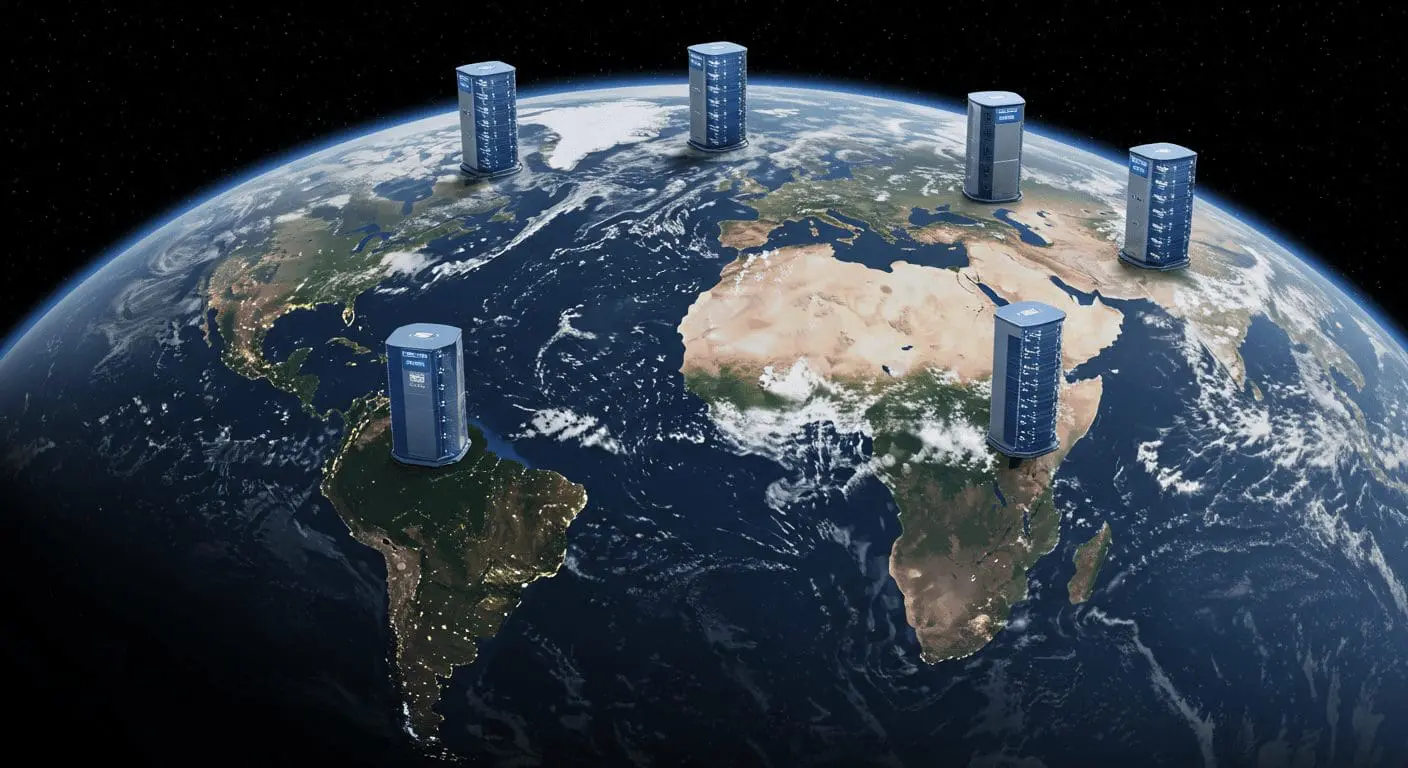
The difficulty in pinpointing the number of quantum computers stems from several factors, including differing definitions of what constitutes a quantum computer, underreporting by some countries, and varying levels of accessibility. Some systems remain confined to laboratory settings, while others are accessible via cloud services, expanding their reach but complicating efforts to track them comprehensively.
The global count of quantum computers remains uncertain due to several factors. First, the definition of a quantum computer varies, encompassing gate-based models like those developed by IBM and Google, quantum annealers such as D-Wave‘s systems, and hybrid setups that integrate classical and quantum elements. This diversity complicates enumeration.
IBM and Google are prominent in the gate-based model. IBM offers cloud access to multiple quantum computers featuring varying qubit counts. Google has advanced its quantum processors toward error correction and practical applications. D-Wave specializes in quantum annealing for optimization tasks, providing distinct systems from traditional gate models.
Academic institutions often host quantum setups primarily for research, while startups explore innovative approaches, though their contributions are less documented. Additionally, some nations may develop quantum computers covertly, leading to underreporting and further opacity in global counts.
Putting a Number on Number of Quantum Computers on The Planet: 100
IBM has led the deployment of superconducting quantum computers via the quantum cloud. They have a public roadmap and announced that they will deploy numerous systems to partners and clients worldwide, including universities and research institutions. They’ve likely built and deployed dozens of systems, gradually increasing in qubit count and performance over time. Reasoned Estimate: 20-30+ quantum computers. This is based on the publicly announced partnerships, their Quantum Network, and the yearly goal of deploying multiple systems.
Google focuses on superconducting quantum computers and famously achieved “quantum supremacy” (a demonstration of a quantum computer outperforming a classical one on a specific task) in 2019. While they don’t offer widespread cloud access like IBM, they have built multiple generations of processors for internal research and select collaborations. Reasoned Estimate: 5-10 quantum computers. Google’s focus has been pushing capability boundaries with fewer advanced, highly controlled systems rather than broad deployment.
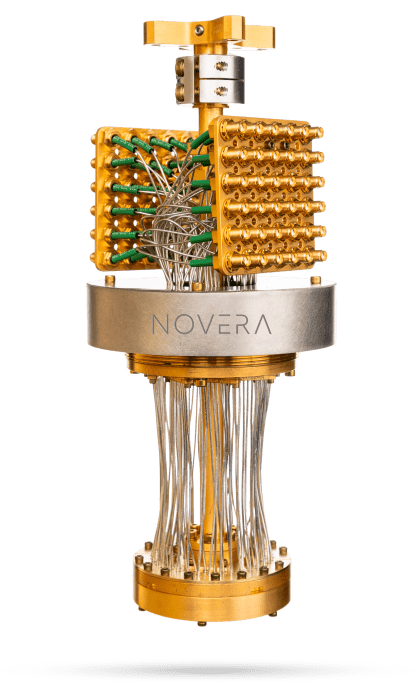
Rigetti builds superconducting quantum computers and provides cloud access through its Quantum Cloud Services. It has partnerships with various organizations and has manufactured several generations of its “Aspen” series chips. Reasoned Estimate: 5-10 quantum computers. Rigetti’s strategy involves internal research and providing access to external users, suggesting a moderate number of deployed systems with a mix of internal and externally accessible machines. They are actively selling their Novera 9 qubit chip.
IonQ utilizes trapped-ion technology, which offers potential advantages in qubit coherence and connectivity. They offer access through significant cloud providers like Amazon Braket, Microsoft Azure Quantum, and Google Cloud. While they don’t disclose the number of physical systems, their public roadmap and published research indicate ongoing system development and deployment. Ion traps are generally more complex to scale in physical size than superconducting circuits. Reasoned Estimate: 3-7 quantum computers. The focus on cloud accessibility through partners and the complexity of scaling trapped-ion systems suggests fewer competent machines.
D-Wave specializes in quantum annealing, a type of quantum computing suited for optimization problems. Its systems are commercially available and have been purchased by various organizations. It has released several generations of its “Advantage” system. Quantum annealers are distinct from gate-based quantum computers. Reasoned Estimate: 5-10 quantum annealers. D-Wave has been commercially selling its systems for a more extended period than most other companies on this list, and it is focused on a specific type of quantum computation.
Quantinuum, formed from the merger of Honeywell Quantum Solutions and Cambridge Quantum, uses trapped-ion technology. It has publicly stated that it operates multiple systems and provides commercial access. Reasoned Estimate: 3-7 quantum computers. Like IonQ, Quantinuum utilizes trapped-ion technology, which is inherently more difficult to scale in terms of the number of physical systems. It focuses on high-fidelity, fully connected qubits.
PsiQuantum is known for its work in Photonic Quantum Computing, which uses photons instead of ions or superconducting circuits. They have raised substantial amounts of funding and made advancements in manufacturing and quantum computation. Due to the very nature of Photonic quantum computing, scaling up is much more involved than other methods. Reasoned Estimate: 1-2 Quantum computers. They are still in a growth and development phase, and their main focus is on fault tolerance, which is only an issue once many qubits have been achieved.
IQM, based in Finland, focuses on building superconducting quantum computers, particularly for on-premise deployment at supercomputing centers and research labs. They’ve secured significant funding and have partnerships with several European organizations. IQM emphasizes co-design, tailoring their hardware to specific application needs. They’ve delivered at least one system to a supercomputing center (VTT in Finland) and have announced others. Reasoned Estimate: 30-50 quantum computers. IQM’s strategy of on-premise deployment, coupled with their relatively recent founding (compared to IBM or D-Wave), and the known delivery to VTT and announced projects, points to a smaller, but rapidly growing, number of deployed systems. Back in 2024, they claimed 30 machines in production.
Microsoft’s primary focus in quantum computing is developing the Azure Quantum ecosystem. This cloud platform provides partners like IonQ, Quantinuum, Rigetti, and Pasqal access to quantum hardware. They are also heavily invested in quantum software development (Q#, QDK) and research into topological qubits. The Jury is still out about how many, but recent claims about creating a topological qubit (Majorana 1) have created excitement. Reasoned Estimate: 1 (of their own) quantum computers.
Pasqal, a French company, is developing quantum computers based on neutral atom technology. Neutral atoms, trapped and controlled by lasers, offer another promising path to scalability and coherence. Pasqal offers cloud access to their systems and partners with various research institutions and industrial clients. They’ve announced the sale of systems to HPC centers. Reasoned Estimate: 2-5 quantum computers. Similar to IonQ and Quantinuum, the complexity of scaling neutral atom systems, combined with their focus on both cloud access and on-premise deployments,
Atom Computing, based in the US, uses neutral atoms as their qubit modality. They’ve publicly demonstrated a system with many qubits (though qubit count alone isn’t the sole performance measure) and are pursuing a roadmap toward fault-tolerant quantum computing. They are relatively new but have made rapid progress. Reasoned Estimate: 1-3 quantum computers. Given their recent entry and the focus on a large-scale, next-generation system, they likely have fewer prototype or early-generation machines, primarily for internal development and testing.
Xanadu, a Canadian company, focuses on photonic quantum computing, using light (photons) as qubits. They offer cloud access to their “Borealis” and earlier “X-series” photonic quantum processors. Photonic quantum computing has potential advantages in terms of scalability and connectivity. Reasoned Estimate: 2-4 quantum computers. Xanadu’s cloud-based access model and the publication of results from their Borealis system suggest they have a few operational systems, though likely fewer than companies focusing on superconducting circuits with wider commercial deployment.
Infleqtion (formerly ColdQuanta), based in the US, is pursuing multiple quantum technologies, including neutral atom quantum computing (with their “Hilbert” system) and quantum sensing/timing. They supply components and systems for quantum research and are developing their own quantum computer. Reasoned Estimate: 1-3 quantum computers (for the computing aspect specifically). Infleqtion’s diversified approach, with a focus on both components and a complete system, along with their relative newness in the quantum computing market (they have longer experience in other quantum areas), suggests a small number of early-stage computing systems.
QuEra Computing, spun out of research from Harvard and MIT, focuses on neutral-atom quantum computers. Their Aquilon quantum computer is available on Amazon Braket. Like Atom Computing and Pasqal, their neutral atom technology is known for its scalability and reconfigurability. Reasoned Estimate: 1-3. They have one known publicly available machine and are a newer company.
Oxford Quantum Circuits (OQC) is a UK-based company building superconducting quantum computers. It offers cloud access through its “Lucy” system and emphasizes a unique 3D architecture (“Coaxmon”) designed for improved scalability and coherence. Reasoned Estimate: 1-3 quantum computers. OQC is a relatively new company focusing on a distinct architecture and cloud-based access, suggesting a small number of initial systems.
Seeqc focuses on developing the entire quantum computing stack, from hardware to software, but with a particular emphasis on cryogenic control and readout electronics. They are building superconducting quantum computers but aim to provide key components and integrated systems to other quantum computing companies. Reasoned Estimate: 1-3 quantum computers (in terms of full systems). Seeqc’s role as both a system developer and a component supplier suggests they likely have a small number of complete systems, with much of their effort focused on enabling other players.
Universal Quantum is a UK-based company working on trapped-ion quantum computers. They are focused on a unique architecture that uses microwave-based gates and a scalable, modular approach. Reasoned Estimate: 1-2 quantum computers. Universal Quantum is still mainly in the research and development phase, working on a novel architecture, indicating a small number of prototype-level systems.
EeroQ is developing quantum computers based on electrons on helium. This is a relatively unexplored approach with potential advantages regarding coherence and scalability. Reasoned Estimate: 0-1 (likely a prototype). EeroQ is in the research phase, exploring a fundamentally different qubit technology. It’s unlikely they have a fully functional quantum computer at this stage, but they are developing somewhat experimental setups.
Silicon Quantum Computing (SQC) is an Australian company building quantum computers based on silicon qubits. This approach leverages existing semiconductor manufacturing technology. Reasoned Estimate: 0-1 (likely a prototype). SQC is pursuing a long-term vision of silicon-based quantum computing, and while they have made significant progress in fabricating and controlling individual qubits, a fully functional, multi-qubit system is likely still under development.
Quantum Motion is a UK-based company focused on silicon-based quantum computing. It collaborates with academic institutions and leverages CMOS technology. Reasoned Estimate: 0-1 (likely a prototype). Like SQC, Quantum Motion is in the research and development stage, working towards a scalable, silicon-based platform.
Beyond Vertically Integrated Quantum Computing
The quantum computing landscape is far more extensive than the companies building complete quantum computers. While estimates suggest between 45 and 130 complete quantum systems (including annealers) have been constructed by major players like IBM, Google, Rigetti, IonQ, D-Wave, and others, a vast and crucial ecosystem of companies providing essential components, software, and services exists.
This ecosystem includes specialists in cryogenics (Bluefors, Oxford Instruments), control electronics (Zurich Instruments, Keysight), microwave components, laser systems (Toptica, M Squared), quantum software (Q-CTRL, Riverlane, Classiq), and specialized materials and fabrication. These companies, research institutions, and consulting firms form the vital infrastructure enabling the development and advancement of quantum computing technology, making their contributions indispensable even though they don’t produce complete quantum computers themselves. The health and growth of this broader supply chain are critical indicators of the overall progress of the field.