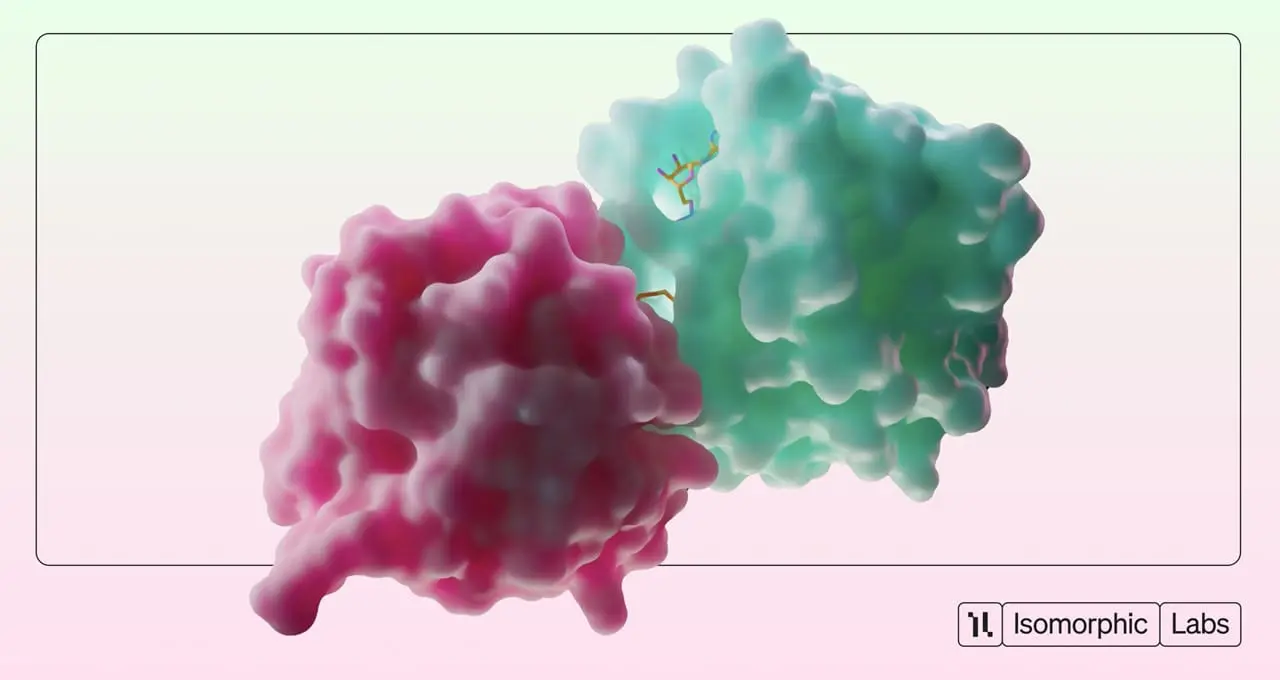
Isomorphic Labs is pioneering an AI-first approach to drug discovery, redefining traditional methodologies by treating biology as an information processing system. The company, led by Max Jaderberg and Sergei Yakneen, employs generalizable AI models that learn from comprehensive protein and chemical interactions, diverging from conventional target-specific methods. Their focus extends beyond optimizing existing workflows, aiming to revolutionize the slow and inefficient drug discovery process.
By modelling cellular processes with AI, they achieve precise predictions of molecular interactions, enabling computational simulations of therapeutic targets in complex biological systems. This approach reduces reliance on wet lab experiments, accelerating the discovery pipeline. Isomorphic envisions a future of precision medicine, though challenges remain in regulatory and technical domains. Committed to proving their technology through real-world breakthroughs, they balance innovation with scientific rigor.
Rethinking Drug Discovery with an AI-First Approach
Isomorphic Labs is pioneering a transformative approach to drug discovery by integrating AI at its core. Their methodology shifts from conventional target-specific strategies to a broader, more interconnected analysis of biological systems. By treating biology as an information processing system, Isomorphic’s approach leverages advanced AI models capable of learning from the entire spectrum of protein and chemical interactions.
Central to their innovation are generalizable AI models that enable computational simulations of molecular interactions with high precision. This capability significantly reduces reliance on traditional wet lab experiments, thereby accelerating the drug discovery process. Their work exemplifies how “AI in drug discovery” can enhance efficiency and explore previously unattainable therapeutic avenues.
The application of tools like AlphaFold 3 underscores Isomorphic’s commitment to advancing AI-driven research. These technologies allow for detailed modeling of cellular processes, predicting how potential therapeutics interact within complex biological systems. This precision not only streamlines the development process but also opens doors to addressing conditions that were once considered untreatable.
Looking ahead, Isomorphic envisions a future where “precision medicine” is the norm, with treatments tailored to individual genetic and molecular profiles. While challenges such as regulatory hurdles and technical complexities persist, their optimistic outlook emphasizes balancing innovation with scientific rigor. The goal remains clear: to validate their technology through tangible pharmaceutical breakthroughs, setting a new standard in drug discovery.
Modeling Biology as a Computational System
Isomorphic Labs approaches biology as a computational system, enabling the development of AI models that learn from the full spectrum of protein and chemical interactions. By treating biological processes as information systems, their approach allows for the creation of generalizable AI tools capable of simulating molecular interactions with high precision. This shift away from traditional, target-specific methods reduces reliance on wet lab experiments, accelerating drug discovery while exploring previously inaccessible therapeutic opportunities.
The application of advanced computational models like AlphaFold 3 is central to Isomorphic’s work, facilitating detailed predictions of how potential therapeutics interact within complex biological systems. These tools enable scientists to computationally model cellular processes, identifying molecular behaviors and interactions that would otherwise require extensive experimental validation. This precision not only streamlines the drug discovery process but also expands the scope of treatable conditions.
Looking forward, Isomorphic envisions a future where “AI in drug discovery” supports precision medicine, with treatments tailored to individual genetic and molecular profiles. While challenges such as regulatory frameworks and technical complexities remain, their approach emphasizes balancing innovation with scientific rigor. The ultimate goal is to validate their technology through practical pharmaceutical advancements, setting new standards for efficiency and effectiveness in the field.
The Future of Precision Medicine
The integration of AI into drug discovery represents a paradigm shift in how therapeutic interventions are developed. By treating biological systems as computational entities, Isomorphic Labs has developed models that learn from vast datasets of protein and chemical interactions. This approach enables precise predictions of molecular behavior, reducing reliance on time-intensive wet lab experiments and accelerating the discovery process.
The application of tools like AlphaFold 3 allows for detailed modeling of cellular processes, predicting how potential therapeutics interact within complex biological systems. This precision not only streamlines drug development but also opens new avenues for addressing conditions that were once considered untreatable.
Looking ahead, Isomorphic envisions a future where “precision medicine” is the norm, with treatments tailored to individual genetic and molecular profiles. While challenges such as regulatory hurdles and technical complexities persist, their approach emphasizes balancing innovation with scientific rigor. The goal remains clear: to validate their technology through tangible pharmaceutical breakthroughs, setting new standards in drug discovery.
More information
External Link: Click Here For More