

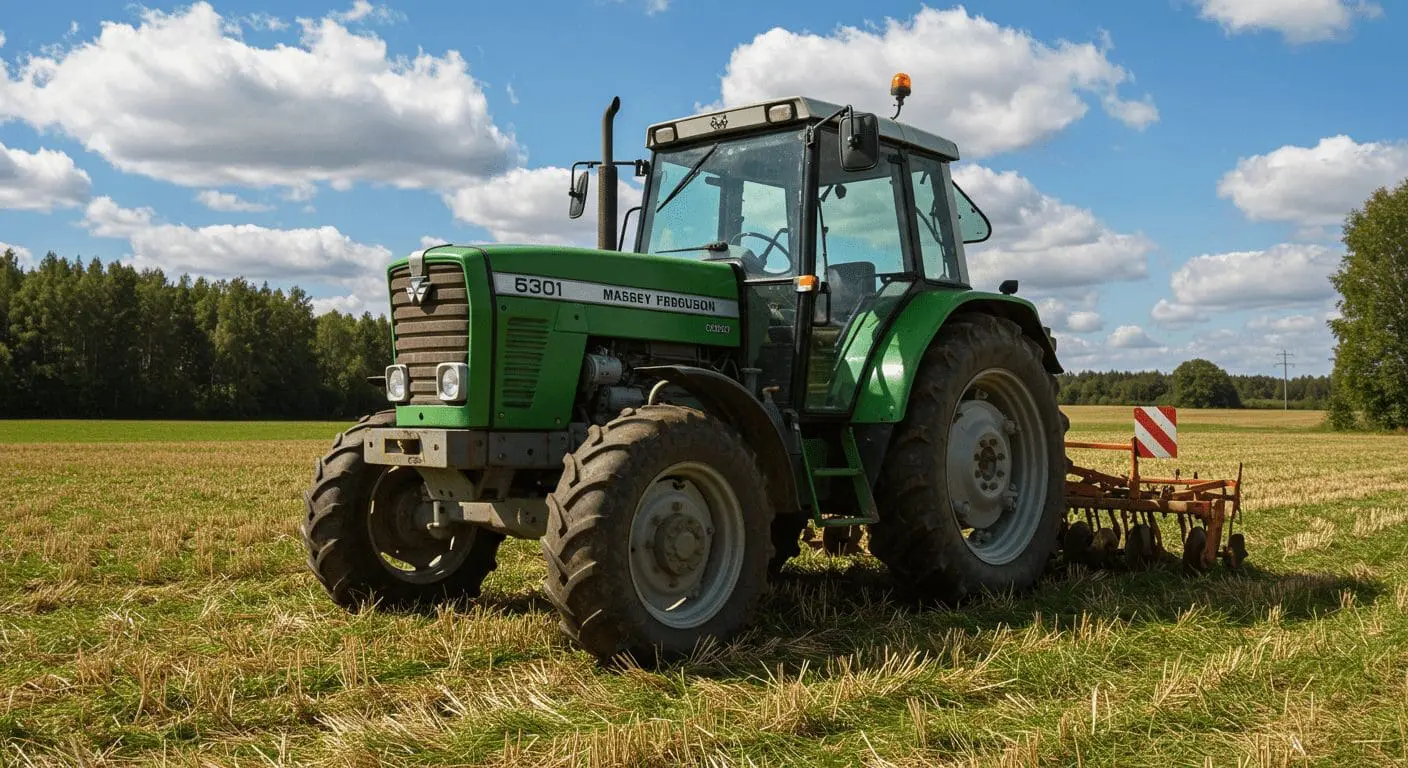
On April 25, 2025, researchers M. Grosse, K. Honda, C. Spech, and J. C. Pineda published Automated Work Records for Precision Agriculture Management, detailing an innovative IoT solution that retrofitted legacy farming machinery with low-cost GNSS and Bluetooth devices in Central Japan’s paddy fields. Over a seven-month period, their system successfully collected 1,623 work records, showcasing the potential of this technology to enhance agricultural efficiency through precise data collection and management.
A field study in Central Japan retrofitted legacy farming machinery with low-cost IoT devices to automate data collection for precision agriculture. Single-purpose vehicles (SPV) were equipped with LTE-GNSS units, while multi-purpose vehicles (MPV) used industry-standard gateways and BLE beacons attached to implements. Over seven months, 1,623 work records (WR) were collected, including 421 for SPV and 1,120 for MPV, with detailed configuration settings enabling specific work type detection. This demonstrates the potential of low-cost IoT-GNSS devices to enhance farm management decisions by automating data collection from legacy machinery.
How IoT is Revolutionizing Agricultural Efficiency
Farming has traditionally relied on manual record-keeping to track machinery usage, crop cycles, and field operations. This labor-intensive process is prone to errors and inefficiencies, often leading to misaligned data and suboptimal decision-making. A recent study conducted in Japan demonstrates how low-cost Internet of Things (IoT) devices can automate work records for farmers, offering a more reliable and efficient alternative to traditional methods.
The research focuses on retrofitting legacy farming machinery
The research focuses on retrofitting legacy farming machinery with IoT sensors and GPS trackers to automatically collect data on machine usage, field boundaries, and operational timelines. By attaching these devices to tractors, harvesters, and other equipment, farmers can generate precise work records without manual input. This approach not only reduces the risk of human error but also provides real-time insights into farming operations.
The system captures detailed information such as machine type, work trajectory, duration, and field boundaries. This data is then visualized through a web-based application, enabling farmers to monitor their operations collaboratively and optimize resource allocation. The study highlights how this technology can bridge the gap between outdated manual systems and modern precision agriculture.
Over a seven-month period, researchers tested the IoT system on multiple farms, collecting over 1,000 work records from tractors and other machinery. Comparisons between manually recorded data and the automated system revealed discrepancies in work dates and record accuracy, underscoring the limitations of traditional methods. The IoT system proved particularly effective in identifying inefficiencies in machine routing and field management, providing actionable insights for farmers to improve productivity.
The automation of farming records offers several advantages. By eliminating manual input, the system minimizes data inaccuracies. Farmers can access up-to-date information on machine performance and field operations, enabling real-time decision-making. The ability to visualize work patterns helps farmers identify inefficiencies and streamline processes. The study also suggests that this technology could be integrated with existing farm management systems, further enhancing its utility.
For instance, combining IoT data with soil sensors
For instance, combining IoT data with soil sensors or weather forecasts could enable more precise crop planning and resource allocation. This integration would allow farmers to optimize their operations based on real-time conditions, leading to higher yields and more sustainable practices.
In conclusion, this research demonstrates the potential of IoT to transform farming operations by automating record-keeping and improving efficiency. While the current implementation focuses on machinery usage, future applications could expand to cover the entire crop cycle, from planting to harvest. As IoT technology becomes more accessible, it offers a promising pathway for farmers to adopt precision agriculture practices, ultimately contributing to higher yields and sustainable agricultural practices.
By embracing these technological advancements, farmers can enhance their productivity while reducing environmental impact, paving the way for a more efficient and sustainable future in agriculture.
🗞 Automated Work Records for Precision Agriculture Management: A Low-Cost GNSS IoT Solution for Paddy Fields in Central Japan
🧠 DOI: https://doi.org/10.48550/arXiv.2504.18222


