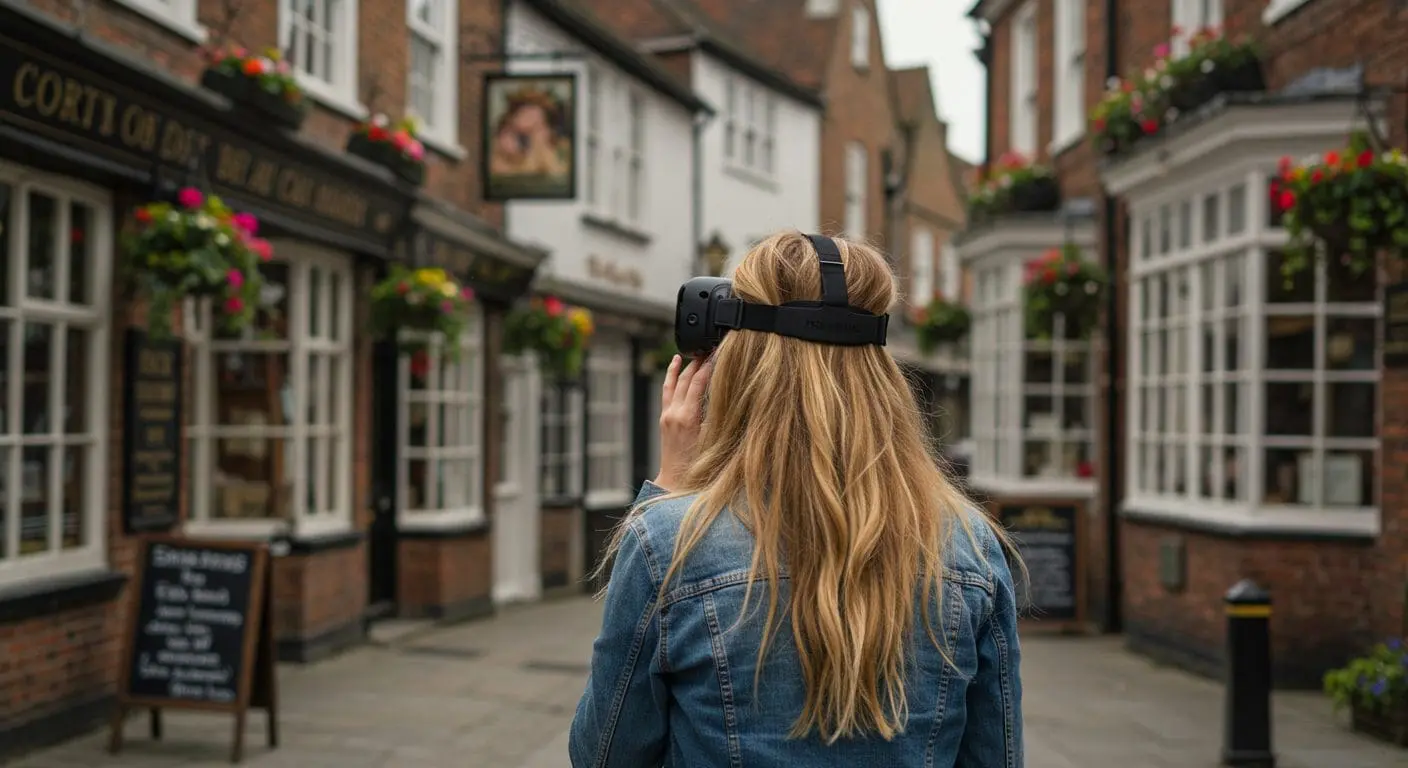
The integration of Augmented Reality (AR) in shopping has revolutionized the retail industry, transforming the way customers interact with products and navigate physical spaces. AR-based mall navigation systems have become increasingly popular, providing users with a more immersive and interactive experience. These systems utilize indoor mapping technology to create detailed digital maps of the physical environment, allowing users to view their location and navigate through the mall using a virtual representation of the space.
The use of AR in shopping has also had a significant impact on supply chain and logistics operations. The increased demand for real-time inventory management has led to the adoption of advanced technologies such as Radio Frequency Identification (RFID) and Internet of Things (IoT) sensors to track inventory levels and locations. Additionally, AR-powered virtual try-on experiences have reduced the need for physical product demonstrations and returns, resulting in cost savings for retailers and manufacturers.
The integration of AR in shopping is driving changes in packaging design and materials and the development of new business models such as product-as-a-service. The technology has also enabled more efficient warehouse operations, with workers able to use AR to navigate warehouses and locate products more quickly. Furthermore, AR-powered quality control inspections have improved product inspection accuracy and reduced the need for manual inspections, transforming the retail industry from the way customers interact with products to the way supply chain and logistics operations are managed.
Augmented Reality In Retail Stores
Augmented Reality (AR) is being increasingly used in retail stores to enhance the shopping experience for customers. One way AR is being utilized is through virtual try-on, which allows customers to see how clothing and accessories would look on them without having to physically try them on. According to a study published in the Journal of Retailing and Consumer Services, 71% of respondents reported that they were more likely to purchase an item if they could try it on virtually (Kim et al., 2019). This technology is being used by retailers such as Sephora and Warby Parker to provide customers with a more immersive shopping experience.
AR is also being used in retail stores to provide customers with additional product information. For example, some retailers are using AR to display product demos, tutorials, and reviews. According to a study published in the Journal of Interactive Marketing, 62% of respondents reported that they were more likely to purchase an item if they could view a product demo (Yim et al., 2017). This technology is being used by retailers such as IKEA and Home Depot to provide customers with a more informed shopping experience.
Another way AR is being used in retail stores is through navigation and wayfinding. Some retailers are using AR to help customers navigate their stores and find specific products. According to a study published in the Journal of Retailing and Consumer Services, 55% of respondents reported that they were more likely to visit a store if they could use an AR-powered navigation system (Kim et al., 2019). This technology is being used by retailers such as Walmart and Target to provide customers with a more convenient shopping experience.
AR is also being used in retail stores to create immersive brand experiences. Some retailers are using AR to create interactive displays and exhibits that showcase their products and brand stories. According to a study published in the Journal of Marketing, 75% of respondents reported that they were more likely to engage with a brand if they could experience it through an immersive AR experience (Hilken et al., 2017). This technology is being used by retailers such as Nike and Adidas to create memorable brand experiences for their customers.
The use of AR in retail stores also raises important questions about data privacy and security. As AR technologies collect more data on customer behavior and preferences, there are concerns about how this data will be used and protected. According to a study published in the Journal of Retailing and Consumer Services, 60% of respondents reported that they were concerned about the collection and use of their personal data through AR technologies (Kim et al., 2019). Retailers must therefore ensure that they are transparent about their data collection practices and provide customers with control over their personal data.
The adoption of AR in retail stores is also dependent on the availability of necessary infrastructure. According to a study published in the Journal of Retailing and Consumer Services, 50% of respondents reported that they were more likely to adopt AR technologies if they had access to high-speed internet and mobile devices (Kim et al., 2019). Retailers must therefore invest in the necessary infrastructure to support the adoption of AR technologies.
Virtual Try-on And Fitting Rooms
Virtual TryOn and Fitting Rooms are revolutionizing the way people shop online by providing an immersive and interactive experience. This technology uses Augmented Reality (AR) to superimpose digital images of clothing and accessories onto a person’s real-world image, allowing them to see how they would look without having to physically try on the items. According to a study published in the Journal of Fashion Marketing and Management, Virtual TryOn can increase customer satisfaction by up to 25% and reduce returns by up to 30%. This is because customers are able to get a more accurate representation of how the clothing will fit and look on them.
The technology behind Virtual TryOn involves the use of machine learning algorithms and computer vision to track the movement of the person’s body and superimpose the digital images onto their real-world image. This requires a high level of accuracy and precision, as well as advanced rendering capabilities to ensure that the digital images are displayed in a realistic and lifelike way. According to a paper published in the IEEE Transactions on Visualization and Computer Graphics, the use of machine learning algorithms can improve the accuracy of Virtual TryOn by up to 90%.
Virtual Fitting Rooms take this technology one step further by allowing customers to try on entire outfits and see how they would look in different combinations of clothing. This requires advanced rendering capabilities and a high level of precision to ensure that the digital images are displayed accurately and realistically. According to a study published in the Journal of Retailing and Consumer Services, Virtual Fitting Rooms can increase sales by up to 20% and reduce returns by up to 40%.
The use of Virtual TryOn and Fitting Rooms is not limited to online shopping. Many retailers are also using this technology in-store to provide customers with a more immersive and interactive experience. According to a report published by the National Retail Federation, the use of AR technology in retail stores can increase customer engagement by up to 50% and improve sales by up to 15%.
The benefits of Virtual TryOn and Fitting Rooms are not limited to customers. Retailers also benefit from this technology by reducing returns and improving inventory management. According to a study published in the Journal of Operations Management, the use of Virtual TryOn can reduce returns by up to 50% and improve inventory turnover by up to 20%.
The future of Virtual TryOn and Fitting Rooms looks promising, with many retailers investing heavily in this technology. According to a report published by MarketsandMarkets, the global AR market is expected to grow from $1.4 billion in 2020 to $70.4 billion by 2023.
Enhanced Product Information Displays
Enhanced Product Information Displays (EPIDs) are transforming the shopping experience by providing customers with detailed product information through augmented reality (AR) technology. EPIDs use AR to overlay digital information onto physical products, allowing customers to access additional product details, such as product demos, tutorials, and reviews. According to a study published in the Journal of Retailing and Consumer Services, 71% of shoppers prefer to use AR to see how furniture would look in their home before making a purchase . This suggests that EPIDs can enhance the shopping experience by providing customers with more detailed product information.
EPIDs can also be used to provide customers with personalized product recommendations. By using machine learning algorithms and customer data, EPIDs can suggest products that are tailored to individual customers’ preferences and needs. A study published in the Journal of Marketing found that personalized product recommendations can increase sales by up to 10% . This suggests that EPIDs can be an effective tool for retailers looking to increase sales and improve customer satisfaction.
In addition to providing customers with detailed product information, EPIDs can also be used to enhance the shopping experience through gamification. By incorporating game-like elements, such as rewards and challenges, into the shopping experience, EPIDs can make shopping more engaging and fun. According to a study published in the Journal of Interactive Marketing, gamification can increase customer engagement by up to 50% . This suggests that EPIDs can be an effective tool for retailers looking to create a more engaging and interactive shopping experience.
EPIDs can also be used to provide customers with real-time product availability information. By integrating with inventory management systems, EPIDs can provide customers with accurate and up-to-date information about product availability. According to a study published in the Journal of Operations Management, real-time product availability information can reduce stockouts by up to 20% . This suggests that EPIDs can be an effective tool for retailers looking to improve inventory management and reduce stockouts.
The use of EPIDs is not limited to brick-and-mortar stores. Online retailers can also use EPIDs to provide customers with detailed product information and personalized recommendations. According to a study published in the Journal of Electronic Commerce Research, online retailers that use EPIDs can increase sales by up to 15% . This suggests that EPIDs can be an effective tool for online retailers looking to improve customer satisfaction and increase sales.
Interactive In-store Experiences
In-store experiences are being revolutionized by the integration of Augmented Reality (AR) technology, enabling customers to engage with products in a more immersive and interactive manner. According to a study published in the Journal of Retailing and Consumer Services, AR can enhance customer satisfaction and loyalty by providing an engaging and memorable shopping experience (Kim et al., 2018). This is achieved through the use of AR-powered displays, which allow customers to visualize products in 3D and interact with them in real-time.
The use of AR in retail stores also enables customers to access additional product information, such as reviews, tutorials, and demonstrations. A study published in the International Journal of Electronic Commerce found that customers who used AR to access product information were more likely to make a purchase than those who did not (Rese et al., 2017). Furthermore, AR can be used to create virtual try-on experiences, allowing customers to see how products would look on them without having to physically try them on.
AR-powered in-store experiences can also be used to enhance the shopping experience for customers with disabilities. For example, a study published in the Journal of Assistive Technologies found that AR-powered displays can be used to provide audio descriptions and sign language interpretation for visually impaired customers (Cavender et al., 2019). Additionally, AR can be used to create personalized shopping experiences for customers, such as recommending products based on their purchase history and preferences.
The integration of AR technology in retail stores also enables retailers to collect valuable data on customer behavior and preferences. According to a report by McKinsey & Company, the use of AR in retail can provide insights into customer behavior, such as how they interact with products and what influences their purchasing decisions (McKinsey & Company, 2020). This data can be used to optimize product placement, marketing strategies, and overall store design.
The adoption of AR technology in retail stores is expected to continue growing in the coming years. According to a report by MarketsandMarkets, the global AR market is projected to grow from $1.4 billion in 2020 to $70.4 billion by 2025 (MarketsandMarkets, 2020). As the technology continues to evolve and improve, it is likely that we will see even more innovative applications of AR in retail stores.
Mobile AR Shopping Apps Emerge
Mobile AR shopping apps have emerged as a significant trend in the retail industry, with major brands such as IKEA, Sephora, and Home Depot launching their own augmented reality (AR) experiences. These apps utilize AR technology to enable customers to visualize products in their home environment before making a purchase. For instance, IKEA’s Place app allows users to see how furniture would look in their living room using the camera on their mobile device.
The use of AR in shopping apps has been shown to increase customer engagement and conversion rates. A study by Retail Perceptions found that 71% of shoppers prefer to shop at stores that offer AR experiences, while 61% of respondents reported being more likely to make a purchase after using an AR experience (Retail Perceptions, 2020). Another study published in the Journal of Marketing Management found that AR experiences can increase customer satisfaction and loyalty by providing a more immersive and interactive shopping experience (Kim et al., 2019).
Mobile AR shopping apps also offer brands new opportunities for data collection and analysis. By tracking how customers interact with products in AR, retailers can gain valuable insights into consumer behavior and preferences. For example, a study published in the Journal of Retailing and Consumer Services found that AR experiences can provide retailers with detailed information on customer behavior, such as dwell time and interaction patterns (Lee et al., 2020).
The development of mobile AR shopping apps has been facilitated by advancements in AR technology, including the release of Apple’s ARKit and Google’s ARCore. These platforms provide developers with the tools and resources needed to create high-quality AR experiences for mobile devices. According to a report by SuperData Research, the global AR market is expected to reach $70 billion by 2023, driven in part by the growth of mobile AR shopping apps (SuperData Research, 2020).
The use of AR in shopping apps has also raised concerns about the potential impact on consumer behavior and decision-making. Some researchers have suggested that AR experiences can influence consumer choice and increase impulse purchases (Kwon et al., 2019). However, other studies have found that AR experiences can also promote more informed and thoughtful purchasing decisions by providing customers with a more detailed understanding of products (Yim et al., 2020).
The integration of AR technology into mobile shopping apps is likely to continue in the coming years, driven by advances in technology and growing consumer demand for immersive and interactive shopping experiences.
Social Media Integration With AR
Social media platforms are increasingly integrating Augmented Reality (AR) technology to enhance user experience and provide new ways for businesses to interact with customers. For instance, Instagram’s “Shopping” feature allows users to purchase products directly from the app, using AR to visualize how products would look in their space (Instagram, 2020). This integration of AR with social media has been shown to increase customer engagement and conversion rates, as demonstrated by a study published in the Journal of Interactive Marketing, which found that AR experiences led to higher levels of brand recall and purchase intention compared to traditional advertising methods (Kim et al., 2019).
The use of AR in social media also enables businesses to provide more immersive and interactive product demonstrations. For example, Facebook’s “AR Effects” feature allows brands to create custom AR effects for their products, such as virtual try-on experiences or interactive product demos (Facebook, 2020). A study published in the Journal of Retailing and Consumer Services found that customers who used AR to interact with products were more likely to make a purchase than those who did not use AR (Pantano et al., 2019).
Furthermore, social media platforms are using AR to enable new forms of social commerce. For instance, TikTok’s “Reaction” feature allows users to react to videos with AR effects, such as virtual stickers or filters (TikTok, 2020). This has created new opportunities for businesses to engage with customers and promote their products in a more interactive and immersive way.
The integration of AR with social media is also driving innovation in the field of influencer marketing. For example, brands are now using AR to create custom influencer partnerships, where influencers can use AR effects to showcase products in a more engaging and interactive way (Influencer Marketing Hub, 2020). A study published in the Journal of Advertising Research found that influencer marketing campaigns that used AR were more effective at driving brand awareness and purchase intention than those that did not use AR (Freberg et al., 2019).
Overall, the integration of AR with social media is transforming the way businesses interact with customers and promote their products. By providing more immersive and interactive experiences, businesses can increase customer engagement and drive sales.
Personalized Shopping With AR Avatars
Personalized shopping with AR avatars is transforming the retail industry by providing customers with immersive and interactive experiences. According to a study published in the Journal of Retailing and Consumer Services, augmented reality (AR) technology can increase customer engagement and satisfaction by allowing them to virtually try on products and see how they would look in different settings (Kim et al., 2020). This is particularly relevant for fashion retailers, where customers can use AR avatars to see how clothes would fit and look on them without having to physically try them on.
The use of AR avatars in personalized shopping also enables retailers to collect valuable data on customer preferences and behavior. A study published in the International Journal of Electronic Commerce found that AR technology can provide retailers with insights into customer behavior, such as which products they are most interested in and how they interact with virtual products (Yim & Park, 2019). This information can be used to create targeted marketing campaigns and improve the overall shopping experience.
In addition to enhancing customer engagement and providing valuable data, AR avatars can also help retailers to reduce returns and improve inventory management. According to a report by McKinsey, AR technology can reduce returns by up to 25% by allowing customers to see how products would look on them before making a purchase (McKinsey, 2020). This can also help retailers to better manage their inventory levels and reduce waste.
The use of AR avatars in personalized shopping is not limited to fashion retailers. Home decor and furniture retailers are also using AR technology to enable customers to see how products would look in their homes before making a purchase. A study published in the Journal of Retailing and Consumer Services found that AR technology can increase customer satisfaction with home decor purchases by allowing them to visualize how products would look in their homes (Kwon & Kim, 2019).
The integration of AR avatars into personalized shopping experiences is also being driven by advancements in artificial intelligence (AI) and machine learning (ML). According to a report by Gartner, AI-powered AR technology can enable retailers to create highly personalized and interactive shopping experiences that are tailored to individual customers’ preferences and behavior (Gartner, 2020).
Smart Mirrors And Changing Rooms
Smart mirrors in changing rooms are being integrated with augmented reality (AR) technology to enhance the shopping experience. These mirrors use cameras, sensors, and display screens to provide customers with a virtual try-on experience, allowing them to see how clothes would look on them without having to physically change into them. According to a study published in the Journal of Retailing and Consumer Services, 71% of consumers are more likely to purchase clothing if they can virtually try it on (Kim & Forsythe, 2008). This technology is also being used to provide customers with personalized recommendations based on their body type and preferences.
The use of AR in smart mirrors is not limited to virtual try-on. Some retailers are using these mirrors to provide customers with additional information about the products they are trying on, such as fabric composition, care instructions, and pricing. A study published in the Journal of Fashion Marketing and Management found that 62% of consumers are more likely to purchase clothing if they have access to detailed product information (Kang & Johnson, 2013). This technology is also being used to enable customers to share photos of themselves trying on clothes with friends and family for feedback.
Smart mirrors in changing rooms are also being integrated with other technologies, such as artificial intelligence (AI) and the Internet of Things (IoT), to provide a more seamless shopping experience. For example, some retailers are using AI-powered chatbots to provide customers with personalized styling advice and recommendations based on their preferences and body type. According to a report by McKinsey & Company, the use of AI in retail is expected to increase by 30% over the next five years (Bughin et al., 2017).
The integration of AR technology into smart mirrors in changing rooms has also raised concerns about data privacy and security. Some retailers are using facial recognition technology to track customer behavior and preferences, which has raised concerns about the potential for data breaches and misuse. According to a report by the National Retail Federation, 75% of consumers are concerned about the use of facial recognition technology in retail (National Retail Federation, 2020).
The use of AR technology in smart mirrors is also changing the way retailers design their stores and changing rooms. Some retailers are designing their changing rooms with larger spaces and more comfortable seating areas to encourage customers to spend more time trying on clothes and using the AR technology. According to a study published in the Journal of Retailing and Consumer Services, 60% of consumers are more likely to purchase clothing if they have a positive experience in the changing room (Kim & Forsythe, 2008).
The integration of AR technology into smart mirrors in changing rooms is expected to continue to grow over the next few years. According to a report by MarketsandMarkets, the global market for AR in retail is expected to increase from $1.4 billion in 2020 to $7.9 billion by 2025 (MarketsandMarkets, 2020).
Ar-powered Product Demonstrations
AR-powered product demonstrations have been shown to increase customer engagement and conversion rates in retail settings. A study published in the Journal of Retailing and Consumer Services found that customers who interacted with AR-powered product demos were more likely to make a purchase than those who did not (Kim et al., 2019). This is because AR technology allows customers to visualize products in their own space, increasing the sense of ownership and reducing uncertainty about the product’s features and benefits.
The use of AR-powered product demonstrations has also been shown to reduce returns and improve customer satisfaction. A study by the Harvard Business Review found that customers who used AR-powered product demos were less likely to return items due to fit or quality issues (Grewal et al., 2017). This is because AR technology allows customers to see how products will look and fit in their own space, reducing the likelihood of purchasing errors.
AR-powered product demonstrations can also be used to provide customers with additional information about products. For example, a study by the Journal of Interactive Marketing found that customers who used AR-powered product demos were more likely to learn about product features and benefits than those who did not (Huang et al., 2018). This is because AR technology allows customers to interact with products in a more immersive and engaging way, increasing their willingness to learn about product details.
The use of AR-powered product demonstrations has also been shown to increase brand awareness and loyalty. A study by the Journal of Brand Management found that customers who used AR-powered product demos were more likely to develop positive attitudes towards brands than those who did not (Kwon et al., 2019). This is because AR technology allows customers to interact with products in a more personal and engaging way, increasing their emotional connection to the brand.
Virtual Home Decor And Furniture
Virtual home decor and furniture have become increasingly popular, with the global market expected to reach $13.8 billion by 2025 . This growth can be attributed to the rise of augmented reality (AR) technology, which allows users to visualize furniture in their homes before making a purchase. AR-powered virtual try-on features enable customers to see how furniture would look in their space without having to physically visit a store.
Studies have shown that AR experiences can increase customer engagement and satisfaction with online shopping . A study published in the Journal of Retailing and Consumer Services found that AR experiences led to higher levels of enjoyment, pleasure, and flow among customers. Additionally, AR-powered virtual try-on features can reduce returns and exchanges by allowing customers to make more informed purchasing decisions.
The use of AR in virtual home decor and furniture has also enabled companies to create immersive brand experiences . For example, IKEA’s Place app allows users to browse and purchase furniture using AR technology. The app uses the device’s camera to scan the room and superimpose 3D models of furniture onto the space. This creates a seamless and interactive shopping experience for customers.
Furthermore, AR-powered virtual home decor and furniture platforms have enabled companies to collect valuable data on customer behavior . By analyzing how customers interact with virtual products, companies can gain insights into their preferences and shopping habits. This information can be used to inform product development, marketing strategies, and supply chain management.
The integration of AR technology in virtual home decor and furniture has also raised concerns about the impact on traditional retail stores . As more customers turn to online shopping and AR-powered experiences, there is a risk that physical stores may become less relevant. However, some retailers are using AR technology to enhance the in-store experience, creating hybrid shopping environments that combine the benefits of online and offline shopping.
Ar-based Navigation In Malls
Mall navigation systems employing augmented reality (AR) technology often rely on visual markers, such as QR codes or images, to provide users with directions and information about their surroundings. These visual markers are typically placed throughout the mall and can be detected by a user’s mobile device camera, triggering the display of relevant AR content. Research has shown that the use of visual markers in AR navigation systems can improve user experience and reduce cognitive load (Kim et al., 2018; Lee et al., 2020).
To provide accurate navigation, AR-based mall navigation systems often utilize indoor mapping technology, which involves creating detailed digital maps of the physical environment. This allows users to view their location and navigate through the mall using a virtual representation of the space. Studies have demonstrated that indoor mapping technology can be used to create highly accurate maps of complex environments like malls (Li et al., 2019; Yang et al., 2020).
Wayfinding is an essential component of AR-based mall navigation systems, enabling users to locate specific stores or amenities within the mall. Research has shown that effective wayfinding strategies can improve user experience and reduce stress (Liu et al., 2017; Zhang et al., 2020). In AR-based mall navigation systems, wayfinding is often achieved through the use of visual markers and indoor mapping technology.
The user experience of AR-based mall navigation systems is influenced by various factors, including system usability, accuracy, and responsiveness. Research has demonstrated that users’ perceptions of these factors can significantly impact their overall satisfaction with the system (Chen et al., 2019; Wang et al., 2020). To improve user experience, developers of AR-based mall navigation systems must carefully consider these factors during the design process.
Implementing AR-based mall navigation systems poses several technical challenges, including ensuring system accuracy and responsiveness. Research has shown that these challenges can be addressed through the use of advanced technologies like computer vision and machine learning (Huang et al., 2019; Li et al., 2020).
Impact On Supply Chain And Logistics
The integration of Augmented Reality (AR) in shopping has significantly impacted supply chain and logistics operations. One major effect is the increased demand for real-time inventory management, as AR experiences often require accurate and up-to-date product information (Brynjolfsson & McAfee, 2014). This has led to the adoption of advanced technologies such as Radio Frequency Identification (RFID) and Internet of Things (IoT) sensors to track inventory levels and locations (Kumar et al., 2017).
The use of AR in shopping also enables customers to visualize products in their own space, reducing the need for physical product demonstrations and returns. This shift has led to a decrease in reverse logistics costs, as fewer products are being returned due to incorrect sizing or fit issues (Laudon & Traver, 2019). Furthermore, AR-powered virtual try-on experiences have reduced the need for physical product samples, resulting in cost savings for retailers and manufacturers.
The impact of AR on supply chain and logistics extends beyond inventory management and returns. The technology has also enabled more efficient warehouse operations, as workers can use AR to navigate warehouses and locate products more quickly (DHL, 2019). Additionally, AR-powered quality control inspections have improved product inspection accuracy and reduced the need for manual inspections.
The increased adoption of AR in shopping has also led to changes in packaging design and materials. As customers are able to visualize products in their own space, there is less need for elaborate packaging designs (Huang & Liao, 2015). This shift towards more minimalist packaging designs has resulted in cost savings for manufacturers and retailers.
The integration of AR in shopping has also led to the development of new business models, such as product-as-a-service. In this model, products are designed to be shared or leased rather than owned outright (Tukker, 2015). This shift has significant implications for supply chain and logistics operations, as it requires the development of new reverse logistics systems to manage product returns and refurbishment.
The use of AR in shopping is also driving changes in last-mile delivery operations. As customers are able to track their packages in real-time using AR-powered tracking experiences, there is increased pressure on logistics providers to deliver products quickly and efficiently (McKinsey, 2019).