The Fred Young Submillimeter Telescope (FYST), a highly advanced astronomical observatory, has reached its final location atop Cerro Chajnantor in Chile after a lengthy ocean voyage and overland transport. The telescope, designed to study star and galaxy formation across cosmic history, will begin operations in April 2026. It is part of the CCAT Observatory project, led by Cornell University in collaboration with German and Canadian institutions.
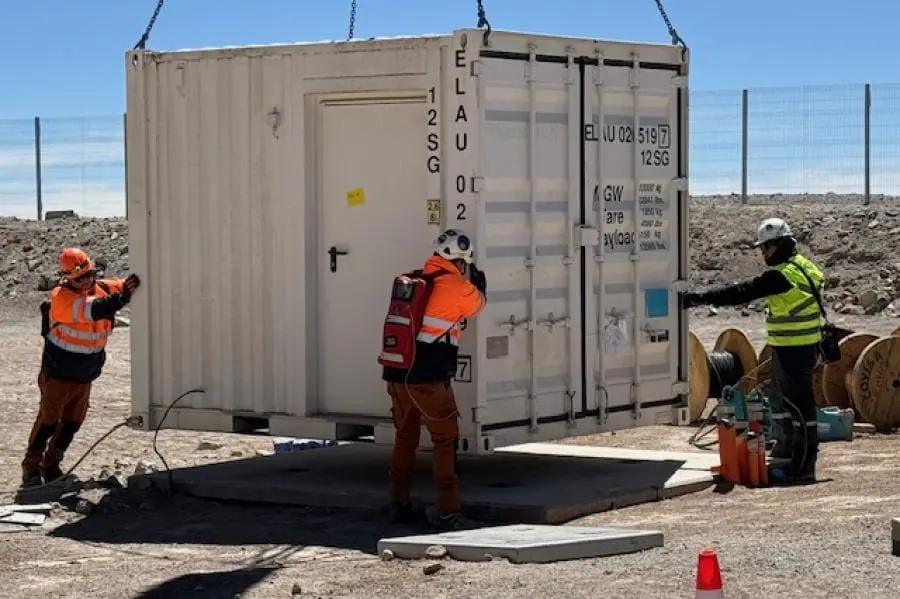
After a lengthy journey, the Fred Young Submillimeter Telescope (FYST) has reached its final destination at Cerro Chajnantor in Chile. The first principal component of the telescope arrived following a six-week ocean voyage, a week of waiting to offload, and another week navigating through mountainous terrain. From there, the disassembled parts are being carefully transported 18,400 feet to the summit of Cerro Chajnantor, where reassembly will occur ahead of its projected first observations in April 2026.
The telescope’s design is tailored for submillimeter frequency observations, enabling it to map star and galaxy formation across cosmic time with unprecedented speed and sensitivity. This capability will provide insights into the early universe, including cosmic inflation, gravitational waves from the Big Bang, and the dynamics of gas, dust, and magnetic fields within galaxies.
Reassembling FYST at such a high altitude presents significant challenges. Workers must acclimate to the extreme conditions, with strict limits on their time at elevation. Each day spent working above 18,400 feet requires a full day of recovery below 9,000 feet. These logistical hurdles underscore the complexity of assembling and operating a state-of-the-art observatory in such an environment.
The collaboration is led by Cornell University, with contributions from German and Canadian consortia. The telescope’s advanced mirrors, carbon fiber structures, and instruments represent cutting-edge technology, making FYST a unique tool for submillimeter astronomy. Once operational, it will offer researchers unparalleled opportunities to study the universe at this critical wavelength range.
Scientific Mission and Capabilities of FYST
The Fred Young Submillimeter Telescope (FYST) is designed to observe the universe at submillimeter wavelengths, enabling it to study star and galaxy formation across cosmic time with exceptional speed and sensitivity. This capability will allow researchers to map the earliest stages of cosmic dawn through cosmic noon, when most of today’s stars were formed. By analyzing these processes, FYST will provide critical insights into cosmic inflation, gravitational waves from the Big Bang, and the interstellar dynamics of gas, dust, and magnetic fields within galaxies.
The telescope’s advanced design incorporates state-of-the-art mirrors, carbon fibre structures, and instruments such as CHAI and PrimeCam. These components are optimized for submillimeter frequency observations, making FYST a powerful tool for studying phenomena that have been challenging to observe with previous telescopes. Once operational, it will offer researchers unparalleled opportunities to study the universe at this critical wavelength.
Reassembling the Fred Young Submillimeter Telescope (FYST) at an altitude of 18,400 feet presents significant challenges. Workers must acclimate to extreme conditions, with strict limits on their time at elevation. Each day spent working above 18,400 feet requires a full day of recovery below 9,000 feet. These logistical hurdles underscore the complexity of assembling and operating a state-of-the-art observatory in such an environment.
The project is a collaboration led by Cornell University, with contributions from German and Canadian consortia. The telescope’s advanced mirrors, carbon fiber structures, and instruments represent cutting-edge technology, making FYST a unique tool for submillimeter astronomy. Once operational, it will offer researchers unparalleled opportunities to study the universe at this critical wavelength range.
More information
External Link: Click Here For More