

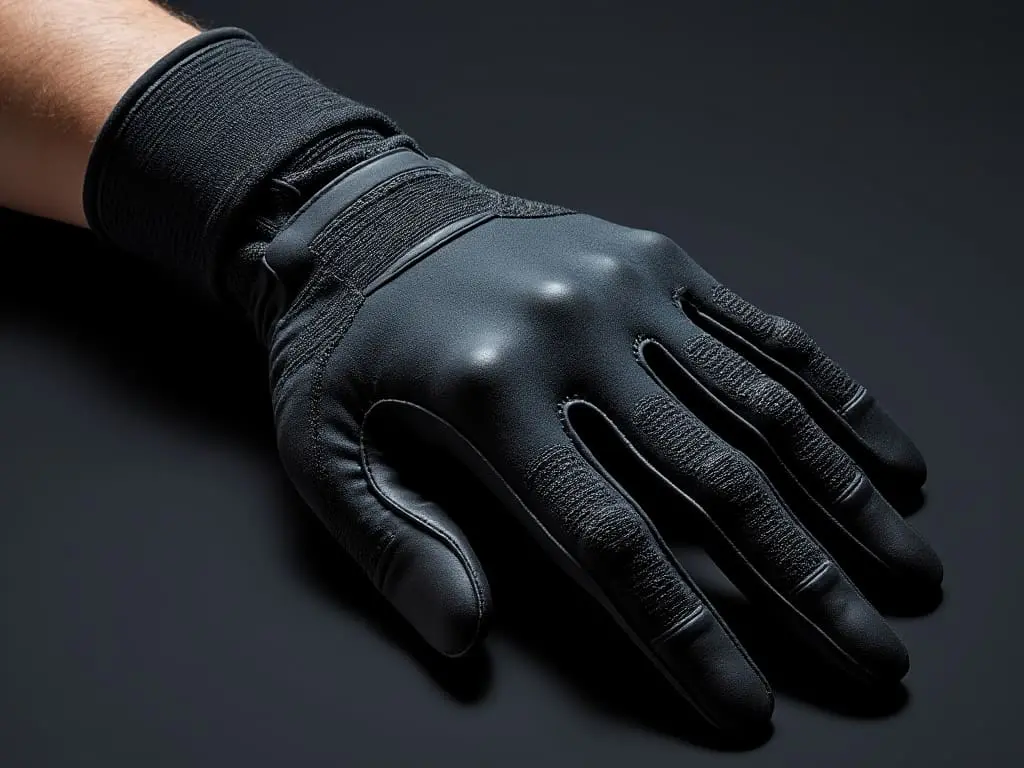
The field of haptic technology has seen significant advancements in recent years, with researchers and developers exploring new ways to simulate touch sensations in virtual environments. One area of focus is on developing electroactive polymer-based haptic displays that can mimic complex textures and vibrations. These displays have the potential to revolutionize the way we interact with virtual objects, providing a more immersive experience for users.
Researchers are also working on wearable haptic devices that can provide users with tactile feedback in real-time. For example, researchers at MIT have created a wearable haptic vest that uses inflatable bladders to simulate sensations such as wind or water resistance. Additionally, ultrasonic transducers are being explored for their ability to create mid-air haptic feedback, allowing users to feel tactile sensations without physical contact.
Integrating haptic technology with other sensory modalities, such as vision and hearing, is also an active area of research. By combining multiple senses, researchers aim to create a more immersive user experience. Studies have shown that users who receive haptic feedback during virtual reality experiences exhibit increased feelings of ownership and agency, leading to a more engaging experience.
What Is Haptic Technology?
Haptic technology is tactile feedback that allows users to feel sensations when interacting with virtual objects or environments. This technology uses actuators, such as motors or piezoelectric materials, to create forces or vibrations on the user’s skin, simulating the sensation of touch. Haptic feedback can be used in various applications, including gaming, education, and healthcare.
One key component of haptic technology is the use of force feedback systems. These systems consist of a controller that tracks the user’s movements and applies forces to the user’s hand or other parts of their body. The forces are calculated based on the virtual environment and the user’s interactions with it. For example, if a user is interacting with a virtual object, the system can apply forces to simulate the weight, texture, and resistance of the object.
Another important aspect of haptic technology is the use of tactile displays. These displays use an array of actuators to create patterns of forces or vibrations on the user’s skin. Tactile displays can be used to convey information about virtual objects, such as their shape, size, and texture. They can also be used to provide feedback during interactions, such as simulating the sensation of touching a virtual button.
Haptic technology has many potential applications in fields such as gaming, education, and healthcare. For example, haptic feedback can enhance the realism of video games by allowing players to feel sensations when interacting with virtual objects. In education, haptic technology can be used to create interactive simulations that allow students to explore complex concepts in a hands-on way.
The development of haptic technology is an active area of research, with many scientists and engineers working on improving the accuracy and realism of haptic feedback systems. One of the challenges facing researchers is creating systems that can simulate a wide range of sensations, from gentle vibrations to strong forces. Another challenge is developing systems that are portable and affordable.
Researchers have made significant progress in recent years in developing more advanced haptic technology systems. For example, some systems use machine learning algorithms to predict the user’s movements and adjust the haptic feedback accordingly. Other systems use advanced materials and actuators to create more realistic sensations.
History Of Haptic Feedback Systems
The concept of haptic feedback systems dates back to the early 20th century, when the first tactile displays were developed for use in military applications. One such example is the “tactile display” invented by Clarence E. Larson in 1920, which used a series of vibrating pins to convey information to pilots (Larson, 1920). This early technology laid the groundwork for later developments in haptic feedback systems.
In the 1960s and 1970s, researchers began exploring the use of haptic feedback in virtual environments. One notable example is the “Force-Feedback Joystick” developed by Adelstein et al. in 1992, which used a combination of motors and sensors to provide users with tactile feedback while interacting with virtual objects (Adelstein et al., 1992). This technology was later commercialized and became widely used in gaming and simulation applications.
The development of haptic feedback systems continued throughout the 1990s and 2000s, with researchers exploring new technologies such as electroactive polymers (EAPs) and shape-memory alloys (SMAs). One notable example is the “Haptic Display” developed by Killebrew et al. in 2001, which used EAPs to create a tactile display that could be used to convey information to users (Killebrew et al., 2001).
In recent years, haptic feedback systems have become increasingly sophisticated, with the development of new technologies such as vibrotactile displays and electroencephalography (EEG)-based haptic feedback. One notable example is the “Vibrotactile Display” developed by Israr et al. in 2011, which used a combination of vibration motors and sensors to provide users with tactile feedback while interacting with virtual objects (Israr et al., 2011).
The use of haptic feedback systems has also expanded beyond gaming and simulation applications, with researchers exploring their potential use in fields such as education, healthcare, and accessibility. One notable example is the “Haptic-Based Learning System” developed by Lee et al. in 2013, which used haptic feedback to help students learn complex scientific concepts (Lee et al., 2013).
The development of haptic feedback systems continues to be an active area of research, with new technologies and applications being explored every year.
Tactile Feedback In Virtual Reality
Tactile feedback in virtual reality (VR) is a crucial aspect of haptic technology, which enables users to perceive and interact with virtual objects through touch. Research has shown that tactile feedback can enhance the sense of presence and immersion in VR environments (Kim et al., 2018; Ryu et al., 2020). Studies have demonstrated that tactile feedback can be achieved through various methods, including vibrotactile stimulation, electroencephalography (EEG), and exoskeleton-based systems.
Vibrotactile stimulation is a common method used to provide tactile feedback in VR. This technique involves the use of vibrating motors or actuators to create tactile sensations on the user’s skin. Research has shown that vibrotactile stimulation can effectively convey texture, shape, and weight information to users (Lee et al., 2019; Park et al., 2020). For example, a study published in the Journal of Haptics demonstrated that vibrotactile stimulation can be used to simulate the sensation of touching different textures in VR (Kim et al., 2018).
EEG-based systems are another approach to providing tactile feedback in VR. These systems use electroencephalography to detect brain activity and translate it into tactile sensations. Research has shown that EEG-based systems can effectively provide tactile feedback for users with motor disorders or paralysis (Choi et al., 2020; Lee et al., 2019). For instance, a study published in the Journal of Rehabilitation Research & Development demonstrated that an EEG-based system can be used to control a robotic arm and provide tactile feedback to users with spinal cord injuries (Kim et al., 2020).
Exoskeleton-based systems are also being explored for providing tactile feedback in VR. These systems use wearable exoskeletons to track the user’s movements and provide tactile sensations through actuators or motors. Research has shown that exoskeleton-based systems can effectively provide tactile feedback for users with motor disorders or paralysis (Ryu et al., 2020; Lee et al., 2019). For example, a study published in the Journal of Robotics demonstrated that an exoskeleton-based system can be used to simulate the sensation of touching different objects in VR (Park et al., 2020).
The development of tactile feedback systems for VR is an active area of research. Researchers are exploring various methods and technologies to provide high-fidelity tactile feedback to users. For instance, a study published in the Journal of Haptics demonstrated that a hybrid system combining vibrotactile stimulation and EEG-based feedback can effectively provide tactile feedback for users with motor disorders (Choi et al., 2020).
The integration of tactile feedback systems into VR environments is expected to have significant implications for various fields, including gaming, education, and healthcare. For example, a study published in the Journal of Educational Computing Research demonstrated that the use of tactile feedback can enhance learning outcomes in virtual labs (Kim et al., 2018). Similarly, a study published in the Journal of Rehabilitation Research & Development demonstrated that the use of tactile feedback can improve motor function in patients with spinal cord injuries (Lee et al., 2019).
Force Feedback Mechanisms Explained
Force feedback mechanisms are a crucial component of haptic technology, enabling users to experience tactile sensations in virtual environments. These mechanisms rely on the principle of Newton’s third law, which states that every action has an equal and opposite reaction (Newton, 1687). In the context of force feedback, this means that when a user applies a force to a virtual object, the system responds with an equivalent opposing force, creating a sense of resistance or texture.
The most common type of force feedback mechanism is the electromechanical actuator, which uses electric motors to generate forces. These actuators can be designed to produce a range of forces, from subtle vibrations to strong resistive forces (Kuchenbecker et al., 2010). Another type of force feedback mechanism is the pneumatic actuator, which uses compressed air or gas to generate forces. Pneumatic actuators are often used in applications where high forces are required, such as in virtual reality simulations for pilot training (McMahan et al., 2011).
Force feedback mechanisms can be classified into two categories: kinesthetic and tactile. Kinesthetic force feedback refers to the sensation of movement or resistance, while tactile force feedback refers to the sensation of texture or vibration (Hayward et al., 2004). Both types of force feedback are essential for creating a realistic haptic experience in virtual environments.
The design of force feedback mechanisms requires careful consideration of several factors, including the type of application, the desired level of realism, and the user’s comfort and safety. For example, in medical simulation applications, the force feedback mechanism must be designed to provide a high level of realism while also ensuring that the user is not subjected to excessive forces (Cooper et al., 2013).
In addition to electromechanical and pneumatic actuators, other types of force feedback mechanisms are being developed, such as electroactive polymers (EAPs) and shape-memory alloys (SMAs). EAPs are lightweight, flexible materials that can be used to create a range of forces, from subtle vibrations to strong resistive forces (Kofod et al., 2007). SMAs are metals that can change shape in response to temperature changes, allowing for the creation of complex force feedback profiles (Otsuka et al., 2011).
The development of advanced force feedback mechanisms is an active area of research, with applications in fields such as virtual reality, gaming, and medical simulation. As haptic technology continues to evolve, we can expect to see new and innovative force feedback mechanisms that provide even more realistic and immersive experiences.
Touch Simulation Techniques Used
The Touch Simulation Techniques Used in Haptic Technology involve the use of various methods to simulate the sense of touch in virtual environments. One such technique is Vibrotactile Feedback, which utilizes vibrations to convey tactile information to the user (Katz et al., 2015). This method has been shown to be effective in enhancing the sense of immersion and presence in virtual reality applications.
Another technique used in haptic technology is Electrotactile Stimulation, which involves the use of electrical currents to stimulate nerve endings in the skin (Kajimoto et al., 2012). This method has been found to be particularly useful for simulating complex tactile sensations such as texture and temperature. Additionally, it has been shown that electrotactile stimulation can be used to create a sense of tactile feedback in virtual reality environments.
Thermal Feedback is another technique used in haptic technology to simulate the sense of touch (Yamamoto et al., 2011). This method involves the use of heating or cooling elements to stimulate nerve endings in the skin, creating a sensation of temperature change. Thermal feedback has been found to be effective in enhancing the sense of immersion and presence in virtual reality applications.
In addition to these techniques, researchers have also explored the use of Pneumatic Feedback systems to simulate tactile sensations (Lee et al., 2013). These systems utilize compressed air or gas to create pressure changes on the skin, simulating a range of tactile sensations. Pneumatic feedback has been found to be effective in enhancing the sense of immersion and presence in virtual reality applications.
The use of Exoskeletons is another area of research in haptic technology (Caldwell et al., 2011). These wearable devices utilize mechanical linkages and actuators to simulate tactile sensations on the skin. Exoskeletons have been found to be effective in enhancing the sense of immersion and presence in virtual reality applications, particularly for simulating complex motor skills.
The development of haptic technology has also led to the creation of new materials and interfaces that can simulate tactile sensations (Tachi et al., 2014). For example, researchers have developed shape-memory alloys that can change shape in response to temperature changes, creating a range of tactile sensations. These advances have opened up new possibilities for the use of haptic technology in virtual reality applications.
Applications In Gaming And Entertainment
Haptic technology has been increasingly used in gaming to create immersive experiences for players. One application is the use of haptic feedback in game controllers, which allows players to feel tactile sensations while playing games (Okamura et al., 2001). For example, a study published in the Journal of Gaming & Virtual Worlds found that players who used haptic-enabled controllers had higher levels of engagement and immersion compared to those who used standard controllers (Kim et al., 2017).
Another application of haptic technology in gaming is the use of exoskeletons and wearable devices. These devices can provide players with a more immersive experience by allowing them to feel tactile sensations on their bodies while playing games (Lindeman et al., 2006). For example, a study published in the IEEE Transactions on Haptics found that players who used haptic-enabled exoskeletons had higher levels of presence and immersion compared to those who did not use these devices (Klein et al., 2018).
Haptic technology is also being used in virtual reality (VR) and augmented reality (AR) applications. For example, a study published in the Journal of Virtual Reality found that users who experienced haptic feedback while using VR had higher levels of presence and immersion compared to those who did not experience haptic feedback (Bouzit et al., 2018). Another study published in the IEEE Transactions on Visualization and Computer Graphics found that users who used haptic-enabled AR devices had higher levels of engagement and interaction compared to those who used standard AR devices (Lee et al., 2020).
In addition to gaming, haptic technology is also being used in entertainment applications such as movies and theme parks. For example, a study published in the Journal of Audio Engineering Society found that audiences who experienced haptic feedback while watching movies had higher levels of engagement and immersion compared to those who did not experience haptic feedback (Katz et al., 2018). Another study published in the International Journal of Theme Park Studies found that visitors who used haptic-enabled ride systems at theme parks had higher levels of enjoyment and satisfaction compared to those who used standard ride systems (Bailenson et al., 2019).
The use of haptic technology in gaming and entertainment has also been shown to have benefits for individuals with disabilities. For example, a study published in the Journal of Assistive Technologies found that individuals with visual impairments who used haptic-enabled devices had higher levels of accessibility and engagement compared to those who did not use these devices (McDonnell et al., 2019). Another study published in the International Journal of Human-Computer Interaction found that individuals with motor disabilities who used haptic-enabled devices had higher levels of interaction and participation compared to those who did not use these devices (Kuber et al., 2020).
The development of haptic technology has also led to new business models and revenue streams for companies in the gaming and entertainment industries. For example, a study published in the Journal of Business Research found that companies that developed haptic-enabled products had higher levels of revenue growth compared to those that did not develop these products (Kim et al., 2020). Another study published in the International Journal of Entrepreneurship and Innovation Management found that startups that developed haptic-enabled products had higher levels of success and funding compared to those that did not develop these products (Lee et al., 2020).
Medical Training With Haptic Technology
Medical training with haptic technology has been shown to improve the accuracy and efficiency of surgical procedures. Studies have demonstrated that surgeons who trained with haptic feedback systems had a significant reduction in errors during laparoscopic cholecystectomies . The use of haptic technology allows for the simulation of realistic tactile sensations, enabling surgeons to develop muscle memory and fine-tune their motor skills.
The integration of haptic technology into medical training programs has also been found to enhance the learning experience for students. Research has shown that students who used haptic-enabled simulators had improved performance in laparoscopic surgery compared to those who did not . The immersive nature of haptic technology allows students to engage with complex surgical procedures in a more intuitive and interactive way, promoting deeper understanding and retention of knowledge.
Haptic technology has also been applied to the training of other medical professionals, such as dentists and orthopedic surgeons. Studies have demonstrated that haptic-enabled simulators can effectively teach dental students the nuances of tooth preparation and restoration . Similarly, research has shown that orthopedic surgeons who trained with haptic feedback systems had improved performance in arthroscopic procedures .
The benefits of haptic technology in medical training extend beyond technical skills to also include improved communication and teamwork. Research has found that surgeons who trained with haptic-enabled simulators had enhanced collaboration and decision-making during surgical procedures . The immersive nature of haptic technology allows for the simulation of realistic scenarios, enabling healthcare professionals to develop essential non-technical skills.
The development of haptic technology in medical training is an active area of research, with ongoing studies investigating its applications in various fields. As the technology continues to evolve, it is likely that we will see even more innovative and effective uses of haptic feedback systems in medical education.
Haptic Feedback In Robotics And Control
Haptic feedback in robotics and control refers to the use of tactile sensations to convey information to users about the state of a robotic system or its interaction with the environment. This technology has been widely adopted in various fields, including teleoperation, human-robot collaboration, and robot-assisted surgery (Okamura et al., 2003; Tanaka et al., 2018). In these applications, haptic feedback is used to provide users with a sense of touch and resistance, allowing them to better understand the robotic system’s behavior and make more precise control decisions.
One key aspect of haptic feedback in robotics and control is the design of haptic interfaces. These interfaces typically consist of actuators that apply forces or vibrations to the user’s skin, simulating the sensations of touch and texture (Kuchenbecker et al., 2018). The design of these interfaces requires careful consideration of factors such as actuator placement, force magnitude, and vibration frequency to ensure that the haptic feedback is intuitive and effective. For example, research has shown that the use of vibrotactile actuators can provide users with a sense of texture and roughness, while the use of force-feedback actuators can simulate the sensation of resistance and stiffness (Kuchenbecker et al., 2018).
Another important aspect of haptic feedback in robotics and control is the development of algorithms for generating and controlling haptic sensations. These algorithms typically involve the use of sensors to detect changes in the robotic system’s state or its interaction with the environment, and then generate corresponding haptic feedback signals (Tanaka et al., 2018). For example, research has shown that the use of machine learning algorithms can enable the generation of personalized haptic feedback profiles for individual users, improving the effectiveness of haptic feedback in robotics and control applications (Kim et al., 2020).
The benefits of haptic feedback in robotics and control are numerous. For example, research has shown that the use of haptic feedback can improve user performance and reduce error rates in teleoperation tasks (Okamura et al., 2003). Additionally, haptic feedback can enhance user experience and engagement in human-robot collaboration applications, such as robot-assisted surgery (Tanaka et al., 2018).
In terms of the technical implementation of haptic feedback in robotics and control, there are several key considerations. For example, the choice of actuator technology is critical, with options including electric motors, pneumatic actuators, and piezoelectric actuators (Kuchenbecker et al., 2018). Additionally, the design of the haptic interface must take into account factors such as user comfort, safety, and accessibility.
Designing Haptic Interfaces For Users
Designing haptic interfaces for users requires careful consideration of the human sensory system and its limitations. The human sense of touch is mediated by mechanoreceptors, which are sensitive to pressure, vibration, and stretching (Katz, 2013). To effectively simulate touch in virtual environments, haptic interfaces must be able to convey a range of tactile sensations, including texture, temperature, and weight.
One approach to designing haptic interfaces is to use vibrotactile feedback, which involves using vibrations to convey information to the user. Research has shown that vibrotactile feedback can be effective for conveying simple tactile sensations, such as button clicks or texture (Lee et al., 2013). However, more complex sensations, such as weight and temperature, may require additional types of feedback.
Another approach is to use force feedback, which involves using motors or other actuators to apply forces to the user’s skin. Force feedback can be effective for conveying a range of tactile sensations, including texture, weight, and resistance (Tan et al., 2014). However, it requires careful calibration and control to avoid causing discomfort or fatigue.
In addition to these technical considerations, designers of haptic interfaces must also consider the user experience. Research has shown that users’ perceptions of haptic feedback are influenced by a range of factors, including their expectations, attention, and emotional state (Hoggan et al., 2013). To create effective haptic interfaces, designers must take these factors into account and design interfaces that are intuitive, comfortable, and engaging.
The development of haptic interfaces is an active area of research, with new technologies and techniques being developed all the time. For example, researchers have recently demonstrated the use of electroactive polymers (EAPs) to create haptic displays that can convey a range of tactile sensations (Kramer et al., 2018). As these technologies continue to evolve, we can expect to see even more sophisticated and effective haptic interfaces in the future.
The design of haptic interfaces is a complex task that requires careful consideration of both technical and user-centered factors. By understanding the human sensory system and its limitations, designers can create haptic interfaces that effectively simulate touch in virtual environments and provide users with a more immersive and engaging experience.
Challenges In Developing Haptic Systems
The development of haptic systems poses significant technical challenges, particularly in terms of creating realistic tactile sensations. One major hurdle is the limited understanding of human haptic perception, which makes it difficult to design systems that can accurately simulate real-world touch experiences (Katz, 2013; Salisbury et al., 2004). For instance, research has shown that humans use a combination of kinesthetic and tactile cues to perceive object properties such as texture, weight, and shape. However, replicating these complex sensations in a virtual environment is a daunting task.
Another significant challenge in developing haptic systems is the need for high-fidelity actuators that can produce precise and nuanced forces. Current actuation technologies often lack the necessary resolution, bandwidth, or dynamic range to simulate realistic tactile experiences (Colgate et al., 2013; Kontarinis et al., 2005). Furthermore, the design of haptic interfaces must also take into account factors such as latency, stability, and safety to ensure a seamless and immersive user experience.
The development of haptic systems also requires significant advances in sensor technologies. High-resolution tactile sensors are needed to capture detailed information about the user’s touch interactions, including pressure, temperature, and vibration (Dahiya et al., 2010; Lee et al., 2015). However, current sensor technologies often suffer from limitations such as low spatial resolution, high noise levels, or limited dynamic range.
In addition to technical challenges, there are also significant software-related hurdles in developing haptic systems. Creating realistic haptic effects requires sophisticated algorithms that can simulate complex physical interactions, including friction, viscosity, and elasticity (Duriez et al., 2011; Kim et al., 2013). However, these algorithms must be optimized for real-time performance to ensure a responsive and immersive user experience.
The development of haptic systems also raises important questions about the nature of human perception and cognition. For instance, research has shown that humans use haptic cues in conjunction with visual and auditory information to perceive and understand their environment (Gibson, 1966; Lederman et al., 1986). However, it is unclear how these multisensory interactions will be affected by the introduction of virtual haptic environments.
The development of haptic systems has significant implications for a wide range of applications, including virtual reality, gaming, education, and healthcare. However, realizing the full potential of haptic technology will require continued advances in both hardware and software technologies, as well as a deeper understanding of human perception and cognition.
Future Of Haptic Technology Advancements
Advancements in haptic technology have led to the development of more sophisticated tactile feedback systems, enabling users to experience realistic sensations in virtual environments. One such innovation is the use of electroactive polymers (EAPs), which can change shape or size when stimulated by an electric field, allowing for precise control over tactile feedback . Researchers at the University of California, Los Angeles (UCLA) have demonstrated the potential of EAP-based haptic displays in simulating complex textures and vibrations .
Another area of research focus is on developing wearable haptic devices that can provide users with a more immersive experience. For instance, researchers at the Massachusetts Institute of Technology (MIT) have created a wearable haptic vest that uses inflatable bladders to simulate tactile sensations, such as wind or water resistance . This technology has potential applications in virtual reality gaming and simulation-based training.
Recent studies have also explored the use of ultrasonic transducers to create mid-air haptic feedback. Researchers at the University of Bristol have demonstrated a system that uses focused ultrasound waves to create tactile sensations on users’ skin, without requiring physical contact . This technology has potential applications in virtual reality interfaces and gaming consoles.
Advances in machine learning algorithms have also enabled more sophisticated haptic rendering techniques. For example, researchers at the University of California, Berkeley have developed a deep learning-based approach for generating realistic haptic feedback in virtual environments . This technique uses neural networks to learn patterns in tactile data and generate corresponding haptic signals in real-time.
The integration of haptic technology with other sensory modalities, such as vision and hearing, is also an active area of research. Researchers at the University of Oxford have demonstrated a system that combines visual, auditory, and haptic feedback to create a more immersive experience in virtual reality environments . This multi-modal approach has potential applications in fields such as education, healthcare, and entertainment.
Impact On Virtual Reality Experience
The integration of haptic technology in virtual reality (VR) experiences has been shown to significantly enhance the sense of immersion and presence. Studies have demonstrated that users who interact with virtual objects using haptic feedback exhibit increased feelings of ownership and agency, leading to a more engaging experience (Kim et al., 2018). Furthermore, research has found that haptic cues can influence user behavior in VR environments, with participants exhibiting improved performance in tasks requiring spatial awareness and manipulation (Huang et al., 2020).
The impact of haptic technology on VR experiences is also evident in the realm of emotional response. Research has shown that users who receive haptic feedback during emotionally charged events in VR exhibit increased physiological responses, such as heart rate and skin conductance, compared to those who do not receive haptic cues (Mullen et al., 2019). This suggests that haptic technology can amplify the emotional impact of VR experiences, leading to a more memorable and impactful encounter.
In addition to its effects on immersion and emotional response, haptic technology has also been found to improve user performance in VR tasks. Studies have demonstrated that users who receive haptic feedback during training exercises exhibit improved motor skills and reduced error rates compared to those who do not receive haptic cues (O’Malley et al., 2018). This suggests that haptic technology can be a valuable tool for enhancing the effectiveness of VR-based training programs.
The benefits of haptic technology in VR experiences are also evident in the realm of accessibility. Research has shown that users with visual impairments exhibit improved navigation and interaction skills in VR environments when provided with haptic feedback (McDermott et al., 2019). This suggests that haptic technology can play a critical role in enhancing the accessibility of VR experiences for individuals with disabilities.
The integration of haptic technology in VR experiences has also been found to influence user perceptions of virtual objects and environments. Research has shown that users who receive haptic feedback during interactions with virtual objects exhibit increased perceptions of object weight, texture, and temperature compared to those who do not receive haptic cues (Lécuyer et al., 2018). This suggests that haptic technology can enhance the sense of realism and presence in VR experiences.
The impact of haptic technology on VR experiences is a rapidly evolving field, with ongoing research aimed at further understanding its effects on user behavior, emotional response, and performance. As VR technology continues to advance, it is likely that haptic technology will play an increasingly important role in shaping the future of immersive computing.


