

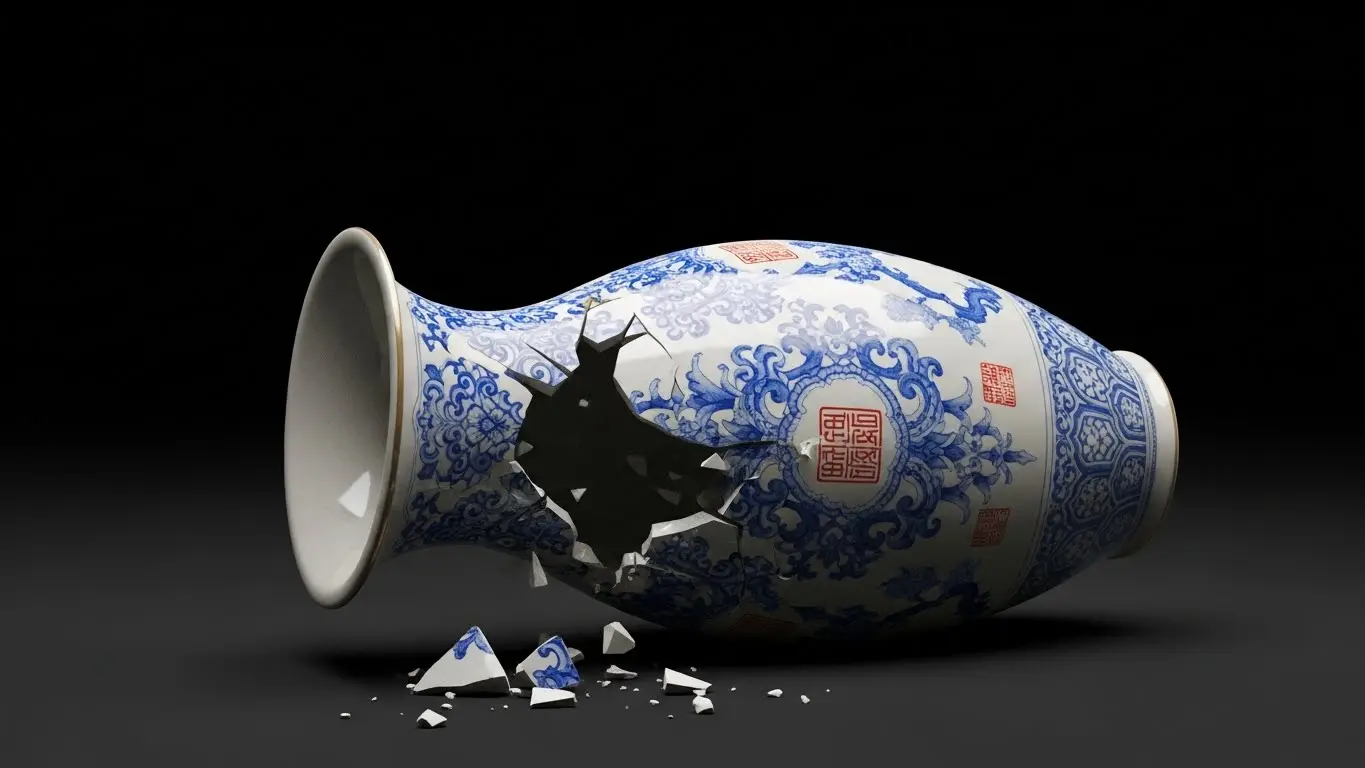
William Hague warns that Europe risks repeating the fate of the 19th-century Qing dynasty, which fell behind in key technologies and suffered a century of foreign domination. Hague draws a parallel between the Qing’s technological lag and Europe’s current position in areas like artificial intelligence, digital infrastructure, advanced defense systems, and critical minerals, where deployment paces lag behind other nations. This disparity is evidenced by international proposals, such as a Ukraine peace deal, where European interests appear secondary. Despite Europe’s continued innovation in foundational technologies within universities and start-ups, Hague contends a failure to scale and deploy these advancements domestically poses a significant threat.
Europe’s Technological and Economic Vulnerability
Europe faces a potential vulnerability mirroring the Qing dynasty, which fell behind in key technologies two centuries ago. William Hague warns of a similar risk today, as Europe lags in areas like AI, digital infrastructure, advanced defense systems, and critical minerals. This disparity is evidenced by the proposed Ukraine peace deal, negotiated by Washington and Moscow with limited European input, demonstrating a potential for Europe to be sidelined in its own region and unable to sustain conflict without external aid.
A key problem isn’t a lack of invention, but a failure to scale and deploy technologies developed within Europe’s universities and start-ups. Konstantinos Apostolatos notes roughly €3 trillion of capital is unallocated or poorly allocated, suggesting resources aren’t the primary issue. Instead, a lack of vision, intelligent pooling, leadership, and focused programme management hinders progress. The source implies Europe possesses the means but struggles with effective implementation and strategic direction.
Beyond strategy, cultural factors contribute to Europe’s challenges. Dr. Marek Tyl points to high “uncertainty avoidance,” favoring predictability and established procedures. This discourages risk-taking and entrepreneurial disruption, hindering innovation and adaptation. This ingrained culture excels at regulation but struggles to foster rapid progress or tolerate failure, potentially contributing to a slower pace of technological advancement and economic growth compared to other global powers.
Cultural Barriers to Innovation in Europe
entropyEurope faces potential stagnation, mirroring the late Qing dynasty, due to lagging technological development in areas like AI and advanced defense systems. The source highlights a risk of “unequal treaties” and dependence on others for crucial technologies and weapons, particularly noting Europe’s reliance on American systems for the Ukraine conflict. This situation is compounded by a failure to scale and deploy European-invented technologies, despite strengths in initial innovation within universities and startups.
A key cultural barrier identified is high “uncertainty avoidance” within European societies. This preference for predictability and established procedures discourages the risk-taking necessary for entrepreneurial disruption and bold innovation. The source suggests this creates an establishment-oriented culture strong on regulation but weak in fostering rapid adaptation and tolerance for failure, hindering progress.
Despite ample capital – approximately €3 trillion of unallocated or poorly allocated funds – Europe lacks the vision, leadership, and program management needed to address these challenges. The source emphasizes a need for focused action on “moonshots” and suggests that past anti-EU rhetoric has contributed to current difficulties, hindering European cooperation and potentially accelerating a decline comparable to that of the Qing dynasty.
Europe is in danger of becoming the Qing empire of the 21st century.
William Hague
The Role of Leadership and Capital Allocation
The source highlights a critical need for leadership in Europe, specifically regarding the mobilization of capital and strategic deployment of resources. Approximately €3-€3 trillion of capital currently exists as unallocated or poorly allocated funds. The argument is not a lack of financial resources, but a deficit in “vision, intelligent pooling and focus” to fund impactful “moonshots” and accelerate focused action. This suggests current capital allocation isn’t aligned with fostering innovation or building a competitive edge.
A key concern is Europe’s potential to mirror the historical fate of the Qing dynasty, falling behind in key technologies like AI, digital infrastructure, and advanced defense systems. The source contends this isn’t solely a technological issue, but one of scaling and ownership – Europe frequently invents these technologies but fails to maintain control over their deployment. Effective leadership, therefore, requires building home-grown firms capable of scaling innovations and securing a lasting position in critical sectors.
Cultural factors also impede progress, with European societies exhibiting high “uncertainty avoidance” and a preference for established procedures. This environment discourages risk-taking and entrepreneurial disruption, hindering bold innovation and rapid adaptation. While acknowledging that cultural shifts are difficult, the source implies addressing this ingrained conservatism is essential for fostering the dynamic environment needed to compete effectively in the modern technological landscape and avoid a decline similar to the Qing dynasty.
Historical Parallels: Europe and the Qing Dynasty
William Hague draws a parallel between contemporary Europe and the Qing dynasty, noting that two centuries ago, the Qing believed themselves successful but fell behind in key technologies. This led to a century of unequal treaties, foreign domination, and national humiliation. Hague suggests Europe risks a similar fate, observing a technological revolution in areas like AI and defense systems where others are scaling up faster. The proposed Ukraine peace deal, driven by Washington and Moscow, exemplifies this risk, potentially treating European interests as an afterthought.
Europe’s potential for avoiding this outcome lies in its continued innovation, particularly within universities and start-ups. However, the source highlights a failure to scale, own, and deploy these technologies effectively. Addressing this requires leadership focused on mobilizing capital, intelligent procurement, and building homegrown firms. Without such action, Europe may face increasing “unequal treaties” being negotiated without its input, mirroring the historical fate of the Qing dynasty.
Beyond strategic failings, cultural factors also contribute to Europe’s challenges. One commenter notes high levels of “uncertainty avoidance,” hindering risk-taking and bold innovation. This creates a culture focused on regulation and established procedures, struggling to adapt quickly or tolerate failure. Changing this deeply embedded culture is seen as a significant, potentially disruptive undertaking, but necessary for a potential rebirth of Europe.


