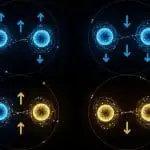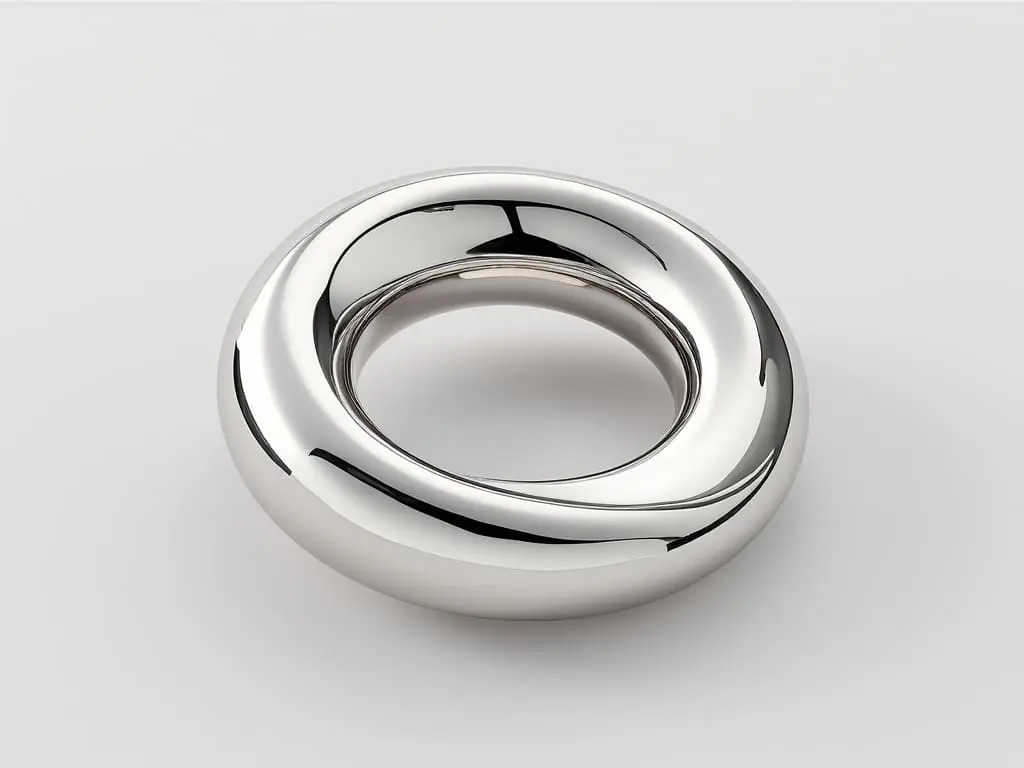
Scientists have made a groundbreaking discovery in the field of quantum computing, proposing the use of graphene nanotorus to encode qubits – the fundamental units of quantum information. This innovative approach has the potential to revolutionize the way complex problems are solved, leveraging the unique properties of curved graphene to create a new kind of physical qubit. By harnessing external magnetic and electric fields, researchers can control the device and suppress systematic errors, paving the way for reliable and efficient quantum computing platforms. With its high surface-to-volume ratio, graphene nanotorus offers an attractive alternative to traditional qubit encoding methods, opening up new possibilities for exploring quantum algorithms and developing scalable quantum computing systems.
Quantum computing has been gaining significant attention in recent years, with researchers exploring various physical platforms to encode quantum bits (qubits). The potential advantages of quantum computers in solving hard problems through quantum algorithms have driven efforts to identify suitable physical platforms. Qubits have been successfully encoded in degrees of freedom of light, spins in nuclear magnetic resonance of atoms, spin in quantum dots, semiconductor spins, and trapped ions, among others.
The outstanding properties of two-dimensional materials have sparked a revolution in physical science. Graphene, in particular, has been exploited to devise new electronic devices such as helical strips with chiral effects, Mobius strips with topological insulator properties, and bridges connecting layers of graphene using a catenoid surface. These curved materials are described by an effective Dirac Hamiltonian for a massless and gapless electron in the single layer of graphene.
The surface curvature is associated with a geometric potential, known as the da Costa potential. Among the curved geometries of interest, the torus can be built by gluing the two edges of a nanotube and presents a rich phenomenology. In particular, it exhibits a number of properties that make it an attractive platform for quantum computing.
EncodingQuantum Bitsin Graphene Nanotorus
Encoding Quantum Bits in Graphene Nanotorus
Researchers have proposed using the quantum states of an electron trapped on the inner surface of a graphene nanotorus to realize a new kind of physical quantum bit. This device can be used to encode quantum information, and fundamental tasks for quantum information processing such as qubit initialization and the implementation of arbitrary single-qubit gates can be performed using external magnetic and electric fields.
The robustness of the device against systematic errors has been analyzed, and it has been found that these errors can be suppressed by a suitable choice of the external control fields. These findings open new prospects for the development of an alternative platform for quantum computing, where scalability remains to be determined.
Theoretical Background: Quantum Bits and Graphene
Quantum bits (qubits) are the fundamental units of information for quantum computation, exploiting the properties of two-level systems to be in a superposition of quantum states. Qubits have been successfully encoded in various physical platforms, including degrees of freedom of light, spins in nuclear magnetic resonance of atoms, spin in quantum dots, semiconductor spins, and trapped ions.
Graphene, a two-dimensional material, has been exploited to devise new electronic devices such as helical strips with chiral effects, Mobius strips with topological insulator properties, and bridges connecting layers of graphene using a catenoid surface. The curved geometry of graphene presents a rich phenomenology, including the da Costa potential associated with the surface curvature.
Graphene Nanotorus: A New Platform for Quantum Computing?
The graphene nanotorus is a new platform for quantum computing that has been proposed by researchers. This device uses the quantum states of an electron trapped on the inner surface of a graphene nanotorus to encode quantum information. Fundamental tasks for quantum information processing such as qubit initialization and the implementation of arbitrary single-qubit gates can be performed using external magnetic and electric fields.
The robustness of the device against systematic errors
The robustness of the device against systematic errors has been analyzed, and it has been found that these errors can be suppressed by a suitable choice of the external control fields. These findings open new prospects for the development of an alternative platform for quantum computing, where scalability remains to be determined.
Experimental Implementation: Challenges and Opportunities
The experimental implementation of the graphene nanotorus device presents several challenges and opportunities. The fabrication of the device requires precise control over the curvature of the graphene surface, which can be achieved using advanced techniques such as scanning tunneling microscopy or atomic layer deposition.
Once fabricated, the device must be cooled to very low temperatures to achieve the necessary quantum coherence. This requires sophisticated cryogenic systems and careful control over the experimental setup. Despite these challenges, researchers are optimistic about the potential of the graphene nanotorus device for quantum computing.
Conclusion: A New Frontier in Quantum Computing?
The graphene nanotorus device presents a new potential in quantum computing, offering a promising platform for encoding quantum information. However, the theoretical background and experimental implementation present several challenges and opportunities that must be addressed to realize this device’s full potential.
Researchers are optimistic about the prospects for developing an alternative platform for quantum computing using the graphene nanotorus device. Further research is needed to overcome the technical challenges associated with fabricating and operating this device, but the potential rewards make it a worthwhile pursuit.
Publication Date: 2024-11-01
Authors: J. Furtado, A. C. A. Ramos, J. E. G. Silva, Romain Bachelard, et al.
Source: Annals of Physics
DOI: https://doi.org/10.1016/j.aop.2024.169862