Polarized radiation holds immense potential for unlocking the secrets of the cosmos, offering crucial information about magnetic fields, scattering events, and the three-dimensional architecture of astrophysical objects. Haifeng Yang from Zhejiang University and Lile Wang from Peking University, along with their colleagues, have developed Kratos-polrad, a new computational tool designed to efficiently and accurately model the behaviour of this polarized light. This innovative system leverages the power of modern graphics processing units to perform complex Monte Carlo radiative transfer calculations, crucially maintaining consistency in polarization measurements throughout the process. By significantly accelerating these simulations, Kratos-polrad empowers astronomers to investigate previously inaccessible phenomena, promising new insights into the nature of dust grains, magnetic fields, and the intricate structures within galaxies and nebulae.
Polarized Radiative Transfer in Dusty Media
This work details the implementation of a computational tool that simulates how light travels through dusty environments. Radiative transfer is fundamental to understanding how light interacts with matter, crucial for interpreting observations of astronomical objects like star-forming regions and galaxies. The code accurately simulates how light is absorbed, scattered, and emitted by dust grains, affecting the observed intensity and polarization. It employs a comprehensive treatment of the Stokes parameters, fully describing the polarization state of light, including total intensity, linear polarization, and circular polarization.
The code solves the radiative transfer equation, a fundamental equation describing how radiation propagates through a medium, accounting for absorption, emission, and scattering. The team developed an analytical solution to this equation for individual cells within the simulation, improving both accuracy and computational efficiency. This analytical approach allows for a precise determination of how the Stokes parameters change as radiation travels through each cell.
Kratos-polrad Models Polarized Radiative Transfer Accurately
Scientists have developed Kratos-polrad, a new computational tool for modelling polarized radiative transfer, achieving significant performance gains over existing methods. This work addresses a critical need in astrophysics, where polarized radiation provides vital insights into magnetic fields, scattering processes, and three-dimensional structures. The code utilizes a novel approach to calculate how light interacts with dust grains, accurately tracking the polarization state of photons as they propagate through complex environments. Extensive validation confirms the accuracy of Kratos-polrad in simulating diverse polarization phenomena, including self-scattering, dichroic extinction, and complex patterns in twisted magnetic fields.
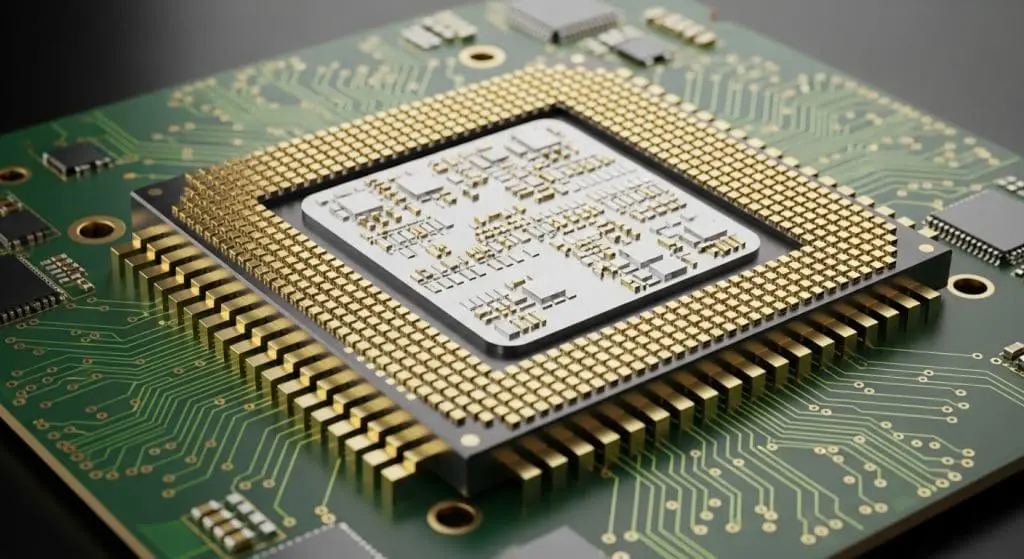
Tests involving inclined disk systems demonstrate that the simulated polarization fraction closely matches analytical predictions, while the orientation of polarization vectors is correctly reproduced. Further validation against established codes reveals excellent agreement in polarization fraction profiles. The breakthrough delivers a substantial performance improvement, exceeding CPU-based methods by over an order of magnitude. Benchmarking shows that Kratos-polrad, running on advanced hardware, achieves throughput equivalent to hundreds of CPU cores, thanks to massive GPU parallelism, optimized memory access, and analytical approaches for complex scenarios.
Researchers also validated the code’s ability to accurately model polarization rotation in twisted magnetic fields. Simulations demonstrate that Kratos-polrad correctly predicts the emergent polarization state, aligning with analytical expectations. These results confirm the code’s ability to handle complex magnetic field configurations and accurately track the polarization of light as it interacts with magnetically aligned dust grains.
Polarized Radiative Transfer, GPU Accelerated Code
Kratos-polrad represents a significant advancement in computational astrophysics, delivering a new GPU-accelerated code designed for detailed modelling of polarized radiative transfer. The code accurately simulates the behaviour of light as it interacts with dust grains in astrophysical environments, comprehensively treating the full Stokes parameters to capture polarization effects. Validation against existing analytical solutions and established codes confirms its ability to accurately reproduce diverse polarization phenomena, including effects from aligned dust grains and complex magnetic field configurations. This achievement unlocks new possibilities for studying astrophysical systems through polarization, as Kratos-polrad demonstrates performance improvements of approximately one hundred times compared to conventional CPU-based methods.
This speed increase enables researchers to conduct previously impractical studies, generating high-resolution polarization maps with significantly reduced computational time. The code’s modular design allows for future integration with hydrodynamic simulations, opening avenues for time-dependent studies of polarimetric observables in systems like protoplanetary disks and exoplanetary atmospheres. The authors acknowledge that the current model relies on certain approximations regarding dust grain properties, and future work aims to address these limitations by incorporating more realistic and complex dust grain populations.
🗞 Kratos-polrad: Novel GPU system for Monte-Carlo simulations with consistent polarization calculations
🧠 ArXiv: https://arxiv.org/abs/2512.01283