

Researchers confront a longstanding computational challenge in nuclear physics, specifically solving the complex equations that describe interactions between particles, and Jin Lei from Tongji University and colleagues have now developed a powerful new tool to address this. The team presents HPRMAT, a high-performance solver that dramatically accelerates calculations used in coupled-channel problems, achieving significant speedups through innovative techniques including GPU acceleration and mixed-precision arithmetic. This advancement allows researchers to perform large-scale simulations on standard desktop workstations, previously requiring expensive high-performance computing facilities, and opens new avenues for understanding nuclear reactions and the structure of atomic nuclei. The resulting improvements, validated against established benchmarks, represent a substantial leap forward in computational nuclear physics, promising to accelerate progress in the field.
These equations are notoriously difficult to solve, especially for systems with many interacting particles or a wide range of energies. This work addresses these limitations by introducing more efficient and robust computational approaches, crucial for studying exotic nuclei and heavier elements. The team champions the use of direct linear solvers, such as LU decomposition, instead of iterative methods, offering improved numerical stability and accuracy, particularly for large systems.
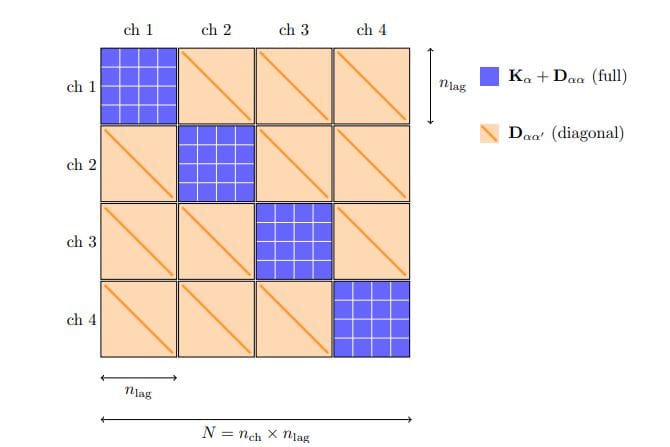
A major breakthrough is the implementation of these solvers on GPUs using the NVIDIA cuSOLVER library, delivering a substantial speedup compared to CPU-based calculations. The authors also exploit the performance characteristics of modern GPUs by using mixed-precision algorithms, combining single-precision and double-precision arithmetic to accelerate calculations without significant loss of accuracy. For systems with local potentials, where interactions are short-range, the researchers optimized calculations using the Woodbury formula, exploiting the block structure of the Hamiltonian to further improve efficiency. The code is designed to be accessible to a wider range of researchers, providing bindings for C, Python, and Julia.
Performance benchmarks demonstrate a nine-fold speedup compared to optimized CPU direct solvers and an eighteen-fold improvement over legacy inversion-based codes, while maintaining comparable or better accuracy than traditional approaches. This work has the potential to significantly accelerate research in several areas of nuclear physics, including nuclear structure, nuclear reactions, and heavy-ion fusion. The accessibility of the code, combined with its cost-effectiveness through GPU utilization, makes it possible to tackle more complex problems with limited resources. This represents a significant contribution that promises to unlock new discoveries in the field.
High Performance Solver Accelerates Nuclear Physics Calculations
The research team developed HPRMAT, a high-performance solver library designed to accelerate calculations central to nuclear physics, specifically those involving the R-matrix method. This new library addresses a significant computational bottleneck by replacing traditional matrix inversion techniques with direct linear equation solving, achieving substantial performance gains. The package incorporates four distinct solver backends, including double-precision LU factorization, mixed-precision arithmetic with iterative refinement, a Woodbury formula approach, and GPU acceleration, offering flexibility and adaptability to various computational resources. Experiments demonstrate that the GPU solver achieves a speedup of up to nine compared to optimized CPU direct solvers and an eighteen-fold improvement over legacy inversion-based codes when applied to large matrices.
A particularly effective strategy involves mixed-precision arithmetic, where factorization is performed in single precision with iterative refinement to maintain double-precision accuracy. This approach is especially beneficial on consumer GPUs, such as the RTX 3090 and RTX 4090, where single-precision throughput is significantly faster than double-precision, broadening access to large-scale calculations for researchers without access to expensive high-end hardware. CPU-only solvers also benefit from the optimized libraries and algorithmic improvements, delivering a speedup of five to seven. Crucially, all solvers maintain high physics accuracy, with relative errors remaining below in cross-section calculations, validated against a well-established reference code. The team rigorously tested the solvers on problems including neutron scattering, oxygen-calcium coupled-channel scattering, carbon-alpha inelastic scattering, and calculations involving the non-local Yamaguchi potential, confirming the robustness and reliability of the new methods. The library supports multiple programming languages, including Fortran, C, Python, and Julia, broadening its accessibility and usability within the scientific community.
High Performance Solver for Nuclear Reactions
Researchers have created HPRMAT, a high-performance solver library designed as a direct replacement for existing linear algebra routines, that achieves substantial performance gains through optimized direct solvers rather than traditional matrix inversion techniques. The package incorporates four distinct solver backends, offering flexibility and adaptability to various computational resources. Benchmark calculations demonstrate the effectiveness of these solvers, with the GPU implementation achieving up to a nine-fold increase in speed compared to optimized CPU solvers and an eighteen-fold improvement over legacy inversion-based codes when applied to large matrices. Notably, the mixed-precision strategy proves particularly effective on consumer-grade GPUs, overcoming performance limitations while maintaining double-precision accuracy, thereby broadening access to large-scale calculations for researchers without access to expensive high-end hardware. Future work will likely focus on extending the code’s capabilities to even larger matrices and exploring further optimizations for diverse hardware architectures, solidifying its role as a valuable tool for nuclear physics research.
👉 More information
🗞 HPRMAT: A high-performance R-matrix solver with GPU acceleration for coupled-channel problems in nuclear physics
🧠 ArXiv: https://arxiv.org/abs/2512.11590


